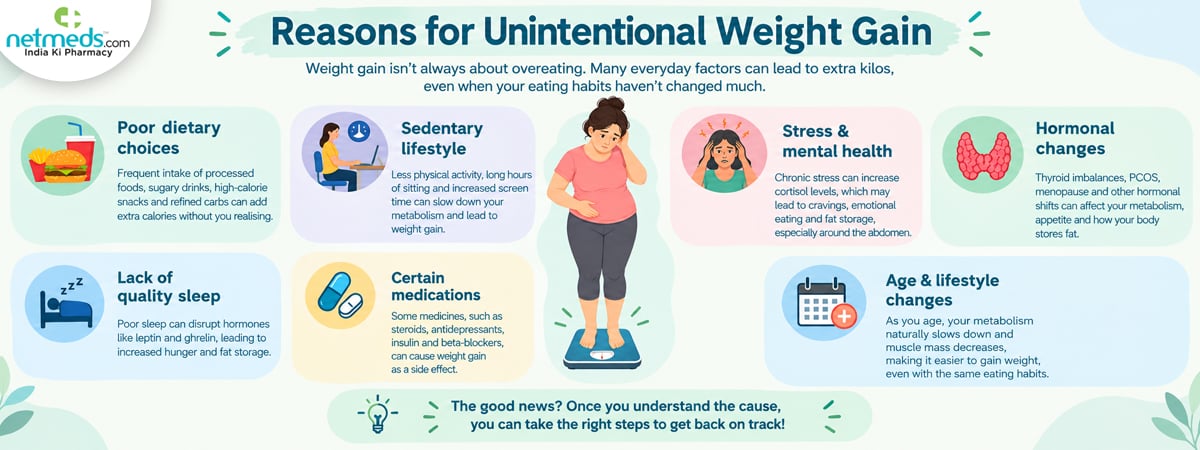
Weight gain can be annoying, especially when we don’t know the real reason behind it. While diet largely plays a key role in weight gain, other factors like stress, poor sleep patterns, hormonal fluctuations, and taking certain medications for a longer duration may contribute to weight gain without you even realising it. If you have noticed your clothes feeling tighter despite maintaining your usual routine, it may be time to look beyond your diet and exercise habits.
(Want To Stay Fit And Strong? Seek Help From Our Wide Range Of Fitness Essentials)
Explore this article to understand the reasons behind unintentional weight gain and what you can do to manage it.
Reasons Why You Are Gaining Weight Unintentionally
Poor Sleep Patterns
If you are one who regularly stays up late or does not get enough sleep, then this could affect your body weight. Sleep plays a vital role in regulating appetite, energy levels and metabolism.
An inadequate sleep schedule can influence hormones involved in hunger and fullness, including ghrelin and leptin. It may also increase cravings for calorie-dense foods, making you more likely to reach for sugar-loaded snacks, fried foods or late-night meals.
Ways To Manage
Ensure to get 7-9 hours of good quality restful sleep every night.
Always try to keep up with a consistent bedtime and wake-up schedule.
Refrain from having heavy meals, caffeine and excessive screen time close to bedtime.
Create a relaxing and comforting nighttime routine to improve sleep quality.
Chronic Stress
Stress is a common factor but often overlooked cause of unintended weight gain. When you experience stress for a prolonged duration, your body releases cortisol, a hormone involved in the stress response. Changes in stress hormones may influence appetite, food preferences and fat distribution.
Stress can also trigger emotional eating, where you turn to food for comfort rather than hunger. Frequently taking an excess amount of calorie-rich snacks or sugary drinks during stressful periods may gradually contribute to weight gain.
Also Read: Hormone Imbalance And Weight Gain: Causes, Symptoms, And Remedies
Ways To Manage
Practise stress-easing techniques such as meditation, deep breathing or yoga.
Engage in regular physical activity such as brisk walking, cycling, swimming or other aerobic exercise.
Eat balanced and wholesome meals at regular intervals to avoid excessive hunger.
Identify emotional eating triggers and explore non-food ways to manage stress.
Also Read: Weight Gain: How It Differs In Men And Women
Hidden Calories in Everyday Foods/ Drinks
We may be eating a nutritious and varied meals regularly, but still intaking excess calories than our body needs. This is owing to hidden calories in daily foods and beverages.
Sugary tea or coffee, packaged fruit juices, sweetened beverages, salad dressings, frequent snacking and liberal use of cooking oil can add up over time. Even foods considered healthy, such as nuts, seeds and dried fruits, can contribute significant calories when eaten in large quantities without following mindful eating behaviour.
Eating while watching television or working may also make it harder to recognise when you are full.
Ways to Manage:
Focus on portion sizes without becoming overly restrictive.
Prefer water or unsweetened beverages more often than going for sugar-laden drinks.
Eat mindfully and avoid distractions during meals.
Add protein-rich foods, vegetables, whole grains and fibre-rich foods to support fullness.
Check food labels for added sugars and serving sizes.
No single food can automatically result in weight gain. It is your overall eating habits, portion sizes and energy requirements that matter most.
Sedentary Lifestyle /Reduced Daily Movement
Even if you exercise on and off, spending most of the day sitting can reduce your overall daily energy expenditure. Long working hours at a desk, driving instead of walking and limited movement during leisure time may gradually contribute to weight gain.
This is particularly relevant if your daily routine has recently changed, such as switching to a desk-based job, working from home or becoming less active after an illness or injury.
Ways to Manage
Take short movement breaks throughout the day during office hours.
Walk for 5–10 minutes after meals when possible.
Use stairs instead of lifts when practical.
Include a combination of aerobic activities and strength training in your weekly routine.
Choose activities that you enjoy doing, such as dancing, cycling, swimming or brisk walking to stay consistent.
Regular movement supports weight management, muscle strength, cardiovascular health and overall well-being.
Hormonal Changes
Sometimes, weight gain is not simply related to lifestyle habits. Underlying medical conditions, hormonal changes and certain medicines can influence body weight.
For instance:
Polyendocrine Metabolic ovarian syndrome (PMOS): This hormonal condition may be associated with insulin resistance and difficulties managing weight.
Menopause: Hormonal changes, ageing and changes in muscle mass can affect body composition and fat distribution.
Certain medications: Some antidepressants, corticosteroids, diabetes medicines and other drugs may contribute to weight gain.
Unintentional weight gain can also result from fluid retention, which may sometimes indicate an underlying health problem.
Ways To Manage
If you experience persistent or unexplained weight gain, consult a healthcare provider. Depending on your symptoms and medical history, they may recommend an evaluation for thyroid problems, hormonal conditions or other possible causes. Never stop or change prescribed medication without medical guidance.
Seek prompt medical attention if weight gain occurs rapidly over a few days, particularly with swelling in the legs or abdomen, breathlessness or difficulty breathing.
When Should You Worry?
Occasional fluctuations in body weight are normal and may occur due to changes in hydration, salt intake, digestion, menstrual cycles or bowel movements. A small increase on the weighing scale does not necessarily mean you have gained body fat.
However, unexplained, persistent or rapid weight gain deserves attention, especially when accompanied by symptoms such as unusual fatigue, constipation, feeling unusually cold, menstrual irregularities or swelling.
A healthcare provider can help determine whether the change is related to lifestyle, medication, fluid retention or an underlying medical condition.
Frequently Asked Questions
Why am I gaining weight even when I eat less?
Weight gain despite eating less may be related to reduced physical activity, inaccurate estimates of calorie intake, fluid retention, hormonal changes, certain medications or underlying medical conditions.
Can lack of sleep cause weight gain?
Yes. Insufficient sleep can affect appetite regulation, increase cravings and influence food choices, potentially contributing to weight gain over time.
Can stress cause sudden weight gain?
Stress may contribute to weight gain by affecting appetite, sleep and eating habits. However, sudden weight gain may also result from fluid retention or a medical condition and should be assessed if unexplained.
How can I stop gaining weight unintentionally?
Eat balanced meals, monitor portion sizes, stay physically active, get adequate sleep and manage stress. If weight gain persists or occurs rapidly without an obvious reason, consult a healthcare provider.
Conclusion
Unintentional weight gain can result from several factors, including poor sleep, chronic stress, hidden calories, reduced physical activity and underlying medical conditions. Identifying the possible cause is the first step towards managing your weight in a healthy and sustainable way.
Instead of following crash diets or drastically cutting down your food intake, focus on balanced, wholesome nutrition, regular movement, adequate sleep and stress management. If your weight continues to increase despite maintaining healthy habits, seek medical advice to rule out underlying causes.
References:
Some Common Causes of Unintentional Weight Gain – A Recent Review of Literature
iftikhar alam
Human Nutrition and Dietetics, Department of Agriculture, Bacha Khan University, Charsadda, Khyber Pakhtunkhwa, Pakistan
https://www.acspublisher.com/journals/index.php/jfdr/article/view/6104
Dutton, H., Wharton, S., Kearsley-Ho, E., Millard, A., & Van, S. (2023). 10 of the Most Asked Questions and Challenges in Obesity. Canadian Journal of General Internal Medicine, 18(SP1), 1-16.
Gualtieri, P., Marchetti, M., Renzo, L. D., De Santis, G. L., Palma, R., Colica, C., ... & Di Lorenzo, N. (2023). Impact of COVID-19 on the Destiny of Bariatric Patients. Nutrients, 15(1), 163.
Broussard, J. L., & Van Cauter, E. (2016). Disturbances of sleep and circadian rhythms: novel risk factors for obesity. Current opinion in endocrinology, diabetes, and obesity, 23(5), 353.
Simon, S. L., Behn, C. D., Cree-Green, M., Kaar, J. L., Pyle, L., Hawkins, S. M., ... & Nadeau, K. J. (2019). Too late and not enough: school year sleep duration, timing, and circadian misalignment are associated with reduced insulin sensitiv
ity in adolescents with overweight/obesity. The Journal of pediatrics, 205, 257-264.
Pugliese, G., Liccardi, A., Graziadio, C., Barrea, L., Muscogiuri, G., & Colao, A. (2022). Obesity and infectious diseases: pathophysiology and epidemiology of a double pandemic condition. International Journal of Obesity, 46(3), 449-465
Tomiyama, A. J. (2019). Stress and obesity. Annual review of Psychology, 70, 703-718.
Hemmingsson, E., Nowicka, P., Ulijaszek, S., & Sørensen, T. I. (2023). The social origins of obesity within and across generations. Obesity Reviews, 24(1), e13514.
Rivers, S. M. L. (2019). At the Hearth: How the Industrial Food System has Changed the Hearth and Home in the Last 100 Years. Pacifica Graduate Institute.
Nardocci, M., Leclerc, B. S., Louzada, M. L., Monteiro, C. A., Batal, M., & Moubarac, J. C. (2019). Consumption of ultra-processed foods and obesity in Canada. Canadian Journal of Public Health, 110, 4-14.
Tan, K. W., Graf, B. A., Mitra, S. R., & Stephen, I. D. (2015). Daily consumption of a fruit and vegetable smoothie alters facial skin color. PloS one, 10(7), e0133445
Malik, V. S., & Hu, F. B. (2022). The role of sugar-sweetened beverages in the global epidemics of obesity and chronic diseases. Nature Reviews Endocrinology, 18(4), 205-218.
Hemmingsson E, Nowicka P, Ulijaszek S, Sørensen TI. The social origins of obesity within and across generations. Obesity Reviews. 2023 Jan;24(1):e13514.
Kumar R, Rizvi MR, Saraswat S. Obesity and Stress: A Contingent Paralysis. International Journal of Preventive Medicine. 2022;13.
Poti JM, Braga B, Qin B. Ultra-processed food intake and obesity: what really matters for health—processing or nutrient content?. Current obesity reports. 2017 Dec;6:420-31.
 Previous