Is that crispy samosa or smoking hot wings or those lip-smacking savoury items calling you? Well, foodie or not, the mere thought of just having those snacks and sweets literally gives us a foodgasm. But hardly do we realise that the after-effect of consuming such oily, spicy and junk foods isn’t a joyful experience for our gut. The result often leads to numerous digestive issues, and GERD is one of the most reported ones.
Also Read: Acid Reflux: 7 Awesome Foods That You Should Add In Your Diet To Ease Heartburn
What Is GERD?
GERD, as in Gastroesophageal reflux disease, is a chronic long-term inflammatory gut issue which is characterised by repeated acid reflux (stomach acid flowing back into the food pipe or oesophagus) causing intense irritation in the lining of your oesophagus. This usually occurs when the lower oesophagal sphincter (LES) muscles are damaged, which in normal conditions prevents the consumed food from flowing back into the food pipe.
Ayurveda signifies GERD as ‘Amlapitta’, a condition arising due to irregular Pitta Doshas in the body which causes surplus acidic levels i.e., “Amlata”, in the stomach leading to acid reflux and heartburn a.k.a ‘Hrid Daha’ and is often accompanied with Tikta Udgara (a bitter taste in the mouth) and Avipaka (indigestion). If the acidic concentration in the gastrointestinal tract remains high repetitively, with time the irregular Pitta also affects the Vata and Kapha Doshas eliciting further discomforting manifestations in the form of chest pain, nausea, vomiting, halitosis (bad breath), indigestion, constipation, abdominal cramps, dysphagia (difficulty in swallowing food), frequent burps, flatulence (gas), and regurgitation (undigested food coming back in our mouth).
Also Read: Water Brash: Know How To Deal With This GERD Symptom
Right from overeating, consuming too much junk, spicy, oily food, tea, coffee or cold drinks, eating at odd intervals or skipping meals altogether, and an overall bad lifestyle marked by excessive stress, insomnia, smoking and alcohol consumption are some of the factors that cause acid reflux and GERD.
While an advanced stage of GERD might require medical intervention and consumption of allopathic medications, if you want to prevent acid reflux from deteriorating, then trust us, we have your back!
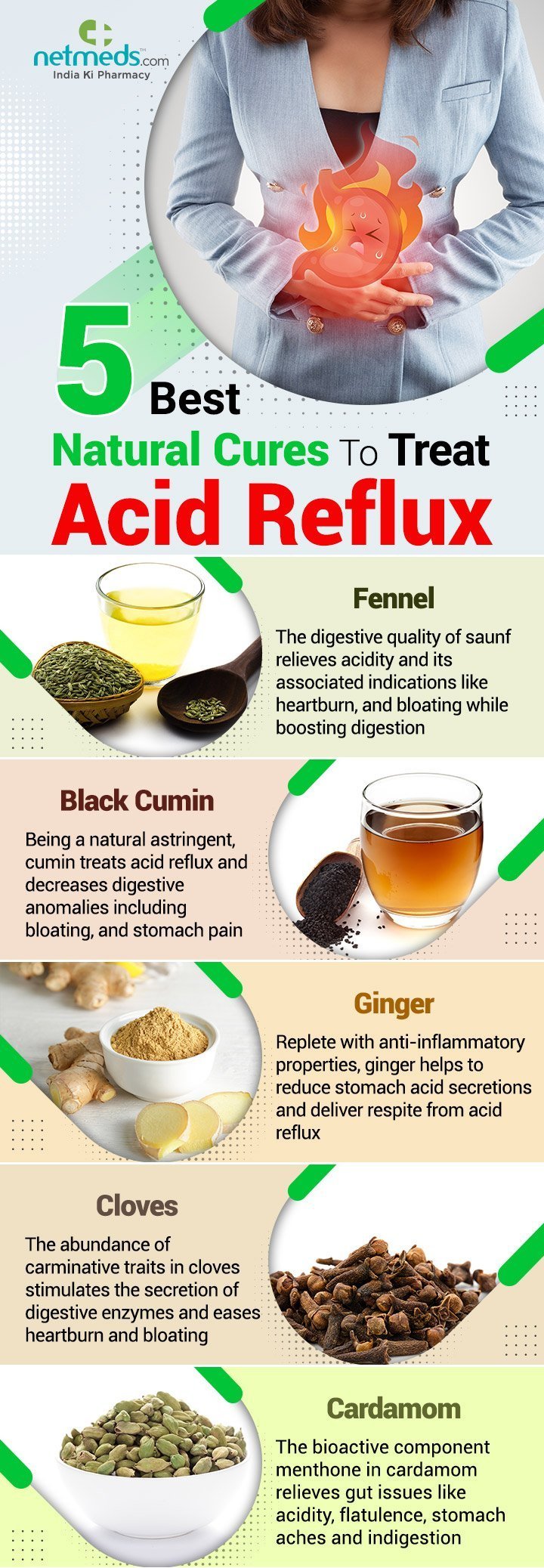
We bring you 5 spectacular natural remedies right from your kitchen counter that not only prevent acid reflux from advancing into GERD but also promote digestion and take care of other gastrointestinal anomalies.
Foray through this infographic to find 5 such incredible kitchen cures.
Frequently Asked Questions
What is GERD and what causes it?
GERD, or gastroesophageal reflux disease, occurs when stomach contents repeatedly flow back into the oesophagus, causing symptoms such as heartburn and regurgitation.
Can GERD be treated naturally with kitchen ingredients?
Certain foods may help some people manage GERD symptoms, but kitchen ingredients should complement, not replace, medical treatment when GERD is persistent or severe.
Is ginger good for acid reflux and GERD?
Limited research suggests ginger-containing interventions may improve GERD symptom relief, although more high-quality studies are needed before ginger can be considered a treatment for GERD.
What foods are best for people with GERD?
There is no universal GERD diet, but choosing foods that do not trigger individual symptoms and eating smaller meals may help manage reflux.
Which foods should be avoided during GERD flare-ups?
Common triggers include spicy and high-fat foods, chocolate, coffee, alcohol, mint and acidic foods such as citrus and tomatoes, although individual triggers vary.
References:
- NIDDK – Eating, Diet & Nutrition for GERD: Evidence-based guidance on dietary habits, common food triggers, meal timing and weight management.
- NIDDK – Treatment for GERD: Covers lifestyle modifications, medicines and other treatment approaches for GERD.
- NIDDK – GERD Symptoms & Causes: Detailed information on heartburn, regurgitation, warning symptoms and when to seek medical care.
- American College of Gastroenterology – Acid Reflux/GERD: Clinical information on GERD lifestyle measures, dietary triggers and treatment options.
- PubMed – Dietary, Nutraceutical & Probiotic Interventions for GERD: Systematic review and meta-analysis examining dietary and nutraceutical approaches, including ginger-containing interventions.
- PubMed – Dietary Interventions in GERD: Systematic review and meta-analysis assessing different dietary interventions for GERD.
- American College of Gastroenterology – GERD Guidelines: Clinical recommendations covering weight loss, meal timing, trigger foods and other lifestyle measures.
 Previous