


Indian vegetable markets are a host to various veggies that add great flavour to traditional staple dishes, from dal, sambar, to soups and salads. And the ones that are ubiquitous in Indian kitchens in this regard are the bounty belonging to the allium family – onions, garlic, and scallions/spring onions. But did you know that yet another aromatic herb exists that also belongs to this botanical family, which offers both great zesty taste to meals and also confers excellent health benefits?
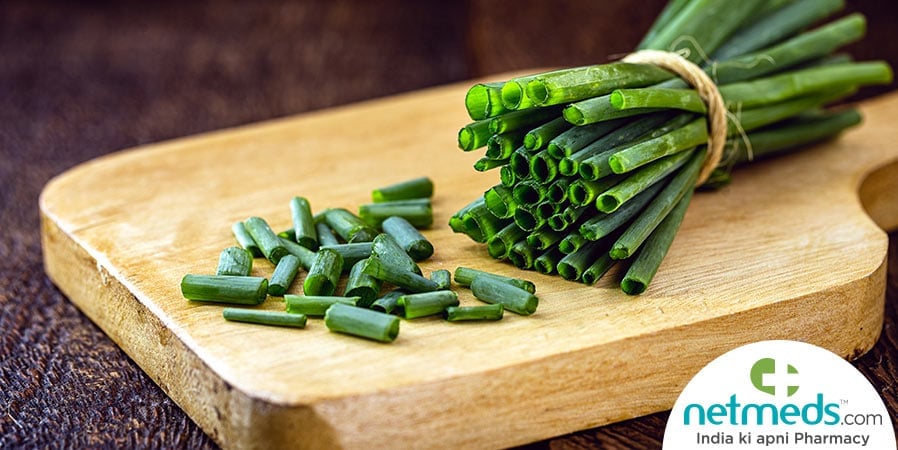
Known as chives and scientifically termed Allium schoenoprasum, they are perennial plants that grow extensively in regions in Europe, Asia, and North America. A common feature in the Mediterranean diet, these aromatic, long, thin green stems with a mildly pungent yet herb-like smell and taste similar to onions, are packed with beneficial components. Adding chives to the diet helps remedy cardiac ailments, build disease resistance and even avert chronic disorders of diabetes, cancer, and hypertension.
Nutrition Content In Chives:
Chives are available in two types: common chive,s also called onion chives and Chinese chives, otherwise known as garlic chives. While the appearance of their leaves differs slightly, these verdant stems offer similar piquant flavours and provide outstanding benefits for health.
Chives are rich in vitamin C for immune system activity, as well as vitamin K for optimal blood clotting and wound healing mechanism, besides bone health. They possess vast reserves of vitamin A for improving eyesight and are very low in calories, fats for accelerating weight loss. High in folate and manganese, these flavourful stalks enhance red blood cell synthesis and circulation, while also boosting muscle strength and nerve signalling functions. Moreover, chives house a treasure trove of plant-based antioxidants that display powerful anti-cancer and anti-inflammatory properties, which thwart uncontrolled tumour growth in the body.
Buy Our Top-Selling Nutrition Supplements To Bolster Overall Health!
Superb Wellness Incentives Of Chives:
Prevents Cancer
Chive stems and seeds possess profuse amounts of organosulfur compounds. These constituents have anti-cancer qualities, which influence enzyme activity in the system and thereby slow down the progression of cancer and banish uncontrolled cell proliferation in the internal tissues and organs. Adding a small portion of chives as part of the routine diet helps in preventing cancer and safeguarding the liver, kidneys, and stomach from tissue damage and organ failure.
Augments Heart Functions
Bestowed with the bioactive element allicin, chives are a blessing for improving heart health. This phytonutrient relaxes the blood vessels leading up to the heart and thus prevents high blood pressure/hypertension. Moreover, it also contains quercetin, which averts plaque accumulation in the arteries and keeps cardiovascular diseases, atherosclerosis at bay.
Also Check Out: Hypertension: Follow Dash Diet To Control High BP - Infographic
Boost Immunity
Chives are laden with vitamin C, a vital water-soluble vitamin that shields the internal cells and uplifts the immune system. Owing to its useful antioxidant characteristics, the vitamin C in chives stimulates blood circulation to all organs and safeguards the cells, tissues from harmful free radicals and oxidative damage.
Fortifies Bones And Joints
The copious amounts of vitamin K in chives help in regulating the clotting of blood and thrombin protein activity in instances of injury, thus ensuring proper wound healing and preventing excessive bleeding. In addition, vitamin K also plays a central role in bone health by aiding in increasing bone mineral density and lowering the risk of osteoporosis, fractures, and arthritis, hence supplying strong bones and joints.
Promotes Digestion
Chives are loaded with vitamins B1, B2, and B3, besides ample dietary fibre content. These work in synergy to elevate the metabolism of carbohydrates, proteins, and fats in the body, regulate appetite, control untimely and unhealthy cravings, while also facilitating smooth digestion processes. Moreover, the plethora of antimicrobial components in chives helps treat stomach infections and ease abdominal pain, indigestion, and enhance gut health.
Frequently Asked Questions
What Are Chives Called In India?
Chives do not have an Indian vernacular name because they are not traditionally grown or used plants in Indian cuisine. However, they are sometimes informally referred to as “Chinese chives” or “garlic chives” in markets, though these refer to a different plant (Allium tuberosum). Real chives (Allium schoenoprasum) are usually sold under the English name “chives.”
Are Chives Green Onions?
No. Chives and green onions (spring onions/scallions) are different plants.
Chives have thin, hollow leaves; a mild onion-garlic flavour, and are used only for their leaves.
Green onions have thicker, non-hollow leaves with a white bulbous base and a stronger onion flavour.
Do We Get Chives In India?
Yes, but mainly in urban supermarkets, gourmet grocery stores, or online. Chives are not commonly grown or widely available in small-town or rural markets.
Are Chives From Garlic?
Not exactly. Chives belong to the Allium family, which includes garlic, onions, leeks, shallots, etc. Their mild flavour is similar to garlic and onion, but they are not derived from garlic and are a separate species.
Can I Eat Chives Raw?
Yes. Chives are commonly eaten raw. They are typically sprinkled on:
Salads
Soups
Baked dishes
Omelettes
Cream cheese or dips
Heat can weaken their flavour, so raw use is preferred.
Who Should Not Eat Chives?
Most healthy people can eat chives safely, but caution is needed for:
People with Allium allergies (onions, garlic, leeks)
For individuals with sensitive stomachs, large amounts might cause bloating or gas.
People on blood-thinning medications (like warfarin) should limit excessive intake because chives contain Vitamin K.
Moderate culinary use is generally safe.
Which Is Healthier, Chives Or Green Onions?
Both are healthy, but they differ slightly:
Chives are higher in Vitamin K, loaded with antioxidants, and used in small quantities.
Green onions offer more fiber and bulk nutrients. It is usually consumed in larger servings.
References:
https://www.researchgate.net/publication/351005359_Caraway_Chinese_Chives_And_Cassia_As_Functional_Foods_With_Considering_Nutrients_A
https://www.sciencedirect.com/science/chapter/edited-volume/abs/pii/B9781845690175500191
https://pmc.ncbi.nlm.nih.gov/articles/PMC7956299/
 Previous


