After an entire day of work, business, and tiredness, when you finally hit the shacks and want to relax. Have your felt yourself tossing and turning without an end? Well, did you have a heavy meal for dinner, something too spicy or a late one in that case? If the answer to the above questions is ‘Yes’, then, my pal, your Sleeplessness is an underlying factor of Indigestion.
Also Read: Yoga For Indigestion: Proven Yogasanas To Relieve Dyspepsia In Winters
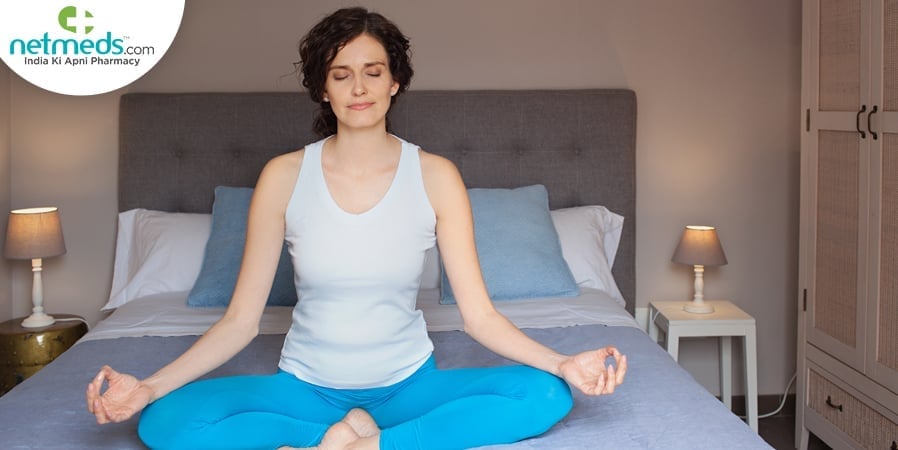
Just like stress and insomnia go hand-in-hand, similarly, digestive troubles and sleeplessness can be a malicious cycle. We often experience difficulty in falling asleep owing to indigestion and heartburn, and in turn, the fact that we could not sleep properly tends to increase body stress and lead to digestive issues. Well, there is no need for an explanation of how popping sleeping pills every day without a prescription can cause severe side effects, if you want a holistic approach to getting relief from both indigestion and sleeplessness, there is nothing better than Bedtime Yoga.
What Is Bed-Time Yoga?
Bedtime Yoga is nothing new, but a sequence of yoga poses that can be performed right after dinner. Yes, you heard that right, unlike other forms of exercises, these yogasanas can be easily performed even with a full tummy.
Also Read: Ayurveda For Insomnia: Time-Tested Therapies For A Good Night’s Sleep
While there’s no single style or perfect sequence of yoga that’s a model for all to get sleep. It’s more the technique in which you perform the asanas for sleep that makes a difference. The primary requirement here is sustained and gentle stretches paired with slow and steady breathing movements that encourage one to achieve profound emancipation and relaxation — both physically and psychologically — which is exactly what sleep studies or other pieces of research exhibit, again and again, that enables an individual to fall asleep. Sleep studies also demonstrate that practising yoga for sleep can not only help one fall asleep and enhance the quality of your sleep but also remedy digestive troubles, anxiety, stress etc.
So, without further ado, if you have had your dinner and are ready to go to sleep, just perform these below-mentioned yoga postures with soothing moves to diminish levels of stress, calm the mind, relieve tension from the bodily tissues, and mitigate digestive woes; all of which work in synch to serve as an efficacious and natural snooze remedy.
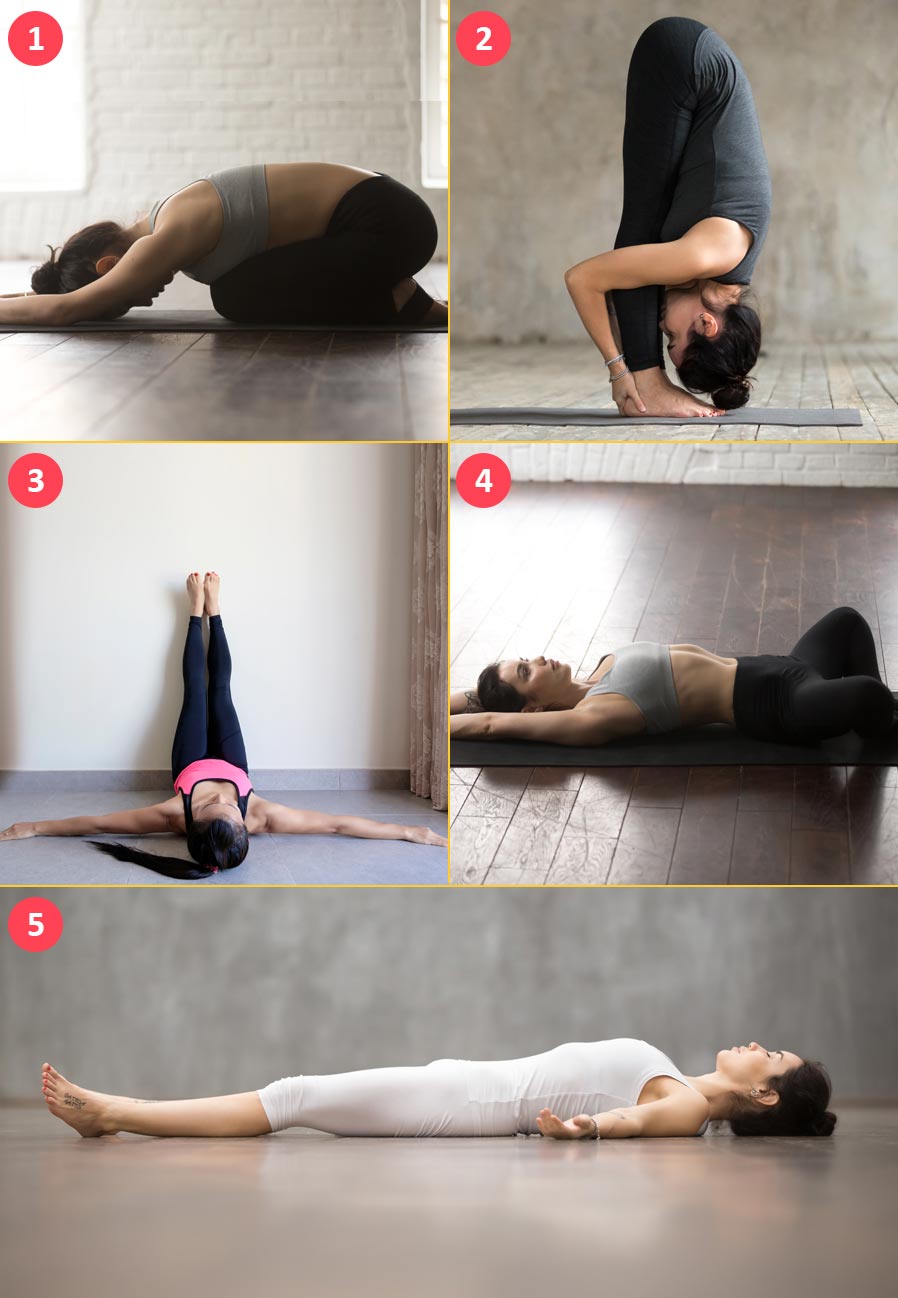
Relaxing Yoga Postures To Do At Bedtime
Balasana (Child Pose)
Squat on your knees while keeping the backbone straight. Now gradually lean forward such that both thighs touch your chest. Keep bending forward until your head is beyond the knee and touches the floor. Straighten both hands backward on either side of your legs with your palms downward, touching the floor. Hold this posture for 20-25 seconds, take a few seconds of break, and repeat the asana 2-3 times.
Benefits:
The Child Pose is extremely beneficial for stretching the entire body, including the shoulder, hip joint and muscles. It promotes overall balance and stamina and boosts digestion. Practising it regularly eliminates stress and anxiety, retains calmness of mind, and helps for a better sleep.
Uttanasana (Standing Forward Bent Pose)
While standing straight on the ground, keep the feet hip-distance apart. Without bending your knees, slowly bend your upper body from the torso downwards. See that your knees don't bend. You can let your hands hang down freely or rest your palms on the ground or just grasp your feet to the ankles. Hold this posture for 8-10 breaths, and then slowly stand up while exhaling. Do this 2-3 times.
Benefits:
This inverted posture is pivotal in bringing fresh blood flow to the head and neck and thereby helps in ridding the body of toxins. Not only does it stretch the back muscles and make the spine supple, but also it helps push the food along the digestive tract to relieve constipation or the bloated feeling. This in turn helps calm the stomach and lowers the overall stress levels, thus helping with sleep.
Viparita Karani (Legs Up The Wall Pose):
Start the asana, by sitting about 3 inches from an empty wall. Lie down on the back and raise your legs upwards in such a way that the back of the thigh touches the wall. Place your arms on either side of the body. Lie down in this position for 10 minutes or as long as you can and then slowly pull your leg back to the starting position.
Benefits:
The ‘Legs Up The Wall Posture’ is one of the relaxing poses that allows you to simply lie flat on the floor without much twisting and turning. It is highly significant in releasing stress and fatigue from the whole body by opening the various bodily channels and allowing fresh blood to flow to the CNS. It also mitigates headaches, calms the mind, and bestows a peaceful sleep.
Supta Badha Konasana (Reclining Bound Angle Pose)
Initiate the posture by lying down horizontally on the floor with a straight spine. Keep your hands close to the body without touching it. Now, bend your knees sideways, and gradually pull both your legs in towards the body as much as possible. Stay in this stance for 1 minute, then stretch both legs completely outwards and relax. For providing additional support to the spinal column, place a soft cushion or pillow right under the hip while performing this asana.
Benefits:
The Reclining bound angle pose is one of the best asanas for evading gastrointestinal anomalies. This leaning posture relaxes the abdominal muscles which in turn assists in soothing abdominal pain and heartburn. Additionally, it also provides relief from anxiety, irritability, fatigue and insomnia.
Shavasana (Corpse Pose):
Lie down on your back, with your spine straight and close your eyes. Relax your body and mind and ponder on happy peaceful thoughts. Take your time while you are in the corpse pose and let go of all worries. Breathe normally while you are in this posture. After 5 minutes, stand up and go off to sleep.
Benefit:
This yogasana is a must for bestowing oneself with a night of good sleep. Not only does the corpse pose to mark the end of the yoga session but also relaxes the body, calms the mind, and enhances concentration, and patience while boosting overall mental well-being.
Frequently Asked Questions
Is yoga after dinner good for digestion and sleep?
Gentle bedtime yoga after dinner may support digestion, relaxation and better sleep when practised with enough time between eating and exercise.
What are the best bedtime yoga poses after dinner?
Gentle poses such as Vajrasana, Balasana, Supta Baddha Konasana, Cat-Cow and gentle spinal twists may support relaxation and digestion.
How long should I wait after dinner before doing yoga?
For gentle yoga, waiting around 1–2 hours after a meal is generally more comfortable, while vigorous yoga should be avoided soon after eating.
Can yoga after dinner help with bloating and gas?
Gentle yoga movements may encourage relaxation and movement of the digestive tract, potentially helping relieve mild bloating and gas.
Can bedtime yoga improve sleep quality?
Relaxing yoga combined with slow breathing may help reduce stress and promote a calmer state before bedtime.
References:
1.Yoga and Gastrointestinal Health – Systematic Review
A 2026 systematic review found that yoga may improve symptoms and quality of life across several gastrointestinal conditions, although more high-quality research is needed.
PubMed – A systematic review of yoga for the treatment of gastrointestinal disorders
2.Yoga for Irritable Bowel Syndrome – Systematic Review
This 2025 systematic review examined yoga's potential effects on gastrointestinal symptoms, anxiety, depression and quality of life in people with IBS.
PubMed – The Effectiveness of Yoga for Irritable Bowel Syndrome
3.Yoga and IBS – Meta-Analysis of Randomised Controlled Trials
A 2025 meta-analysis evaluated 11 randomised controlled trials investigating yoga for IBS and highlighted the need for larger, better-designed studies.
PubMed – Yoga for Irritable Bowel Syndrome: Systematic Review and Meta-Analysis
 Previous