


Digestion is one of the vital functions of the body, and a happy gut means a healthy life! A healthy digestive system breaks food into nutrients, providing the body with necessary energy for growth, besides aiding in several other important functions.
Digestive issues have become a common complaint among many, due to unhealthy eating habits, unmindful snacking, lack of physical activity, binging on processed food, etc.
However, thank Mother Nature for bestowing us with some amazing natural foods that strengthen and improve gut functioning and safeguard the digestive lining from spicy, fatty, fried and junk foods, easing stomach issues.
Top Foods To Improve Digestion
Yogurt
Your gut is loaded with trillions of good bacteria that help in smooth digestion of food. Yogurt or homemade curd is a natural probiotic that improves the functioning of good, gut-friendly bacteria. Eating yogurt, curd, or buttermilk daily eases digestion and keeps several gut issues at bay.
Fennel
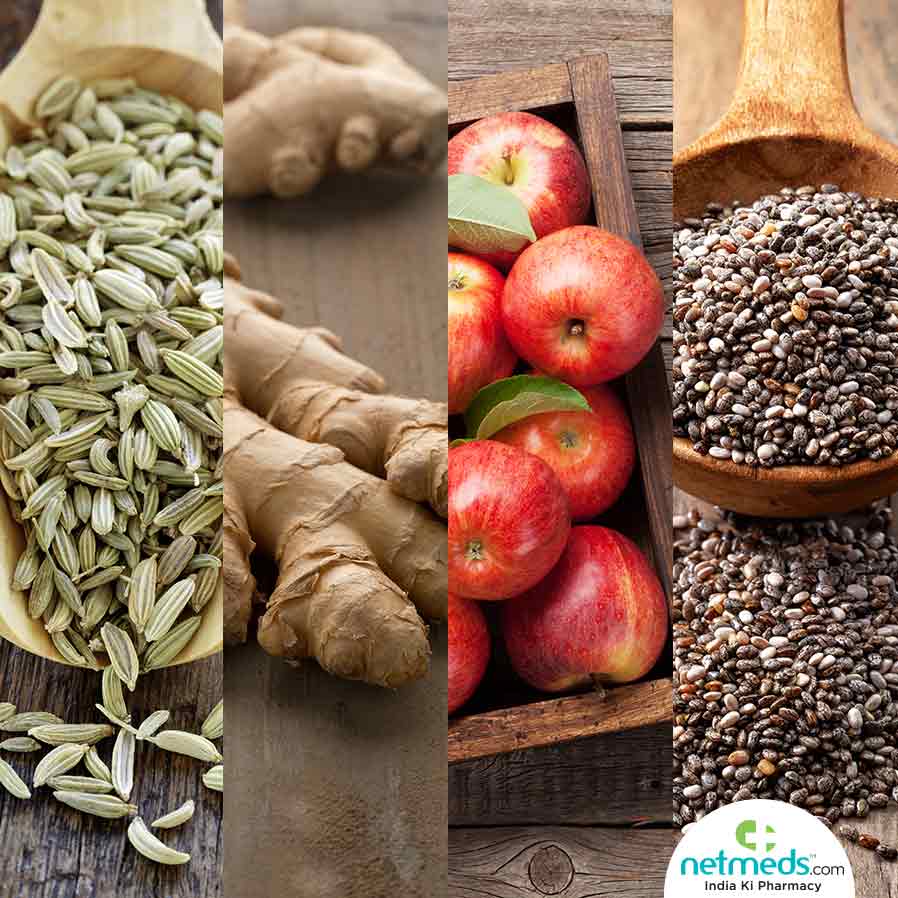
Fennel is a spice that is extensively used in improving the flavour of the dish. The antispasmodic agent in fennel relaxes smooth muscles in the intestine, alleviating various digestive issues like bloating, flatulence and cramping.
Whole Grains
Whole grain cereals such as whole wheat bread, steel-cut oats, quinoa and brown rice are loaded with fibre that helps in easing digestion. The fibre in grains keeps you satiated, adds bulk and lowers the risk of constipation. In addition, some grains act like prebiotics that help feed gut-friendly bacteria.
Ginger
Ginger is one of the best root vegetable/spice widely used in traditional medicine for years as a safe and effective way to alleviate nausea, vomiting, motion sickness, morning sickness, flatulence, loss of appetite and colic issues. However, consume it in moderation, as more than 4 grams of fresh or dried ginger may cause heartburn.
Kimchi
Kimchi is a dish made with cabbage, radish, or onions along with lots of spices. The chief ingredient in kimchi is generally cabbage, which can enhance the growth of healthy bacteria in the colon. The fibre present in cabbage helps in eliminating the waste in regulating bowel movements.
Apple
Apples are loaded with pectin, a soluble fibre that increases the bulk to relieve constipation and diarrhoea. Further on, it also lowers the risk of intestinal infections and inflammation in the colon.
Chia Seeds
Chia seeds are super rich in fibre that forms a gelatin-like substance in your intestine. It works like a prebiotic promoting the growth of gut-friendly bacteria and improves digestion.
Prebiotics are a kind of fibre that is not digested in the small intestine but travels to the colon and is fermented to offer food for gut-friendly bacteria. Good bacteria, or probiotics, need food to survive, and prebiotics are valued as food for probiotics.
The simplest way to get adequate prebiotics into your diet is by consuming plenty of vegetables and fruit. Ensure you get at least 5 servings of vegetables and fruits on a daily basis to augment your gut health.
Prebiotics To Add
Artichokes
It is an impressive source of inulin, a type of fibre that acts as a prebiotic. Adding this vegetable to the meal offers other health benefits like fortifying bone, shielding the brain and regulating blood pressure.
Dragon Fruit
This vividly coloured fruit offers umpteen health incentives, including gut-related ones. Being intrinsically rich in fibre, having dragon fruit on a regular basis treats constipation and improves overall gut health. Add dragon fruit to your smoothie for a yummy, filling and gut-healthy treat.
Garlic
Garlic works amazingly for optimising gut health as a prebiotic, offering food for good bacteria. Further, the potent antibacterial and antiviral qualities of garlic help trigger the immune system and keep you free from diseases.
Frequently Asked Questions
Which foods are best for improving gut digestion?
What foods help improve gut bacteria naturally?
Probiotic-rich foods such as yoghurt, kefir and fermented vegetables, along with prebiotic foods like garlic, onions, bananas and oats, help nourish beneficial gut bacteria.
What should I eat daily for better digestion?
Include fibre-rich fruits, vegetables, whole grains, probiotics and adequate water in your daily diet to support regular bowel movements and healthy digestion.
References:
https://pmc.ncbi.nlm.nih.gov/articles/PMC9455721/
Influence of Foods and Nutrition on the Gut Microbiome and Implications for Intestinal Health
Ping Zhang 1
Sender R., Fuchs S., Milo R. Revised estimates for the number of human and bacteria cells in the body. PLoS Biol. 2016;14:e1002533. doi: 10.1371/journal.pbio.1002533. Postler T.S., Ghosh S. Understanding the holobiont: How microbial metabolites affect human health and shape the immune system. Cell Metab. 2017;26:110–130. doi: 10.1016/j.cmet.2017.05.008.
Arumugam M., Raes J., Pelletier E., le Paslier D., Yamada T., Mende D.R., Fernandes G.R., Tap J., Bruls T., Batto J.M., et al. Enterotypes of the human gut microbiome. Nature. 2011;473:174–180. doi: 10.1038/nature09944.
Frank D.N., St. Amand A.L., Feidman R.A., Boedeker E.C., Harpaz N., Pace N.R. Molecular-phylogenetic characterization of microbial community imbalances in human inflammatory bowel diseases. Proc. Natl. Acad. Sci. USA. 2007;104:13780–13785.
Schroeder B., Bäckhed F. Signals from the gut microbiota to distant organs in physiology and disease. Nat. Med. 2016;22:1079–1089. doi: 10.1038/nm.4185.
Singh R.K., Chang H.W., Yan D., Lee K.M., Ucmak D., Wong K., Abrouk M., Farahnik B., Nakamura M., Zhu T.H., et al. Influence of diet on the gut microbiome and implications for human health. J. Transl. Med. 2017;15:73.
Smits S.A., Leach J., Sonnenburg E.D., Gonzalez C.G., Lichtman J.S., Reid G., Knight R., Manjurano A., Changalucha J., Elias J.E., et al. Seasonal cycling in the gut microbiome of the Hadaz hunter-gatherers of Tanzania. Science. 2016;357:802–806. doi: 1126/science.aan4834.
Jha A.R., Davenport E.R., Gautam Y., Bhandari D., Tandukar S., Ng K.M., Fragiadakis G.K., Holmes S., Gautam G.P., Leach J., et al. Gut microbiome transition across a 2018;16:e2005396. doi: 10.1371/journal.pbio.2005396. Deehan E.C., Yang C., Perez-Muñoz M.E., Nguyen N.K., Cheng C.C., Triador L., Zhang Z., Bakal J.A., Walter J. Precision microbiome modulation with discrete dietary fiber structures directs short-chain fatty acids production. Cell Host Microbe. 2020;27:389–404. doi: 10.1016/j.chom.2020.01.006.
 Previous