Restlessness isn’t always loud or obvious. Sometimes it is just your mind spinning at night, that itch to check your phone for the hundredth time, tense shoulders you can’t shake, or a feeling like you can’t sit still. These days, with everything moving so fast, restlessness slips into our routines almost unnoticed.
Also Read: Yogasanas For Insomnia: 5 Calming Yoga Poses For A Night Of Peaceful Sleep
We try to distract ourselves, scroll through social media, grab a snack, or busy ourselves with anything. But real calm? That is not how you find it. What your body and mind crave is a real pause. This is where yoga steps in.
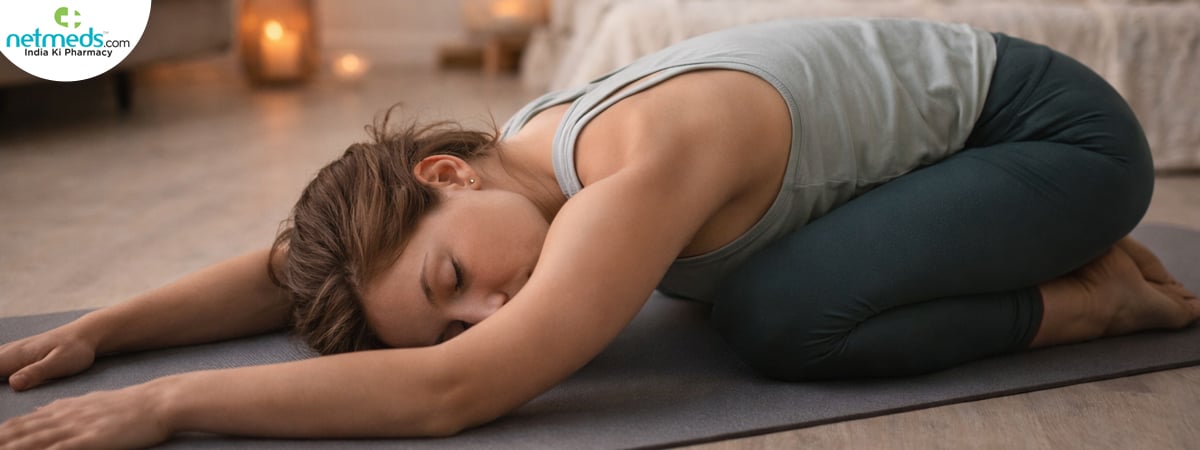
Yoga isn’t about forcing yourself to relax. It is about helping your nervous system shift gears from that wired fight-or-flight mode into a place that feels safe and balanced.
Calm Your Mind And Body With Our Wide-Range Of Anti-Anxiety Supplements!
So, What Is Restlessness, Really?
It’s your body waving a flag, saying, ‘I’m overwhelmed.’ Maybe it is stress, anxiety, too many late nights, too much screen time, caffeine, or just feeling burned out. From a yogic and Ayurvedic view, restlessness often comes from an aggravated Vata dosha. Vata is in charge of movement, thoughts, and the nervous system. When it is out of whack, your mind scatters, your body tenses up, and you feel jumpy and unsettled.
Also Read: Yoga For Mental Health: Get Past Lockdown Blues With These Superb Yoga Poses
Here is the good news: gentle, grounding yoga with slow breathing can help you find calm again.
How does yoga help with restlessness and anxiety? Yoga works on what is really going on, both in your mind and your body. It doesn’t just cover up anxious energy; it helps you let it go.
Here is what yoga does:
Calms your nervous system and lowers stress hormones
Relaxes tight muscles, especially in your neck, shoulders, and hips
Slows your thoughts and helps you tune in to your breath
Supports better sleep and steadier emotions
Grounding racing energy helps you feel centred.
Let us look at five yoga poses that are easy for beginners and perfect for those days you feel restless, anxious, or just worn out.
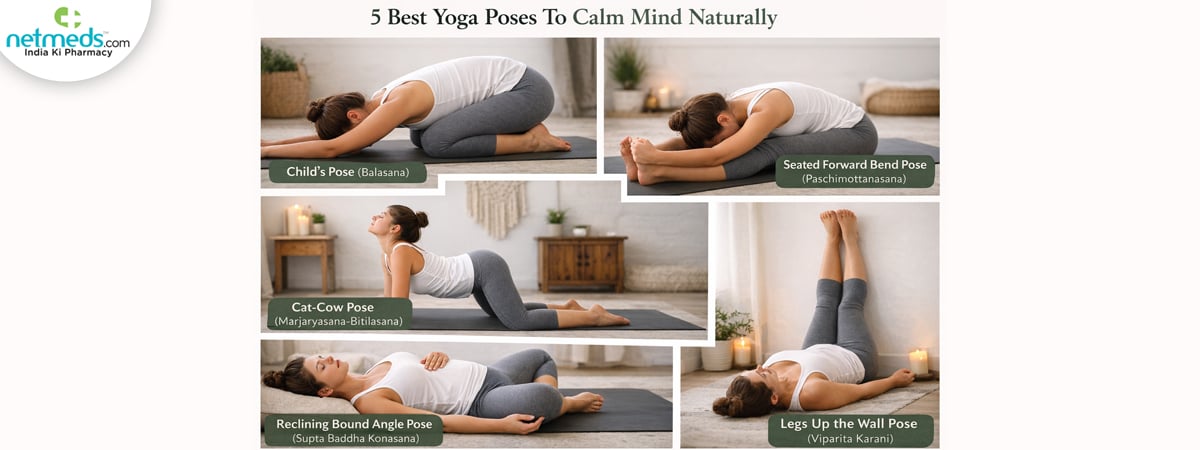
5 Best Yoga Poses To Calm Mind Naturally
Child’s Pose (Balasana)
Kneel, sit back on your heels, and fold forward. Rest your forehead on the mat, with your arms in front or by your sides. Close your eyes. Breathe slowly and deeply for 1–3 minutes.
Benefits:
Signals safety to your nervous system, gently stretches your spine, and gives you a sense of comfort and grounding.
Seated Forward Bend Pose (Paschimottanasana)
Sit with your legs out straight. Inhale, lengthen your spine, and then fold forward from your hips as you exhale. Rest your hands wherever they land. Stay for about a minute.
Benefits:
Draws you inward, calms anxiety, soothes your mind, and stretches your back and hamstrings.
Cat–Cow Pose (Marjaryasana–Bitilasana)
Start on all fours. Inhale, arch your back, and lift your chest (Cow). Exhale, round your spine, and tuck your chin (Cat). Move slowly for 8–12 rounds.
Benefits:
Releases tension in your spine, links breath to movement, and helps restless energy move out of your body.
Reclining Bound Angle Pose (Supta Baddha Konasana)
Lie on your back, bring the soles of your feet together, and let your knees drop open. Use pillows under your knees if you want. Put a hand on your belly. Breathe for 3–5 minutes.
Benefits:
Deeply relaxes your nervous system, eases anxiety, and helps balance your emotions.
Legs Up the Wall Pose (Viparita Karani)
Lie down near a wall, extend your legs up the wall, and let your arms rest by your sides. Close your eyes and settle in for 3–5 minutes.
Benefits:
Soothes your mind, settles restlessness, improves circulation, and helps your body relax for sleep.
Tips For Practising Yoga When You Are Restless
Go for slow, gentle poses instead of rushing through them.
Practice somewhere quiet and dimly lit
Use cushions or bolsters for extra comfort
Even 10–15 minutes can make a difference
Who Benefits from These Poses?
Anyone feeling anxious or mentally unsettled
People struggling with sleep or insomnia
Those dealing with stress or burnout
Anyone feeling emotionally overwhelmed
Folks looking for a natural way to unwind
Precautions While Doing These Poses
Don’t force yourself into any stretch or stay in a pose that feels uncomfortable. If you get dizzy or overwhelmed, take a break. If you have injuries or ongoing health issues, check with a healthcare provider before you start yoga.
Conclusion
In the end, restlessness isn’t a weakness. It is your body and mind asking for care. Yoga gives you a simple, powerful way to slow down, breathe, and reconnect with calm. Practice these five poses regularly, and you will let your nervous system rest, your mind settle, and your body release built-up tension. You don’t have to chase calm. You can invite it in, gently.
Even a few mindful minutes on the mat can make your day feel lighter and your mind feel quieter.
References
- https://www.ncbi.nlm.nih.gov/pmc/articles/PMC4769029/
- https://www.ncbi.nlm.nih.gov/pmc/articles/PMC6144540/
- https://www.frontiersin.org/articles/10.3389/fpsyg.2020.01351/full
 Previous