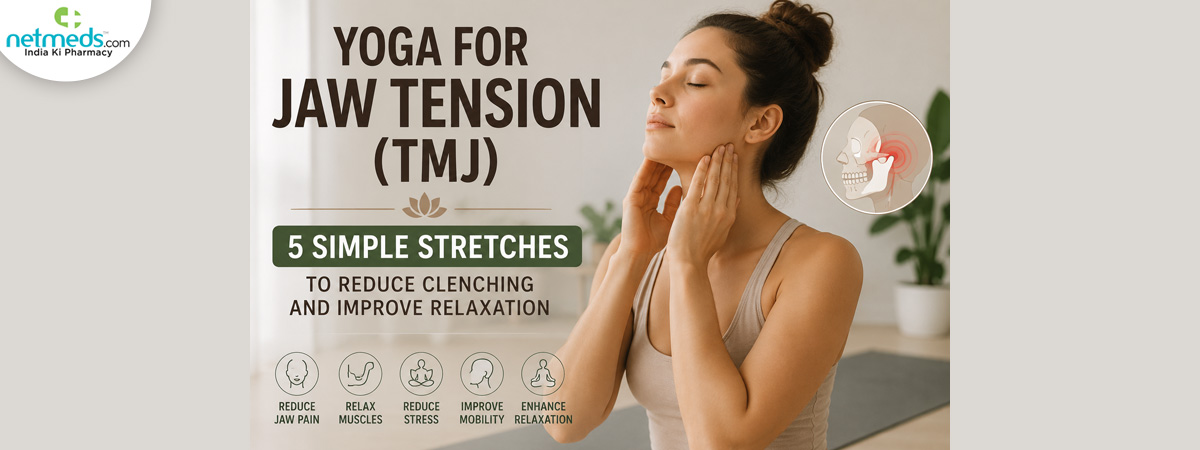
Ever catch yourself clenching your jaw without even realising it? Maybe during work, while scrolling on your phone, or even in your sleep. That tight, achy feeling around your jaw, temples, or ears could be a sign of TMJ (temporomandibular joint) tension.
Jaw tension is more common than you think, especially with rising stress levels, long screen hours, and poor posture. Over time, this constant clenching can lead to headaches, facial pain, difficulty chewing, and even neck stiffness.
The good news? You can ease jaw tension naturally with simple yoga-based stretches. These gentle movements help relax facial muscles, improve blood flow, and reduce stress-related clenching.
Let us get right to it: relax your shoulders, soften your face, and give your jaw the relief it deserves.
Why Jaw Relaxation Matters For TMJ Relief?
Your jaw joint connects your skull to your lower jaw and plays a key role in speaking, chewing, and facial movement. When stress or poor habits strain this joint, problems begin to show up.
When jaw muscles are tight:
Clenching and grinding increase
Pain spreads to the head, neck, and shoulders
Jaw movement becomes restricted
Headaches and ear discomfort may occur
Also Read: Facial Yoga: Nurture Your Inner Glow With These Spectacular Face Exercises
How yoga help in easing jaw tension?
Relaxes facial and jaw muscles
Reduce stress and nervous tension
Enhances mind-body awareness
Promotes overall relaxation

5 Best Yoga Stretches For Jaw Tension (TMJ Relief)
Jaw Release Stretch
Sit comfortably and slowly open your mouth as wide as is comfortable. Place your tongue gently on the roof of your mouth and hold for a few seconds before closing slowly. Repeat 5–10 times.
Benefits:
This stretch helps release tight jaw muscles, improves mobility, and reduces stiffness caused by clenching.
Chin Tuck Stretch
Sit or stand straight. Gently tuck your chin inward as if making a double chin. Hold for 5–10 seconds and release. Repeat several times.
Benefits:
This stretch improves neck alignment and reduces strain on the jaw caused by poor posture.
Neck Side Stretch
Sit upright and tilt your head toward one shoulder. Use your hand to apply gentle pressure for a deeper stretch. Hold for 15–20 seconds and switch sides.
Benefits:
Relieves tension in the neck and jaw muscles, reducing stress-related tightness.
Lion’s Breath (Simhasana)
Sit comfortably, inhale deeply through your nose, then exhale forcefully through your mouth while sticking out your tongue and opening your eyes wide. Repeat 4–6 times.
Benefits:
This powerful release exercise relaxes facial muscles, reduces stress, and relieves jaw tightness instantly.
Shoulder Roll And Relaxation
Sit or stand tall and roll your shoulders slowly backwards and forward. Coordinate with deep breathing for relaxation.
Benefits:
Releases built-up tension in the upper body that contributes to jaw clenching and stress.
Bonus Tips For Better Results
Practice daily for 10–15 minutes
Stay aware of jaw clenching habits
Avoid chewing gum excessively
Maintain good posture while working
Practice deep breathing or meditation
Reduce stress through relaxation techniques
Who Should Practice These Stretches?
People experiencing jaw pain or tightness
Individuals with TMJ discomfort
Those who grind teeth (bruxism)
People under high stress
Anyone with neck and facial tension
Precautions
Avoid forceful jaw movements
Do not overstretch if you feel pain
Practice gently and mindfully
Consult a doctor for severe TMJ disorders
Stop immediately if discomfort increases
Note: These exercises are supportive, not a replacement for medical treatment.
Conclusion
Jaw tension might seem like a small issue, but it can affect your comfort, sleep, and overall well-being. The good news is that simple yoga stretches can make a noticeable difference when practiced regularly.By relaxing your jaw, improving posture, and reducing stress, you are not just easing pain; you are restoring balance to your body.
References:
1. https://www.ncbi.nlm.nih.gov/pmc/articles/PMC5452227/
2. https://www.health.harvard.edu/pain/temporomandibular-disorders
 Previous