Does your child struggle to sit still, concentrate on homework or complete tasks without getting distracted? Attention-deficit/hyperactivity disorder (ADHD) can affect focus, impulse control and activity levels in children.
While yoga cannot cure ADHD, it can be a useful complementary practice that combines movement, balance, breathing and mindfulness. Some research suggests yoga may support attention and reduce hyperactivity and impulsive behaviors, although more high-quality research is needed.
Also Read: Decreased Concentration: Brilliant Yoga Poses To Keep Distractions At Bay
Enhance Your Memory Capacity With These Brain-Boosting Ayurvedic Formulations!
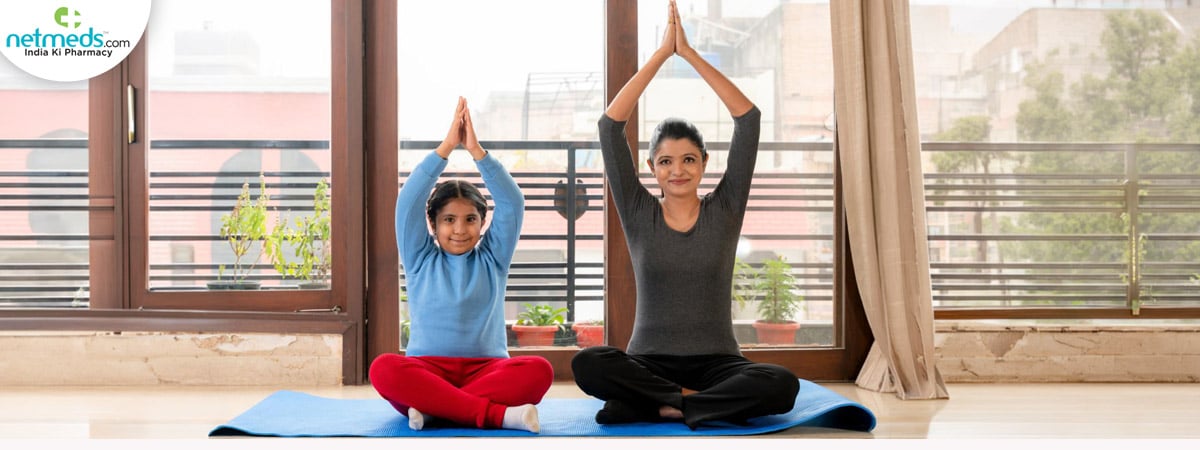
Can Yoga Help Children With ADHD?
Yoga encourages children to focus on their breathing, body position and movements. Regular practice may help:
Improve body awareness
Encourage mindful attention
Develop balance and coordination
Introducing healthy movement into daily routines
Yoga should complement, not replace, professional ADHD treatment, behavioural strategies, school support or prescribed medication.
Also Read: Attention Deficit Hyperactivity Disorder: Causes, Types, Symptoms And Treatment
How Can Yoga Support Attention?
Regular yoga practice may help children:
Practise sustained attention
Holding a pose encourages children to focus on one movement or body position for a short period.
Develop body awareness
Yoga teaches children to notice their posture, balance, breathing and physical sensations.
Encourage controlled breathing
Slow breathing can create a calming pause between activity and rest.
Improve balance and coordination
Balancing poses require concentration and controlled movement.
Build a structured routine
A short daily yoga session can provide predictable movement and mindfulness.
Physical exercise more broadly has also been associated with improvements in attention and executive function among children with ADHD.
Here Are Five Simple Yoga Poses For Children With Adhd
These poses are intended as gentle, beginner-friendly movements. Children should practise under appropriate adult supervision and never be forced into a position.
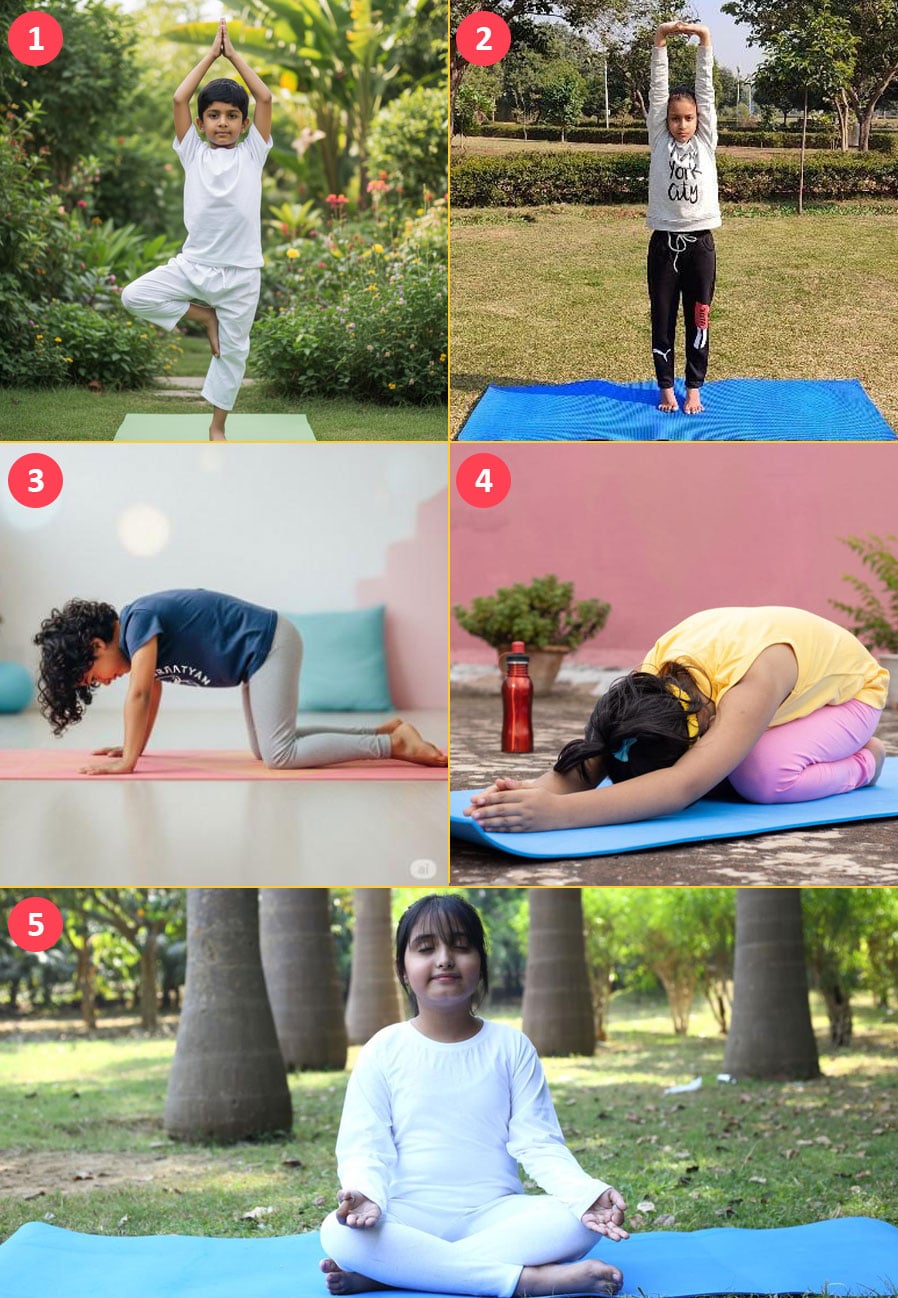
5 Best Yoga Poses For ADHD
Tree Pose (Vrikshasana)
Stand upright, shift your weight onto one leg and place the other foot against the inner calf or thigh, avoiding the knee. Bring your hands together and hold for 10–20 seconds.
Benefits:
The Tree pose encourages balance, concentration, coordination and body awareness.
Mountain Pose (Tadasana)
Stand with your feet comfortably apart, spine tall and shoulders relaxed. Take slow, comfortable breaths for 20–30 seconds.
Benefits:
Tadasana promotes stillness, posture awareness and mindful breathing.
Cat-Cow Pose (Marjaryasana-Bitilasana)
Start on your hands and knees. Alternate between gently lifting the chest and rounding the spine while coordinating each movement with your breath. Repeat 5–8 times.
Benefits:
This pose encourages coordination between breathing and movement while gently mobilising the spine.
Child's Pose (Balasana)
Kneel and gently sit back towards your heels. Fold forward and rest your forehead on the mat or a cushion. Stay for 20–30 seconds while breathing normally.
Benefits:
The Child’s pose provides a calming resting posture and encourages relaxation and breath awareness.
Easy Pose (Sukhasana) With Deep Breathing
Sit comfortably cross-legged with your back relaxed and upright. Place your hands on your thighs and focus on slow, natural breathing for 1–3 minutes.
Benefits:
The Easy pose helps children practise stillness, breath awareness and mindful attention.
Simple Tips To Make Yoga Enjoyable
Start with just 5–10 minutes.
Keep sessions playful and age-appropriate.
Use animal poses, stories or yoga games.
Practise regularly rather than doing long, occasional sessions.
Let children choose between different poses.
Focus on participation rather than perfect technique.
Practise together as a family.
Try This 10-Minute Routine
Mountain Pose: 1 minute
Tree Pose: 30 seconds per side
Cat-Cow: 1–2 minutes
Child's Pose: 1 minute
Easy Pose + Slow Breathing: 2–3 minutes
Precautions
Yoga is generally suitable for many children when practised appropriately, but safety comes first.
Children should practise under adult supervision.
Avoid forcing a child to hold a pose.
Stop if there is pain, dizziness or difficulty breathing.
Use a non-slip yoga mat.
Avoid advanced poses without qualified instruction.
Children with injuries or significant medical conditions should seek professional advice before starting.
Children with ADHD should not stop prescribed medication or other treatment in favour of yoga.
If a child becomes frustrated, shorten the session or choose a simpler activity.
Note: Yoga should be considered a complementary wellness practice, not a replacement for professional ADHD assessment or treatment. Current evidence suggests potential benefits, but research remains limited.
Conclusion
Yoga can be a simple and enjoyable addition to an ADHD-friendly routine. Tree Pose, Mountain Pose, Cat-Cow, Child's Pose and Easy Pose with slow breathing can help children practise balance, body awareness, controlled breathing and focused attention.
Research on yoga for ADHD is promising but still developing, so consider it a supportive practice rather than a stand-alone treatment.
 Previous