


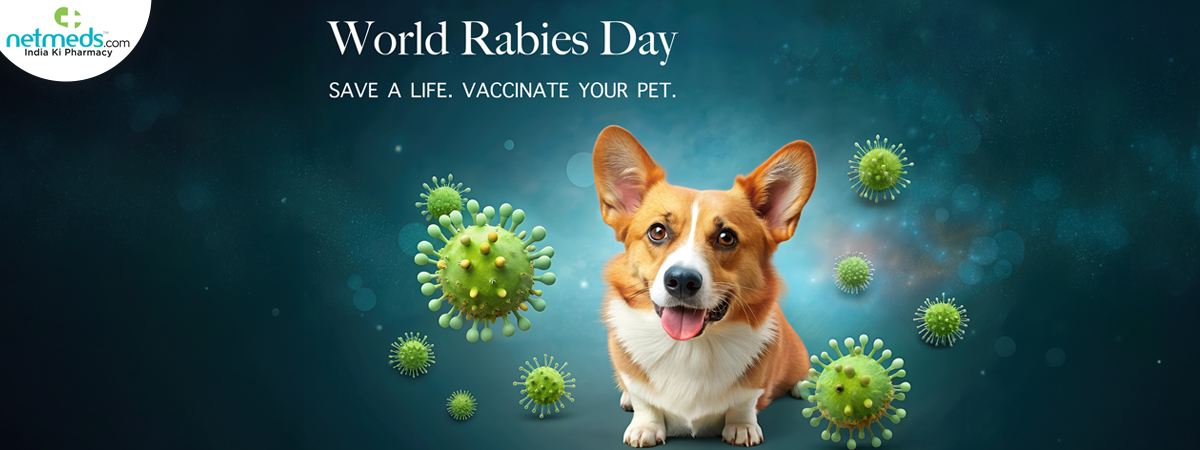
Observed every year on 28 September, World Rabies Day is a reminder of this deadly disease that affects many lives every year. Every life lost to rabies is largely preventable through timely vaccination, awareness, and responsible care. It is a day to speak up for both people and animals, recognise the warning signs, and take simple but life-saving steps to stop the spread before it is too late. Rabies is a disease that can jump from animals to humans. While rabies is usually fatal once symptoms appear, many deaths can be avoided if the right care is given quickly after an exposure. The goal of World Rabies Day is to raise awareness about rabies and to motivate people to take steps that stop rabies in both people and animals.
Also Read: Rabies In Pets: Know The Underlying Cause Of Your Pet’s Aggressive Behaviour

What Is Rabies?
Rabies is an infection that attacks the central nervous system. Rabies spreads mainly through the saliva of an animal, usually after a bite. A scratch or a lick that touches a cut or a mucous membrane can also spread rabies. Dogs cause most human rabies worldwide. WHO says that dog bites and scratches make up about 99% of human rabies cases. Vaccinating dogs is therefore a part of stopping human rabies. Rabies becomes very dangerous because symptoms show up only after the virus reaches the system. When symptoms appear, rabies is always fatal. Proper post‑exposure prophylaxis, or PEP, can stop the virus before it reaches that stage.
Also Read: Puppy Proofing: Protect Your Pet From These 5 Potential Life-Threatening Dangers
What Is the Theme of World Rabies Day 2026?
The theme for World Rabies Day 2026 is ‘Stronger Together.’ Human health, animal health, and the environment are linked, so rabies can only be prevented with proper planning and strategy. Effective prevention to stop the spread from the start includes:
· Vaccinating dogs against rabies.
· Teaching communities how to stay safe from animal bites.
· Making post‑exposure treatment faster and easier.
· Building rabies tracking and reporting.
· Encouraging care for animals.
· Working together between people health workers and animal doctors.
· WHO says mass dog vaccination is a cheap way to stop rabies where it starts.
Why Is World Rabies Day Important?
Rabies is still a health problem, especially in parts of Asia and Africa. Children are more at risk because they often play with animals and may not report a bite or scratch right away. Thinking an animal bite is not serious if the wound looks small or if the animal looks fine can be dangerous. The main message is that any exposure to a rabies‑infected animal must never be ignored. Washing the wound fast and getting a check can change a preventable exposure into a fatal disease.
Common Rabies Myths and Facts
Myth 1: Stray dogs can spread rabies
Fact: Rabies can be in both pet dogs and wild animals. Dogs are the source of human rabies worldwide, but if any other mammal is infected, a medical check is still needed.
Myth 2: A tiny scratch cannot give rabies
Fact: A dog bite is not the only way to get rabies. Scratches or cuts can be dangerous if infected saliva touches the wound. WHO says to see a doctor right away if this happens.
Myth 3: No bleeding means no risk
Fact: Bleeding is not the only sign of rabies risk. WHO says even a small scratch that does not bleed is a Category II exposure, which needs vaccination.
Myth 4: Just washing a bite is fine
Fact: Washing the wound is first aid, but it does not replace a medical check. Depending on the bite, rabies shots or special antibodies might also be needed.
Myth 5: Traditional herbs can stop rabies after a bite
Fact: Sprinkling chilli, plant juice, acids, or alkaline stuff on a bite is not advised. Wash the wound well with soap and water. Get a doctor checked quickly.
Myth 6: Wait for symptoms before treatment
Fact: Waiting is dangerous. When symptoms show, rabies is always fatal. Start PEP after a risky exposure, not after symptoms appear.
What Should You Do After an Animal Bite or Scratch?
If you are bitten or have touched a rabies‑infected animal, act fast.
Wash the wound
Wash the area thoroughly with soap and running water for at least fifteen minutes. If soap is unavailable, flush the wound extensively with water.
Do not apply substances
Do not put chilli powder, acids, alkalis, plant juices or other irritants on the wound. These substances can damage tissue. Do not prevent rabies infection.
Seek care urgently
Go to a healthcare facility for a proper exposure assessment. Do not decide on your own that vaccination is unnecessary because the wound appears minor. For Category II exposure, such as scratches or abrasions without bleeding, WHO recommends wound washing and immediate rabies vaccination. For Category III exposure, which includes bites or scratches and saliva contamination of broken skin or mucous membranes, wound washing, rabies vaccination, and rabies immunoglobulin or monoclonal antibodies are required when indicated.
Follow the recommended vaccination schedule
If rabies vaccination is advised, complete the recommended course according to the instructions of the healthcare professional. The appropriate regimen depends on factors such as the exposure. Whether the person has previously received rabies vaccination. India's National Rabies Control Programme provides information on rabies vaccination, post‑exposure care and health facilities that provide anti‑rabies vaccines and rabies immunoglobulin.
Also Read: Dog Vaccination/Sterilisation: Importance, Bite Prevention And Safety Tips
How Can Rabies Be Prevented?
Rabies prevention does not begin after a bite. It starts before exposure occurs. Here is what can be done:
Vaccinate dogs
Regular rabies vaccination of dogs is one of the important measures for preventing human rabies. Community‑level dog vaccination programmes are particularly important for reducing transmission.
Teach children animal behaviour
Children should be taught not to tease, disturb, chase or approach unfamiliar animals. Children should also be encouraged to tell an adult if an animal bites or scratches them.
Avoid contact with unfamiliar animals
Even animals that appear healthy should not be handled without a reason. Avoid animals that are behaving unusually, appear sick, or are injured.
Know what to do after exposure
Knowing the first‑aid steps before an incident occurs can prevent dangerous delays. Washing the wound immediately and seeking medical care are central to rabies prevention.
Support animal care
Responsible pet ownership includes veterinary care and rabies vaccination. Community efforts involving animal‑health professionals, healthcare workers and local authorities are also important for rabies control.
Who May Need Rabies Pre‑Exposure Vaccination?
Pre‑exposure prophylaxis may be recommended for people who have a continuing, frequent or increased risk of exposure to rabies. This can include laboratory workers, animal‑health professionals, wildlife workers and others whose activities involve direct contact with potentially infected animals. In some circumstances PEP may also be considered for people travelling to or living in areas where rabies is common and access to timely post‑exposure treatment is limited. However, pre‑exposure vaccination does not eliminate the need for assessment after a possible rabies exposure.
Frequently Asked Questions
Can rabies spread through intact skin?
Rabies virus is not transmitted through skin. Exposure becomes a concern when saliva or nervous tissue from an infected animal contacts a bite, scratch, broken skin or mucous membrane.
What is the first thing to do after a dog bite?
Immediately. Flush the wound with soap and running water for at least fifteen minutes, then seek medical attention for rabies exposure assessment and appropriate post‑exposure prophylaxis.
Can rabies be prevented after an animal bite?
Yes. Appropriate post‑exposure prophylaxis, including wound care, rabies vaccination, and when indicated, rabies immunoglobulin or monoclonal antibodies, can prevent rabies from developing after exposure.
Does vaccination of dogs help prevent rabies?
Yes. Vaccinating dogs interrupts transmission at its source and is a key strategy for preventing human rabies.
Conclusion
On World Rabies Day, the 2026 theme, stronger together, reflects a reality. Rabies prevention requires action at all levels. Vaccinating dogs, educating communities, preventing animal contact, and responding quickly to bites and scratches all contribute to reducing human rabies deaths. For an individual who has been potentially exposed, the important steps are simple. Wash the wound immediately for at least fifteen minutes and seek medical care without delay. Rabies is preventable, but the key to survival lies in acting swiftly before symptoms appear because when it comes to rabies, acting early can make the difference between life and death.
References:
Rabies: the clinical features, management and prevention of the classic zoonosis
Mary J Warrell David A Warrell
https://pmc.ncbi.nlm.nih.gov/articles/PMC4954532/
https://www.ncbi.nlm.nih.gov/books/NBK448076/
https://rabiesfreeindia.mohfw.gov.in/
https://www.woah.org/en/disease/rabies/
https://rabiesfreeindia.mohfw.gov.in/faq
https://www.sciencedirect.com/science/article/pii/S2213398425002088
https://ijmr.org.in/rabies-elimination-in-india-pathways-from-vision-to-reality/
https://www.ijpsjournal.com/article/A+Review+on+Rabies+Virus+and+Its+Treatment+Approaches
 Previous


