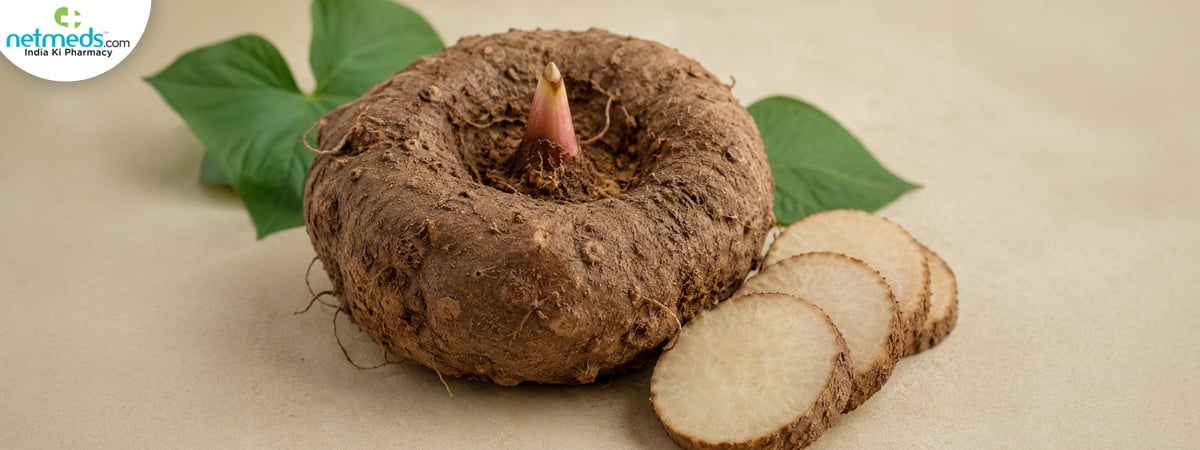
Konjac root has gained popularity in recent years as a high-fibre food, especially among people opting for low-calorie alternatives to conventional noodles and dietary supplements. It is a root vegetable that grows widely in parts of Asia and is known for its starchy corm, a tuber-like stem that grows underground.
Derived from the Amorphophallus konjac plant, konjac root contains a soluble dietary fibre called glucomannan, which absorbs water and forms a gel-like substance in the digestive tract. But what exactly is konjac root, and does it help with weight management, digestion and cholesterol? Explore this article to learn more about konjac root, benefits, nutrition, uses and side effects.
(Optimise Your Physical Health And Manage Weight, With Our Extensive Array Of Fiber Supplements!)
What Is Konjac Root?
Konjac root is the underground corm or tuber of the Amorphophallus konjac plant, which is native to parts of Southeast Asia. It has been traditionally used as a food ingredient and is now widely processed into konjac flour and glucomannan.
Glucomannan is a viscous, water-soluble dietary fibre and is the primary component responsible for many of konjac's nutritional properties. It can absorb substantial amounts of water, which gives konjac products their characteristic gel-like texture. Konjac is commonly used to make konjac noodles, shirataki noodles, rice-like products, jelly products, flour and dietary fibre supplements.
Konjac Root Nutrition
Konjac root is highly valued for its glucomannan content and low-calorie nature. Processed konjac products can contain very little digestible carbohydrate and are often used as alternatives to traditional noodles and rice.
The nutritional composition varies depending on whether you consume fresh konjac, konjac flour, noodles, or a glucomannan supplement.
Also Read: Fiber Supplements For Weight Loss: Benefits, Uses, And Side Effects Explained
Potential Health Benefits of Konjac Root
Supports Digestive Health
Glucomannan is a soluble fiber, bulk-forming fibre that can absorb water and increase stool bulk. This helps regularise bowel movements and relieve constipation. However, increasing fibre intake too quickly may cause digestive discomfort, so it is better to introduce konjac gradually and consume adequate fluids.
Manages Weight
Konjac root benefits are potential in weight management. Glucomannan absorbs water and expands, which may promote feelings of fullness or satiety. However, konjac should not be considered a magic weight-loss ingredient. Evidence from clinical trials has been mixed. A systematic review of randomised trials found that glucomannan did not produce a statistically significant reduction in body weight compared with placebo. Therefore, konjac may be used as part of a balanced, calorie-conscious diet rather than as a standalone weight-loss solution.
Maintain Cholesterol Levels
Several studies suggest that glucomannan may help reduce total and LDL (“bad”) cholesterol. A systematic review and meta-analysis of randomised controlled trials found significant reductions in LDL and non-HDL cholesterol with konjac glucomannan. The FDA has also recognised scientific evidence suggesting that glucomannan can help reduce blood cholesterol.
Manages Diabetes
Glucomannan is a soluble fibre, which may help slow digestion and carbohydrate absorption, potentially regulating post-meal blood glucose levels. Some clinical research has reported reductions in fasting blood glucose with glucomannan supplementation.
Enhances Heart Health
Glucomannan is potentially helpful in controlling cholesterol levels and contributes to overall heart health. Research has particularly focused on its effects on LDL and total cholesterol.
Also Read: Fiber Supplements For Weight Loss: Benefits, Uses, And Side Effects Explained
What Are the Uses of Konjac Root?
Common uses include:
Konjac noodles, or shirataki noodles, which are used as an alternative to traditional noodles.
Konjac rice as a lower-calorie rice alternative.
Konjac flour as a thickening and gelling ingredient.
A glucomannan dietary supplement is available in capsules and powdered forms.
Glucomannan can be used as a texture-modifying or thickening ingredient.
Konjac's ability to form a gel makes it useful in making jelly and gel-based products.
Konjac glucomannan is widely used as a food additive and dietary supplement because of its thickening and water-binding properties.
Konjac Root for Weight Loss: Does It Work?
Konjac is frequently marketed as a natural weight-loss aid, mainly because glucomannan can increase satiety. However, the evidence does not support dramatic weight loss.
The NIH's current consumer information on weight-loss supplements states that glucomannan has little to no effect on weight loss, although it may help lower total cholesterol, LDL cholesterol, triglycerides and blood sugar levels.
For sustainable weight management, konjac should be combined with a balanced diet, adequate protein and fibre, regular physical activity and appropriate calorie intake.
Side Effects Of Konjac Root
Konjac and glucomannan are generally tolerated when consumed appropriately, but some people may experience digestive symptoms.
Bloating
Abdominal discomfort
Diarrhoea or loose stools
Constipation
Belching
These effects are more likely when large amounts are consumed or when fibre intake is increased suddenly.
Glucomannan expands considerably when it encounters water. Therefore, adequate fluid intake is essential when using glucomannan supplements. Insufficient fluid can increase the risk of blockage or choking.
People with swallowing difficulties or narrowing of the oesophagus should avoid such products unless specifically advised by a healthcare professional.
Konjac-containing mini jelly products have also been associated with choking concerns because of their shape, texture and ability to remain intact in the mouth.
Konjac Root vs Glucomannan: What Is the Difference?
Although the terms are sometimes used interchangeably, they are not the same.
Konjac root refers to the edible underground part of the Amorphophallus konjac plant.
Glucomannan is the major soluble dietary fibre extracted from konjac root and used in foods and dietary supplements.
In simple terms, konjac root is the source, while glucomannan is its key fibre component.
Frequently Asked Questions About Konjac Root
Is Konjac Root Good For Weight Loss?
Konjac glucomannan may increase feelings of fullness, but clinical evidence does not show a meaningful or consistent weight-loss effect. It should be considered an adjunct to a healthy diet and exercise rather than a weight-loss treatment.
Is Konjac Root Safe To Eat Every Day?
Konjac foods can generally be included as part of a balanced diet. However, concentrated glucomannan supplements should be taken according to product directions, with sufficient fluid. Consult a healthcare provider if you have swallowing or digestive problems or take regular medication.
Is Konjac Root Keto-Friendly?
Many konjac noodle products are very low in digestible carbohydrates and are commonly included in low-carbohydrate diets. However, always check the nutrition label because formulations can differ between products.
Conclusion
Konjac root is a fibre-rich ingredient best known for its glucomannan content. It can be used to make low-calorie noodles and other foods and may support digestive health, satiety and healthy cholesterol levels. However, claims that konjac alone causes significant weight loss are not well supported by clinical evidence. People with swallowing difficulties, digestive conditions, or those taking medications should consult a healthcare professional before using concentrated supplements.
References:
https://pmc.ncbi.nlm.nih.gov/articles/PMC9858196/
Konjac Glucomannan: An Emerging Specialty Medical Food to Aid in the Treatment of Type 2 Diabetes Mellitus
Yimeng Fang 1,†, Jiahui Ma 1,†, Pengyu Lei 1, Lei Wang 1, Junying Qu 1, Jing Zhao 1, Fan Liu 1, Xiaoqing Yan 2, Wei Wu 3, Libo Jin 1,4, Hao Ji 1, Da Sun 1,5,*
https://www.sciencedirect.com/science/article/abs/pii/S2212619821000103
Recent progress in biological activities and health benefits of konjac glucomannan and its derivatives
Qiwei D , Jianhua Liu, Yuting Ding
https://www.frontiersin.org/journals/plant-science/articles/10.3389/fpls.2025.1530814/full
 Previous