Have you ever heard adults say, ‘Wash your hands; there are germs everywhere!’ and wondered what those germs actually are? The truth is, germs are tiny living things that are so small we cannot see them without a microscope. Even though they are invisible to our eyes, they can live on surfaces, in the air, and even inside our bodies.
Some germs are harmless, and a few are even helpful. But certain germs can make us feel sick, causing problems like colds, coughs, stomach aches, or infections. Learning about germs helps kids understand why hygiene habits such as washing hands and covering their mouths when coughing are so important.
Also Read: Infectious Diseases: Causes, Symptoms And Treatment
Let us explore what germs are, how they spread, and how kids can protect themselves from getting sick.
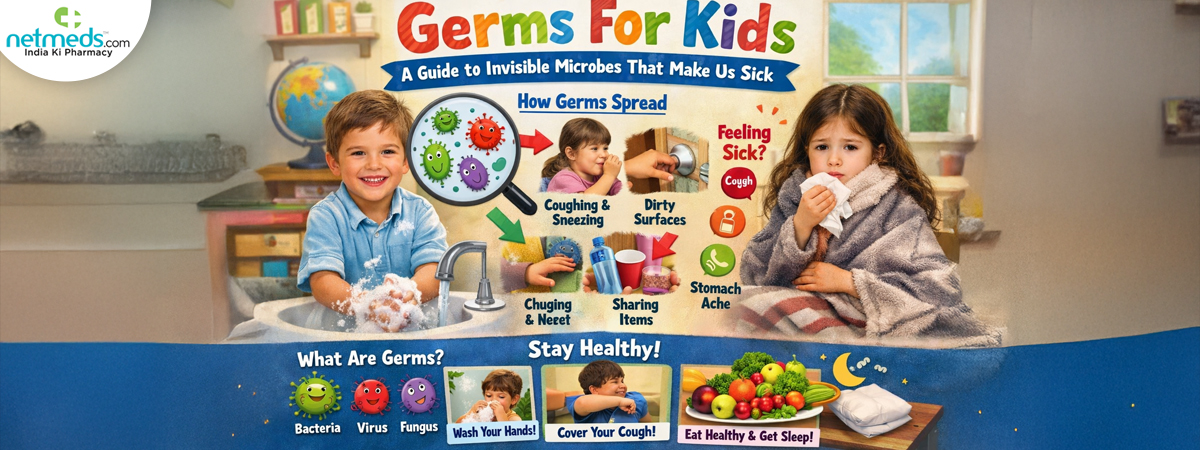
What Are Germs?
Germs are tiny microorganisms that live almost everywhere around us. They are so small that millions of them could fit on the tip of a pencil. Germs can live in the air, on food, on our skin, and on everyday objects like toys, phones, and door handles.
There are four main types of germs:
Bacteria:
Some bacteria are helpful and help our bodies digest food, but others can cause infections.
Viruses:
Viruses are germs that can cause illnesses like the common cold or flu.
Fungi:
These germs include moulds and yeasts that sometimes cause skin infections.
Protozoa:
These are single-celled organisms that live in water and can occasionally cause stomach infections.
Even though germs sound scary, remember that not all germs are bad. Many things help our bodies stay healthy.
Where Do Germs Live?
Germs are found almost everywhere around us. Since they are microscopic, we cannot see them, but they can easily spread from place to place.
Common places where germs live include:
On hands and skin
On toys and school desks
On doorknobs and light switches
In the air when someone coughs or sneezes
On food that is not properly washed or cooked
Because germs travel easily, it is important to keep things clean and practice good hygiene habits.
How Do Germs Spread?
Germs can move from one person to another in many ways. This is called germ transmission.
Here are some common ways germs spread:
Touching contaminated surfaces:
If someone touches a surface with germs and another person touches the same spot, the germs can spread.
Coughing and sneezing:
When someone coughs or sneezes, tiny droplets carrying germs travel through the air.
Sharing personal items:
Sharing water bottles, utensils, or towels can pass germs from one person to another.
Not washing hands:
Dirty hands can easily transfer germs to food, eyes, nose, or mouth.
Signs That Germs Are Making You Sick
When harmful germs enter the body, the immune system works hard to fight them. Sometimes this can cause symptoms such as:
Fever
Cough or cold
Sore throat
Feeling tired or weak
These symptoms are signs that your body is working to fight off the germs.
How Can Kids Protect Themselves From Germs?
The good news is that there are simple habits that can help keep germs away and protect your health.
Wash Your Hands Often
Handwashing is one of the best ways to remove germs. Wash your hands with soap and water for at least 20 seconds, especially before eating and after using the bathroom.
Also Read: Hand Sanitizer: All You Need To Know About This Water-less Disinfectant
Cover Your Cough Or Sneeze
Always cover your mouth and nose with a tissue or your elbow when you cough or sneeze. This prevents germs from spreading in the air.
Avoid Touching Your Face
Germs often enter the body through the eyes, nose, or mouth, so try not to touch your face with unwashed hands.
Eat Healthy Foods
Eating fruits, vegetables, and healthy meals helps keep your immune system strong, making it easier for your body to fight germs.
Get Enough Sleep
Sleep helps the body recharge and fight infections more effectively.
Why Is Good Hygiene Important?
Practising good hygiene habits helps stop germs from spreading. When kids wash their hands, keep their surroundings clean, and follow healthy habits, they protect not only themselves but also their friends and family.
Schools and homes that encourage good hygiene help reduce the chances of illnesses spreading quickly.
Conclusion
Germs may be invisible, but they play a big role in our everyday lives. While some germs are helpful, others can make us sick if they enter our bodies. Understanding how germs spread helps kids learn why handwashing, cleanliness, and healthy habits are so important.
By practising simple hygiene habits every day, kids can stay healthier, stronger, and ready to enjoy school, playtime, and all the fun activities they love.
Sometimes, the smallest habits, like washing your hands, can make the biggest difference in staying healthy.
References
- https://www.cdc.gov/handwashing/why-handwashing.html
- https://kidshealth.org/en/kids/germs.html
- https://www.who.int/news-room/questions-and-answers/item/coronavirus-disease-children-and-covid-19
 Previous