Have you ever noticed how stress, fear, or difficult experiences seem to stay in your body long after the moment has passed? You may feel tension in your shoulders, heaviness in your chest, or a constant sense of unease that is hard to explain. This is because trauma does not just affect the mind; it lives in the body too.
While therapy and professional support are essential for deep healing, gentle practices like trauma-informed yoga can offer a safe and supportive way to reconnect with your body. Unlike regular yoga, this approach focuses on creating a sense of safety, control, and awareness, helping individuals release stored tension at their own pace.
Also Read: Yoga For Mental Health: Natural Ways To Reduce Stress And Anxiety
Trauma-informed yoga is not about perfect poses or pushing your limits. It is about listening to your body, moving mindfully, and rebuilding a sense of trust within yourself. With consistent practice, it can help calm the nervous system, reduce emotional overwhelm, and promote a deep sense of inner peace.

What Is Trauma-Informed Yoga?
Trauma-informed yoga is a gentle, mindful approach to yoga that is specifically designed to support individuals who have experienced emotional or physical trauma. It prioritises safety, choice, and body awareness over physical performance.
This form of yoga focuses on:
Creating a safe and non-judgmental environment
Encouraging slow, controlled movements
Using breathwork to regulate emotions
Allowing personal choice and comfort in every pose
Unlike traditional yoga classes, there is no pressure to ‘push through’ discomfort. The goal is to help you feel grounded, present, and in control of your body.
Also Read: Yoga for Anger Management: 5 Soothing Poses To Release Stress And Frustration
How Does Trauma-Informed Yoga Help Healing?
Trauma can dysregulate the nervous system, keeping the body stuck in a constant state of ‘fight, flight, or freeze.’ Trauma-informed yoga helps gently reset this response.
Here is how it supports healing:
Calms the nervous system and reduces stress hormones
Improves body awareness and emotional regulation
Releases stored tension and physical tightness
Encourages mindful breathing and relaxation
Builds a sense of safety and self-trust
Over time, this practice can help you respond to stress with more calmness and resilience.
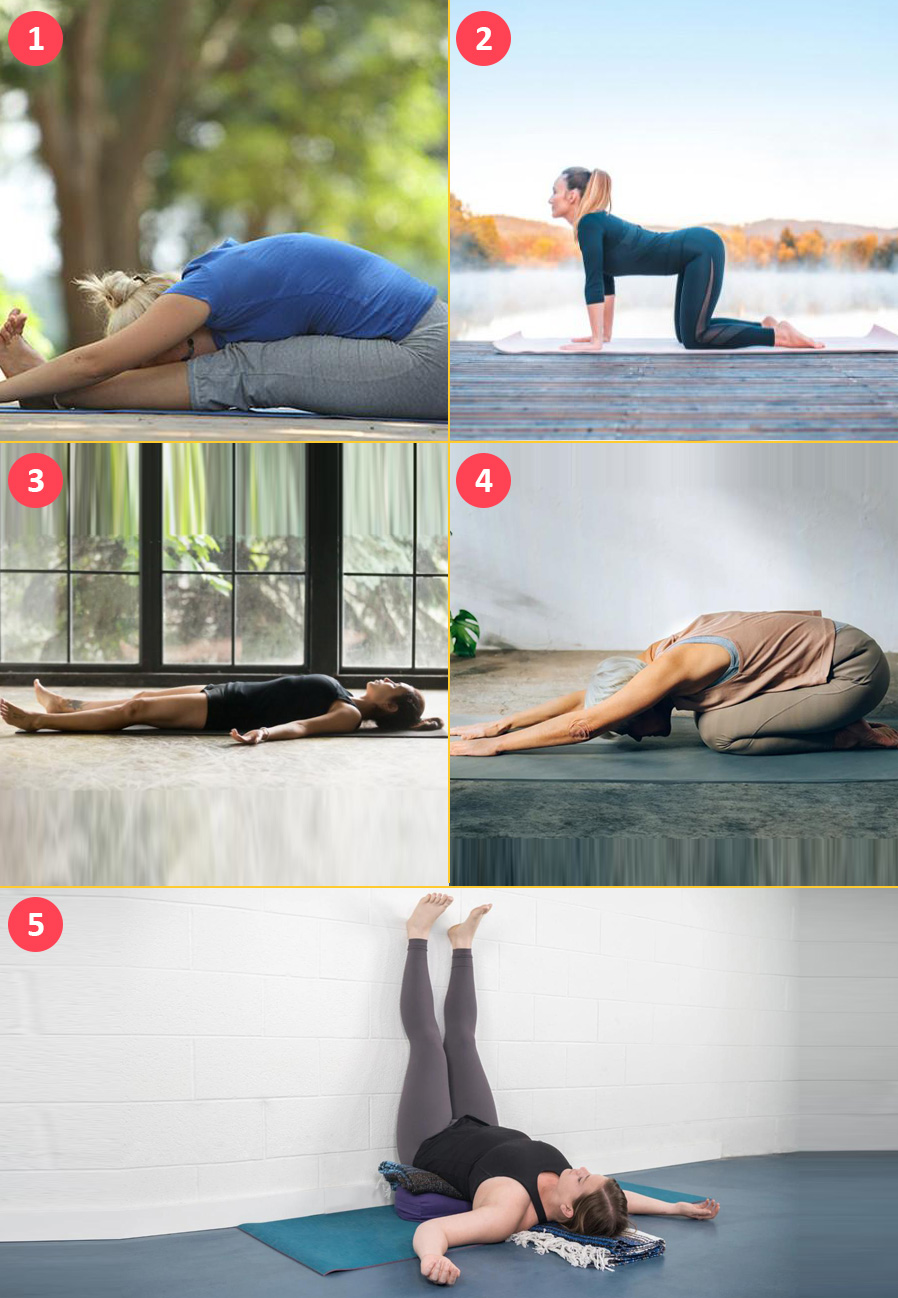
5 Calming Yoga Poses For Healing Through Movement
These poses are gentle, grounding, and suitable for beginners. Move slowly, breathe deeply, and stop if anything feels uncomfortable.
Child’s Pose (Balasana)
Kneel on the floor, sit back on your heels, and slowly fold forward, resting your forehead on the mat. Extend your arms in front or keep them beside your body.
Benefits:
This deeply grounding pose promotes a sense of safety, calms the mind, and helps release tension from the back and shoulders.
Cat-Cow Pose (Marjaryasana–Bitilasana)
Come onto all fours. Inhale as you arch your back (Cow Pose), and exhale as you round your spine (Cat Pose). Move slowly with your breath.
Benefits:
This gentle flow releases stored tension in the spine and improves breath awareness, helping regulate emotional responses.
Legs-Up-The-Wall Pose (Viparita Karani)
Lie on your back and extend your legs up against a wall. Rest your arms comfortably by your sides and close your eyes.
Benefits:
A deeply restorative pose that calms the nervous system, reduces anxiety, and promotes relaxation.
Seated Forward Bend (Paschimottanasana)
Sit with your legs extended in front. Gently hinge forward from your hips and reach toward your feet while keeping your spine long.
Benefits:
This pose encourages introspection, reduces mental restlessness, and helps release emotional tension stored in the body.
Corpse Pose (Savasana)
Lie flat on your back with your arms relaxed by your sides. Close your eyes and focus on slow, natural breathing.
Benefits:
Savasana allows complete relaxation, helping the body and mind integrate the effects of the practice and restore balance.
Tips For Practicing Trauma-Informed Yoga Safely
To get the most out of your practice, keep these points in mind:
Choose a quiet, comfortable, and safe environment
Focus on slow, steady breathing
Move at your own pace without forcing any posture
Keep your eyes open or closed based on comfort
Practice regularly, even for 10–15 minutes a day
Allow yourself to pause or skip poses when needed
Consistency and self-compassion are key to healing.
Who Can Benefit From Trauma-Informed Yoga?
This practice can be helpful for:
Individuals dealing with stress, anxiety, or emotional overwhelm
Those recovering from trauma or difficult life experiences
People experiencing chronic tension or fatigue
Anyone seeking a gentle, mindful approach to wellness
Even if you are new to yoga, this approach is accessible and supportive for all levels.
Precautions
While trauma-informed yoga is gentle, it is important to practice mindfully:
Avoid forcing your body into uncomfortable positions
Stop immediately if you feel pain, dizziness, or emotional distress
Consult a healthcare professional if you have injuries or medical conditions
Seek guidance from a trained instructor if possible
Remember, healing is a gradual process, and your comfort always comes first.
Conclusion
Healing from trauma is not just about the mind; it is about reconnecting with your body safely and compassionately. Trauma-informed yoga offers a gentle path to release stored tension, calm the nervous system, and rebuild inner balance.
Simple poses like Child’s Pose, Cat-Cow, and Savasana may seem basic, but they hold powerful benefits when practised with awareness and intention. Over time, this mindful movement can help you feel more grounded, present, and emotionally resilient.
Start slow, be patient with yourself, and allow your body to guide you. With consistent practice, trauma-informed yoga can become a meaningful tool for healing, self-awareness, and lasting inner peace.
References:
- https://www.ncbi.nlm.nih.gov/pmc/articles/PMC3193654/
- https://www.ncbi.nlm.nih.gov/pmc/articles/PMC5488522/
- https://www.frontiersin.org/articles/10.3389/fpsyt.2018.00057/full
Meta Description:
Discover trauma-informed yoga and 5 calming poses that help release stress, regulate emotions, and support healing through gentle, mindful movement.
 Previous