When you hear the word electrolytes, sports drinks and marathon runners probably come to mind. While athletes certainly rely on these essential minerals to stay hydrated during intense workouts, electrolytes aren't reserved for gym enthusiasts. Everyone needs electrolytes every single day to keep the body functioning properly.
Whether you are working at a desk, caring for your family, studying, or simply going about your daily routine, electrolytes play a vital role in maintaining hydration, supporting muscle and nerve function, regulating heartbeat, and balancing fluids. Even mild electrolyte imbalances can leave you feeling tired, dizzy, or sluggish.
Let us explore why these powerful minerals are essential for everyone, not just athletes.
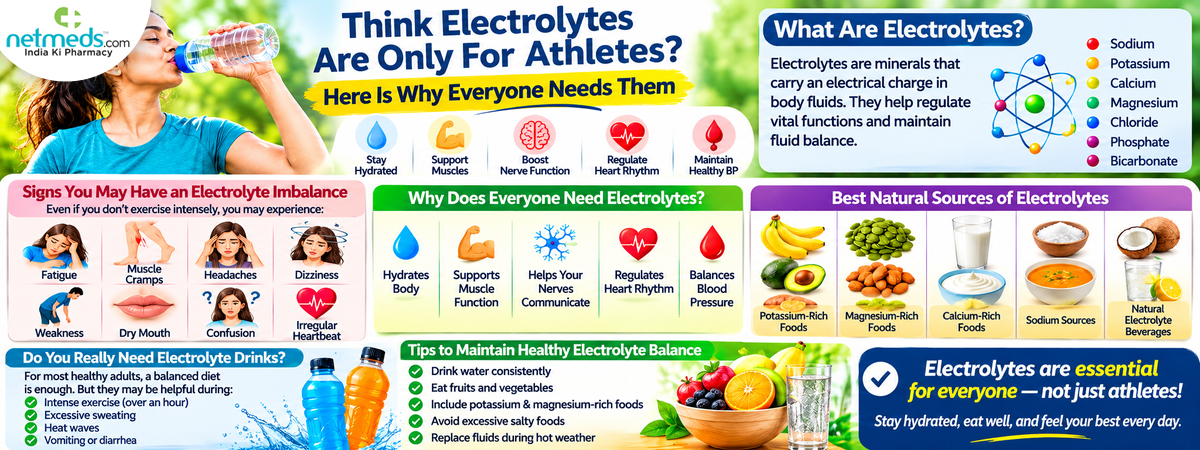
What Are Electrolytes?
Electrolytes are minerals that carry an electrical charge when dissolved in body fluids. They help regulate numerous bodily functions and are found naturally in blood, urine, and other fluids.
The major electrolytes include:
Sodium
Potassium
Calcium
Chloride
Phosphate
Bicarbonate
These minerals work together to maintain your body's delicate fluid balance and support normal cellular function.
Also Checkout: Know Why Electrolytes Are Important For You To Stay Healthy - Infographic
Why Does Everyone Need Electrolytes?
Hydrates Body
Water alone isn't always enough. Electrolytes help your body absorb, distribute, and retain fluids efficiently, preventing dehydration and maintaining optimal hydration throughout the day.
Supports Healthy Muscle Function
From blinking your eyes to climbing stairs, every muscle movement depends on electrolytes. Potassium, calcium, and magnesium help muscles contract and relax normally while reducing the risk of cramps.
Helps Your Nerves Communicate
Electrolytes transmit electrical signals between your brain and body, enabling proper nerve function, quick reflexes, and coordinated movement.
Regulates Heart Rhythm
Your heart relies on balanced electrolyte levels, particularly potassium, calcium, and magnesium, to maintain a regular heartbeat and healthy cardiovascular function.
Balances Blood Pressure
Sodium and potassium work together to regulate fluid balance and support healthy blood pressure when consumed in appropriate amounts.
Signs You May Have an Electrolyte Imbalance
Even people who don't exercise intensely may experience electrolyte imbalances due to illness, poor diet, excessive sweating, or inadequate hydration.
Common symptoms include:
Fatigue
Muscle cramps
Dizziness
Weakness
Dry mouth
Confusion
Irregular heartbeat in severe cases
Persistent or severe symptoms should always be evaluated by a healthcare professional.
Who Is More Likely to Need Extra Electrolytes?
Some individuals have higher electrolyte requirements than others, including:
Athletes and fitness enthusiasts
Older adults
Children with vomiting or diarrhea
People working outdoors in hot weather
Individuals with prolonged fever
Those taking certain medications such as diuretics
People recovering from dehydration
Best Natural Sources of Electrolytes
The good news is that most people can meet their electrolyte needs through a balanced diet.
Potassium-rich foods
Bananas
Sweet potatoes
Oranges
Tomatoes
Magnesium-rich foods
Pumpkin seeds
Almonds
Spinach
Calcium-rich foods
Yogurt
Cheese
Fortified plant-based beverages
Sodium sources
Table salt
Soups
Cheese
Pickles (consume in moderation)
Natural electrolyte beverages
Milk
Homemade lemon water with a pinch of salt
Do You Really Need Electrolyte Drinks?
For most healthy adults who eat a nutritious diet and stay hydrated, electrolyte drinks are usually unnecessary for everyday activities.
However, they may be helpful during:
Intense exercise lasting more than an hour
Excessive sweating
Heat waves
Vomiting or diarrhoea
Recovery after dehydration (as advised by a healthcare provider)
Many commercial sports drinks contain added sugars, so check labels and choose products wisely.
Tips to Maintain Healthy Electrolyte Balance
Drink water consistently throughout the day.
Include fruits and vegetables in every meal.
Eat potassium- and magnesium-rich foods regularly.
Avoid excessive intake of processed, salty foods.
Replace fluids during hot weather or illness.
Consult a healthcare provider before taking electrolyte supplements.
Conclusion
Electrolytes are much more than a sports nutrition buzzword; they are essential minerals that support hydration, muscle contractions, nerve signalling, heart rhythm, and overall health. Whether you are an athlete, an office worker, or a retiree, maintaining a healthy electrolyte balance is key to feeling energised and functioning at your best.
Instead of reaching for sugary sports drinks, focus on staying hydrated and eating a balanced diet rich in fruits, vegetables, dairy, nuts, and whole foods. Your body will thank you with better energy, improved hydration, and overall well-being.
References:
- National Institutes of Health (NIH). Office of Dietary Supplements – Potassium, Magnesium, Calcium.
- Centers for Disease Control and Prevention (CDC). Healthy Hydration.
- Harvard T.H. Chan School of Public Health. The Nutrition Source – Water.
- Cleveland Clinic. Electrolytes: Types, Functions & Imbalance.
- Mayo Clinic. Dehydration: Symptoms and Causes.
 Previous