


Winter is here, and so it is the perfect time to indulge in a broad spectrum of seasonal veggies. From green leafy vegetables to crunchy carrots, beets, cauliflower, etc., you have plenty of options to choose from. Among these wholesome gems, sweet potato, popularly known as shakarkandi, stands out as a delicious, versatile, and nutrient-rich winter superfood. Its natural sweetness and satisfying texture also make it a wholesome substitute for refined, carbohydrate-rich snacks.
(To Combat Seasonal Illness And Stay Healthy, Buy From Our Wide Range Of Health Supplements)
But what makes sweet potato particularly valuable during winter? Dive into this article to explore its nutritional profile, health benefits, culinary uses and precautions.
What Makes Sweet Potato A Winter Superfood?
If you like to choose healthy foods that are delicious as well, then sweet potatoes are the right choice. They are available in different colours such as orange, white, red, pink, violet, yellow, and purple. Loaded with dietary fibre, complex carbohydrates, beta-carotene, vitamin C, potassium, and antioxidants, sweet potatoes can promote digestive health, immunity, eye and heart health, and overall well-being.
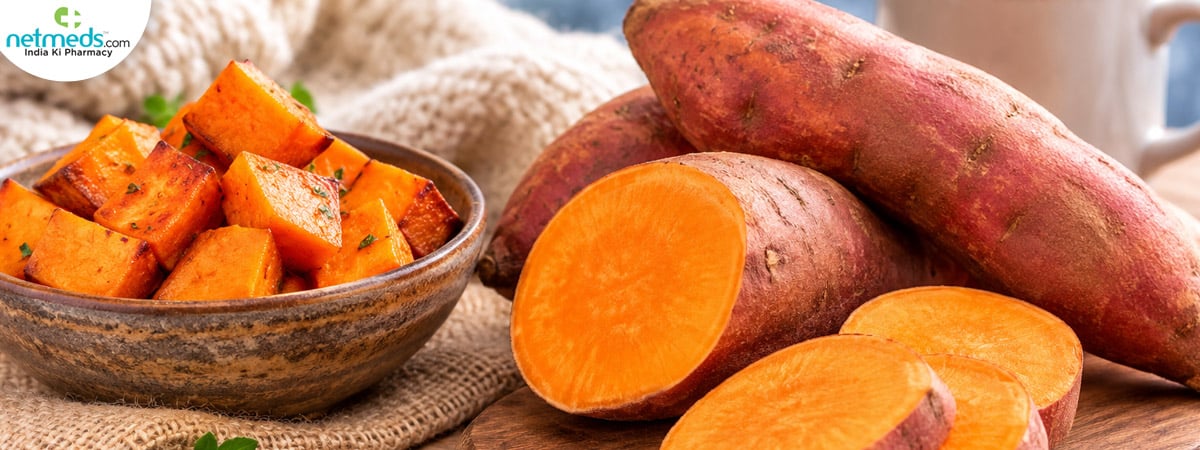
Especially during winter, the human body benefits from a balanced diet packed with antioxidant-rich foods, dietary fibre, and vital nutrients. Sweet potatoes deliver these nutrients in a readily accessible, affordable, and delicious package. Unlike munching on refined carbohydrate snacks, sweet potatoes provide numerous nutrients along with their complex carbohydrate content.
Sweet Potato Nutrition Facts
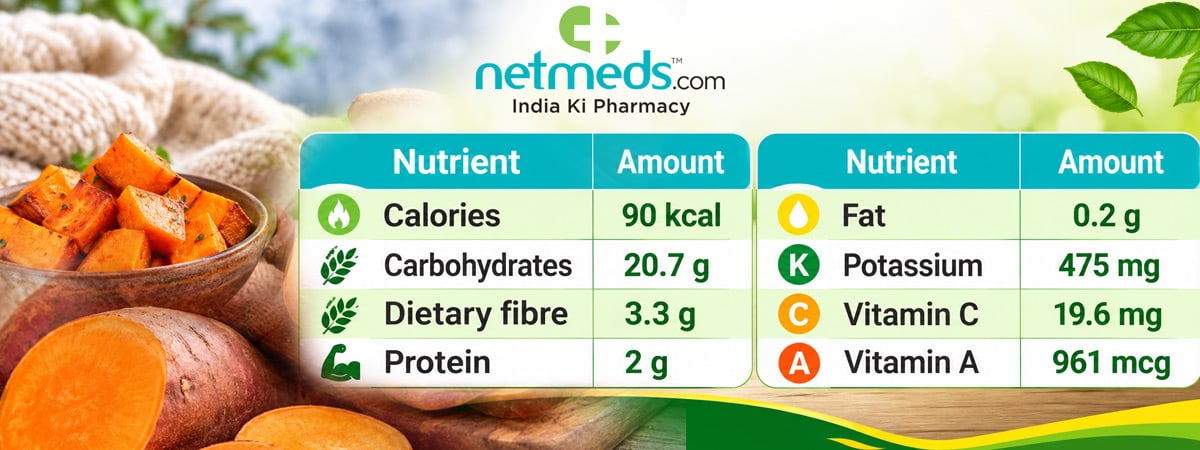
Approximate nutritional value per 100 g of baked sweet potato:
These values are approximate and can vary by variety and cooking method.
7 Incredible Health Benefits Of Sweet Potatoes
Dense Nutrient Profile
Sweet potato is a nutritional powerhouse that encompasses dietary fibre, antioxidants, vitamin A, C, and B vitamins, especially B6 and minerals like potassium and manganese. Incorporating this nutrient-dense root vegetable boosts energy, keeps you satiated and augments overall health.
Promotes Digestion
Being rich in dietary fibre, sweet potatoes promote the feeling of fullness and slow down gastric emptying time. Also, the wealth of soluble and insoluble fibres in sweet potatoes acts as a prebiotic, maintains gut microbiome balance, improves digestive functions and prevents constipation.
Low Glycaemic Index
A medium-sized sweet potato offers approximately 27g of carbs, of which more than 50% is starch. The starch content comprises 80% fast-digesting starch, 9% slow-digesting starch, and 11% resistant starch. The glycaemic index of sweet potato varies between medium and high. Consuming boiled sweet potato can offer you a sustained source of energy, avert blood sugar spikes, and keep you energised.
Potent Antioxidants
Sweet potatoes are loaded with beta-carotene, which is a powerful antioxidant and a precursor to vitamin A. Purple and orange varieties have the largest amount of antioxidants like anthocyanin, and the orange one has the highest amount of beta-carotene. These antioxidants help safeguard cells from oxidative damage, ease inflammation, lower the risk of chronic diseases and trigger the immune system.
Versatile Food
Sweet potatoes can be readily used in several culinary forms, from sweet to savoury dishes, which makes them easy to add to your regular meal plan. From chat to bakes in an air fryer, to desserts, you can use sweet potatoes to make several wholesome recipes.
Also Read: 5 Best Foods to Add to Your Diet Before Winter Arrives for Better Health- Infographic
Promotes Skin Health
Dull and dry skin are quite common during the winter season. The goodness of beta-carotene in sweet potatoes, the body converts into vitamin A. The wealth of skin-friendly nutrients plays a key role in cell growth, repair and maintenance of the skin. The presence of other essential nutrients rejuvenates skin health from inside out.
Supports Heart Health
Sweet potatoes contain potassium, dietary fibre and antioxidants that contribute to cardiovascular health. Potassium helps control blood pressure by balancing sodium levels and supporting normal blood vessel function. Dietary fibre can help manage lipid profile, particularly when consumed as part of a heart-healthy eating pattern.
Supports Weight Management
If you are looking for a wholesome winter snack, sweet potatoes can be a satisfying addition to your diet. The presence of complex carbohydrates and dietary fibre promotes satiety and manages unwanted hunger pangs. Also, their naturally sweet taste makes them a healthy alternative to highly processed junk snacks and desserts.
However, portion size and preparation methods matter. Boiled, steamed, or roasted sweet potatoes are generally better choices than deep-fried preparations loaded with salt and oil.
Also Read: Winter Diet 101: A Guide to Foods To Add And Avoid During This Season
Ways To Add Sweet Potatoes In Your Winter Diet
The versatility of sweet potatoes makes them a readily used ingredient that can be added to breakfast, lunch, evening snacks, and dinner. Some of the healthier ways to add sweet potatoes include:
Enjoy roasted or oven-baked sweet potatoes with a dash of lemon juice and black pepper or paprika powder.
Blend boiled sweet potato cubes with onions, tomatoes, coriander, lemon juice and roasted cumin powder.
Make a comforting winter soup using boiled sweet potatoes, ginger, garlic and mild spices.
Toss steamed sweet potatoes with cucumber, carrots, sprouts and a light yoghurt dressing.
Use mashed sweet potatoes as a nutritious filling for whole-wheat parathas.
Add boiled sweet potato pieces to a vegetable curry with lentils and seasonal spices.
For maximum nutritional benefits, prefer boiling, steaming, baking or roasting over deep-frying.
Are There Any Side Effects Of Eating Sweet Potatoes?
Although sweet potatoes are nutritious, excessive consumption may not suit everyone.
Eating excess quantities of sweet potatoes may cause bloating, gas or abdominal discomfort in some individuals due to their high fibre content.
People with diabetes should monitor portion sizes, consider their overall meal composition and check individual glucose responses.
As sweet potatoes are high in potassium and oxalates, those with chronic kidney disease or a history of calcium oxalate kidney stones may need to restrict their intake.
Eating very large amounts of beta-carotene-rich foods over time can sometimes cause carotenemia, a harmless yellowish-orange discolouration of the skin.
Conclusion
Sweet potatoes offer several health benefits, and they are more than a comforting winter snack, but it is important to balance your food intake during winter. They are nutrient-rich root vegetables packed with beta-carotene, dietary fibre, potassium, vitamin C and antioxidants that support several aspects of health. Enjoying them boiled, roasted, steamed or incorporated into wholesome meals can make your winter diet more nutritious and satisfying.
However, moderation and balanced meal planning are important, particularly for individuals managing diabetes or kidney-related conditions.
Frequently Asked Questions
Is sweet potato good to eat during winter?
Yes. Sweet potatoes provide fibre, beta-carotene, vitamin C and potassium, making them a nutritious addition to a balanced winter diet.
Can we eat sweet potatoes every day?
Yes, most people can enjoy moderate portions of sweet potatoes daily as part of a balanced diet, provided their individual dietary requirements allow it.
Is sweet potato good for weight loss?
Sweet potatoes contain fibre and complex carbohydrates that promote fullness. Boiled or roasted varieties can support weight management when eaten in moderate portions.
References:
https://pmc.ncbi.nlm.nih.gov/articles/PMC9495970/
Sweet Potato Is Not Simply an Abundant Food Crop: A Comprehensive Review of Its Phytochemical Constituents, Biological Activities, and the Effects of Processing †
Emily P Laveriano-Santos 1,2,3,‡, Anallely López-Yerena 1,2,‡, Carolina Jaime-Rodríguez 2,4, Johana González-Coria 2,4, Rosa M Lamuela-Raventós 1,2,3, Anna Vallverdú-Queralt 1,2,3, Joan Romanyà 2,4,*, Maria Pérez 1
Jung J.-K., Lee S.-U., Kozukue N., Levin C.E., Friedman M. Distribution of Phenolic Compounds and Antioxidative Activities in Parts of Sweet Potato (Ipomoea batata L.) Plants and in Home Processed Roots. J. Food Compos. Anal. 2011;24:29–37. doi: 10.1016/j.jfca.2010.03.025.
Bovell-Benjamin A.C. Sweet Potato: A Review of Its Past, Present, and Future Role in Human Nutrition. Adv. Food Nutr. Res. 2007;52:1–59. doi: 10.1016/S1043-4526(06)52001-7.
Shih P.-H., Yeh C.-T., Yen G.-C. Anthocyanins Induce the Activation of Phase II Enzymes through the Antioxidant Response Element Pathway against Oxidative Stress-Induced Apoptosis. J. Agric. Food Chem. 2007;55:9427–9435. doi: 10.1021/jf071933i.
Wang H., Cao G., Prior R.L. Oxygen Radical Absorbing Capacity of Anthocyanins. J. Agric. Food Chem. 1997;45:304–309. doi: 10.1021/jf960421t.
Parveen A., Choi S., Kang J.-H., Oh S.H., Kim S.Y. Trifostigmanoside I, an Active Compound from Sweet Potato, Restores the Activity of MUC2 and Protects the Tight Junctions through PKCα/β to Maintain Intestinal Barrier Function. Int. J. Mol. Sci. 2020;22:291. doi: 10.3390/ijms22010291.
Mohanraj R., Sivasankar S. Sweet Potato (Ipomoea batatas [L.] Lam)-A Valuable Medicinal Food: A Review. J. Med. Food. 2014;17:733–741.
Shandilya U.K., Sharma A. Functional Foods and Their Benefits: An Overview. J. Nutr. Health Food Eng. 2017;7:2–5. doi: 10.15406/jnhfe.2017.07.00247.
Tang Y., Cai W., Xu B. Profiles of Phenolics, Carotenoids and Antioxidative Capacities of Thermal Processed White, Yellow, Orange and Purple Sweet Potatoes Grown in Guilin, China. Food Sci. Hum. Wellness. 2015;4:123–132.
Teow C.C., Truong V.-D., McFeeters R.F., Thompson R.L., Pecota K.V., Yencho G.C. Antioxidant Activities, Phenolic and β-Carotene Contents of Sweet Potato Genotypes with Varying Flesh Colours. Food Chem. 2007;103:829–838.
Li L., Aldini G., Carini M., Chen C.-Y.O., Chun H.-K., Cho S.-M., Park K.-M., Correa C.R., Russell R.M., Blumberg J.B. Characterisation, Extraction Efficiency, Stability and Antioxidant Activity of Phytonutrients in Angelica Keiskei. Food Chem. 2009;115:227–232. doi: 10.1016/j.foodchem.2008.12.015.
 Previous