Whole grain cereals are the main component and staple foods of our Indian diet plans. Ragi and wheat are two of the most common grains that are regularly consumed by most people. Although wheat has long been a mainstay of the diet regimen, ragi is now gaining more attention and has been used as a healthier alternative. But should you make the shift to ragi flour, leaving the wheat flour behind? The answer depends on your nutritional needs, dietary preferences and how each grain is made. Also, understanding the nutritional content, health benefits and uses of ragi and wheat flour can help you make a better choice.
What Is Ragi?
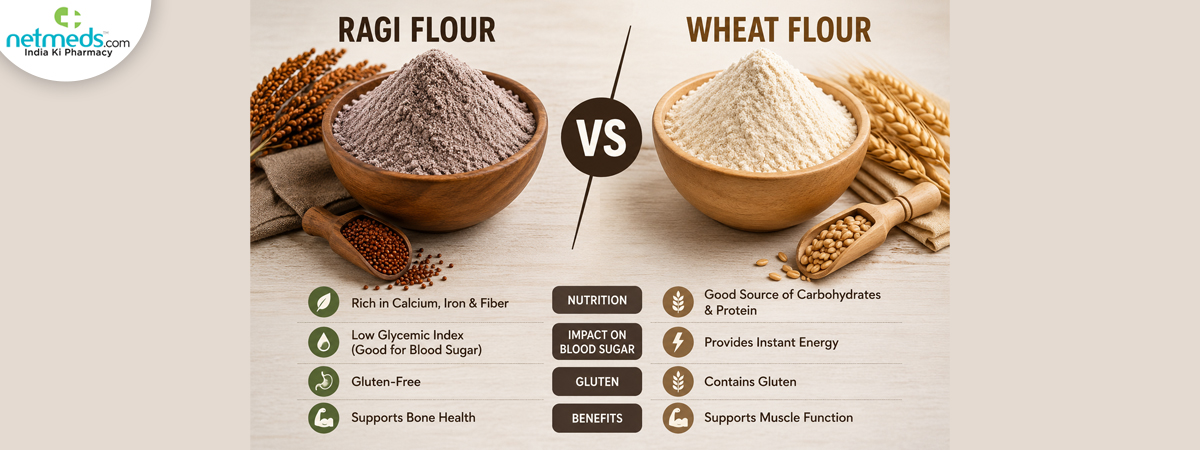
Ragi, also known as finger millet, is a gluten-free whole grain cereal commonly consumed across India. It is naturally loaded with calcium, dietary fiber, iron and other vital micronutrients. Ragi can be relished as porridge, mudde, dosa, roti, idli, and other traditional delights. The richness of dietary fiber content can promote digestive health and keep you satiated, making ragi a valuable addition to a balanced meal regimen.
What Is Wheat Flour?
Wheat flour is obtained from milling wheat grains. Whole wheat flour, commonly called atta, comprises the bran, germ and endosperm layers and offers complex carbs, protein, dietary fiber and key vitamins and minerals. It is usually used to make roti, phulka, paratha, bread and numerous baked foods. When compared to refined maida, whole wheat flour offers more fiber and nutrients.
Ragi vs Wheat Flour: Nutritional Comparison
The appropriate nutritional value varies depending on the variety and processing method. In general, both ragi and whole wheat flour provide complex carbohydrates, while their micronutrient profiles differ.
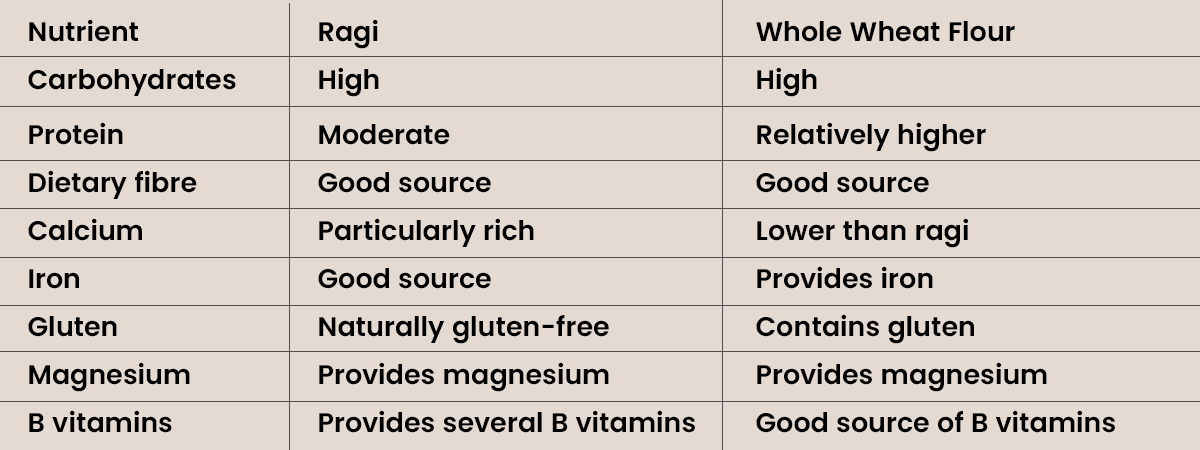
Ragi stands out for its calcium and fibre content, while whole wheat flour generally provides more protein and is particularly versatile for preparing wholesome meals.
Ragi vs Wheat Flour: Which Is Healthier?
Both the grains offer unique health benefits and nutrients. Ragi can be a healthier choice if you want to boost your fiber, calcium and micronutrients, while whole wheat flour can be a convenient staple food as it's loaded with protein content, versatility and familiar texture.
For most healthy adults, including both grains as part of a varied diet can be beneficial rather than completely replacing one with the other.
Health Benefits of Ragi
Improves Bone Health
Being naturally rich in calcium, an essential mineral for maintaining strong bones and teeth. Including ragi as part of a balanced diet can contribute to healthy bone maintenance, preventing the risk of fractures and osteoporosis.
Supports Gut Health
Ragi is an abundant source of dietary fibre, which can regularise bowel movements and contribute to overall digestive health. Fibre also helps add bulk to meals and support smooth digestion processes.
Helps Promote Satiety
The fibre in ragi can help you feel fuller for a longer time after meals. When added to balanced meals containing adequate protein and healthy fats, ragi may prevent overeating, reduce calorie intake and support weight management.
Naturally Gluten-Free
Ragi is naturally gluten-free, making it a healthy alternative for people who need to avoid gluten. However, individuals with coeliac disease should ensure that ragi products are certified gluten-free and are not cross-contaminated during processing.
Health Benefits of Whole Wheat Flour
Provides Dietary Fibre
Whole wheat flour contains fibre that can support digestive health and contribute to satiety. Choosing whole wheat over refined flour can be a simple way to improve the overall nutritional quality of meals.
Good Source of Plant-Based Protein
Wheat contains more protein than most other cereal grains and can contribute significantly to daily protein needs. Combining wheat flour with other protein-rich sources like pulses, dairy, and eggs can make a more wholesome and balanced meal.
Boosts Energy Production
Wheat offers complex carbohydrates, the body's major source of energy. Whole wheat also supplies vast reserves of B vitamins and minerals involved in energy metabolism.
Versatile for Regular Cooking
Whole wheat flour can be easily incorporated into daily Indian meals, including chapati, roti and paratha, making it a convenient staple for many households.
Ragi vs Wheat Flour for Weight Loss
Neither ragi nor wheat flour directly causes weight loss. What matters is overall calorie intake, portion size, protein intake, fibre, physical activity and the quality of the overall diet regimen, which have a greater impact on weight management.
Ragi may be valuable for weight-management diets because its fibre content can promote fullness. However, ragi-based foods can become calorie-dense depending on the ingredients and cooking method; for example, adding large amounts of ghee, sugar, or oil does not serve the purpose of weight loss.
Ragi vs Wheat Flour for Diabetes
Generally, people with diabetes should focus on the total carbohydrate content, portion size, dietary fiber and overall meal composition, rather than relying on one grain for diabetes management.
Ragi is a good source of dietary fibre and can be part of a balanced diet, but it is still packed with carbohydrates and can affect blood glucose levels. While whole wheat also contains carbohydrates and should be consumed in appropriate portions.
Pairing ragi or whole wheat with good quality protein, vegetables and healthy fats may help create a more balanced and nutritious meal. Individual blood glucose responses can vary.
Ragi vs Wheat Flour: Which Is Better for Gluten-Free Diets?
Ragi is the best choice for a gluten-free diet, as it is naturally gluten-free. Wheat naturally contains gluten and is therefore unsuitable for people who need to follow a strict gluten-free diet.
If you have celiac disease, always check food labels and choose products manufactured to prevent gluten cross-contamination.
Uses of Ragi
Ragi flour can be used in several traditional and modern recipes, including:
Ragi dosa
Ragi roti
Ragi mudde
Ragi porridge
Ragi idli
Ragi pancakes
Ragi malt
Ragi-based snacks and baked foods
For better nutritional balance, combine ragi with protein-rich ingredients such as dal, curd, milk, paneer, eggs or legumes.
Uses of Whole Wheat Flour
Whole wheat flour is commonly used to prepare:
Chapati
Phulka
Paratha
Whole wheat bread
Wheat-based pancakes
Homemade baked foods
Wheat-based savoury snacks
Choosing whole wheat flour instead of refined flour can increase fibre intake while maintaining the versatility of wheat-based meals.
Can You Eat Ragi and Wheat Together?
Yes. Generally, there is no need to go for one grain variety. You can add both ragi and whole wheat in your diet regimen and switch between varieties of whole grains to improve dietary variation and nutrition.
For example, you can have whole wheat chapati at one meal and ragi dosa or ragi porridge at another.
Ragi vs Wheat Flour: Which One Should You Choose?
Your choice can depend on your nutritional needs:
For boosting calcium intake, ragi is a particularly good option.
For a gluten-free diet, go for ragi, provided it is free from cross-contamination.
Of the two, whole wheat has the higher protein content.
For weight management, either can fit into a balanced diet when portion size is controlled, and the right ingredients are combined.
Frequently Asked Questions
Can I Eat Ragi Every Day?
Ragi can be consumed regularly as part of a varied, balanced diet. However, relying on only one grain is unnecessary. Rotating ragi with whole wheat and other whole grains can provide greater dietary variety.
Can I Replace Wheat Flour With Ragi Flour?
You can replace some wheat flour with ragi flour in recipes, although the texture and binding properties will change. For rotis and baked foods, combining ragi with other flours can improve texture.
Conclusion
Though wheat flour is undoubtedly an indispensable part of most Indian meal regimens, adding ragi flour to your meals can offer numerous health merits. Blending the flours is an ideal way to get the benefits of both grains in rotis. To augment your gut health and mitigate the risk of several food-related disorders, you should add both grains to your diet. Pair either grain with vegetables, pulses, dairy, eggs or other protein-rich foods to create a nutritious and balanced meal.
References:
https://www.jetir.org/papers/JETIR2203703.pdf
 Previous