


From filtering waste products and balancing fluids to digesting food and regulating hormones, our liver, kidneys, lungs, intestines, and skin work tirelessly to keep you healthy and maintain overall well-being. Thus, the concept of organ cleansing has gained considerable attention, with detox drinks, restrictive diets, herbal preparations, and cleansing programmes being promoted as ways to flush toxins from the body. However, the human body already has an efficient detoxification system that works around the clock. Rather than relying on expensive detox products or extreme dietary practices, supporting your organs through balanced nutrition, adequate hydration, physical activity, and healthy lifestyle choices is a more sensible approach.
Also Read: Detox Drink: 5 Powerful Drinks To Cleanse The System - Infographic
Why Should You Support Your Organs Through Natural Cleansing?
Don't confuse organ cleansing with flushing toxins through special diets or commercial detox products. Your organs already eliminate waste naturally and efficiently; therefore, you must let them maintain their normal functioning. Here are some reasons why supporting organ health matters:
Supports Liver Function
The liver helps break down medications, process nutrients, metabolise alcohol, and convert certain waste products into substances that can be eliminated. Eating a balanced diet and limiting alcohol consumption can safeguard liver health.
Promotes Healthy Kidney Function
The kidneys filter blood, remove waste through urine, and regulate fluid and electrolyte balance. Managing blood pressure, drinking adequate water, and limiting excessive salt intake can help maintain healthy kidney function.
Encourages Better Digestion
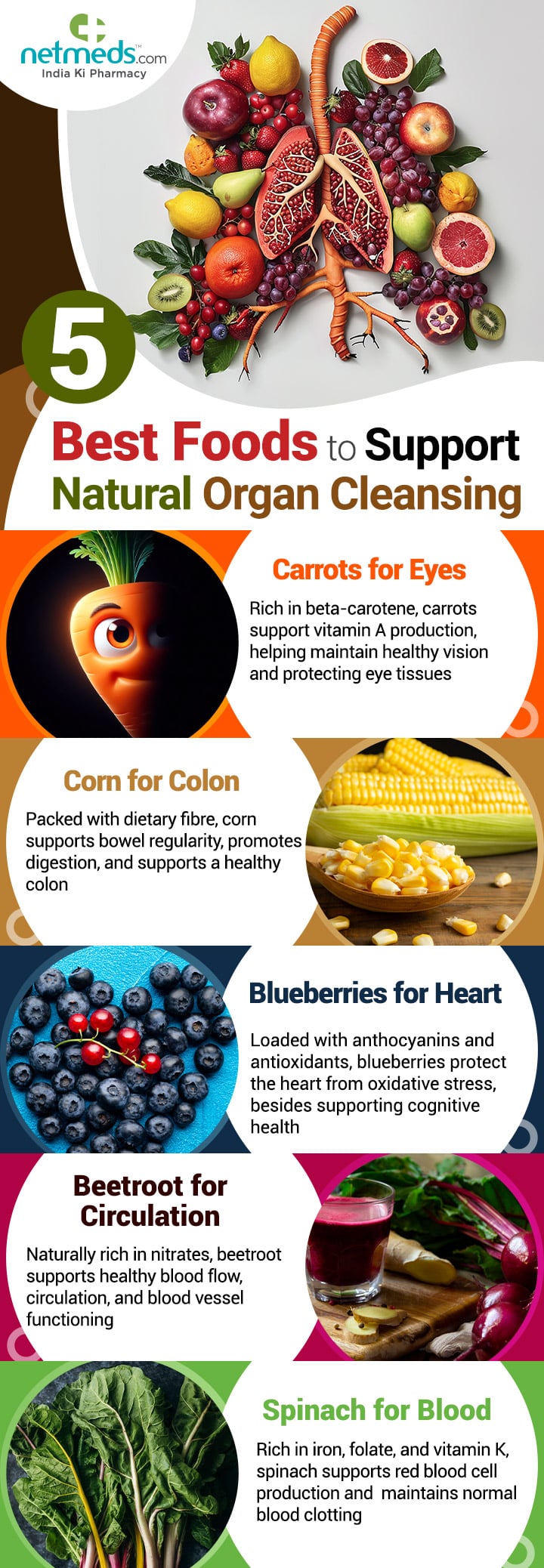
The digestive system breaks down food, absorbs nutrients, and eliminates waste. Eating fibre-rich foods, including fruits, vegetables, whole grains, and legumes, supports bowel regularity very well.
Supports Respiratory Health
The lungs help remove carbon dioxide and maintain oxygen exchange. Avoiding tobacco smoke, reducing exposure to air pollution, and staying physically active can support healthy lung function.
Helps Maintain Overall Well-Being
When your organs function properly, they contribute to energy production, nutrient absorption, immunity, and metabolic balance. Healthy lifestyle habits can support these interconnected processes and promote long-term wellness.
Are Detox Drinks Necessary for Organ Cleansing?
Detox drinks made with lemon, cucumber, mint, ginger, or other ingredients can be refreshing ways to increase fluid intake. However, there is limited scientific evidence that these drinks remove toxins or cleanse specific organs. Similarly, commercial detox teas, laxatives, and extreme juice cleanses are not necessary for maintaining organ health. Some products may cause dehydration, digestive disturbances, or electrolyte imbalances. Always check with a healthcare professional before trying herbal supplements or restrictive detox programmes, particularly if you take medication or have an existing medical condition.
Frequently Asked Questions
What Is the Best Way to Cleanse Your Organs Naturally?
Eating a balanced diet, staying hydrated, exercising regularly, sleeping well, and avoiding smoking and excessive alcohol are practical ways to support your organs' natural functions.
Which Organs Help Remove Toxins From the Body?
The liver and kidneys play major roles in processing and eliminating waste. The lungs, intestines, and skin also contribute to waste removal and maintaining internal balance.
Do Lemon Water and Detox Drinks Cleanse the Liver?
Lemon water can contribute to daily fluid intake, but there is no convincing evidence that it directly cleanses the liver or removes toxins.
How Often Should You Follow an Organ Detox Diet?
Special detox diets are not medically necessary for healthy people. A balanced eating pattern and sustainable lifestyle habits are more appropriate for supporting organ health.
Can Poor Lifestyle Habits Affect Organ Health?
Yes. Smoking, excessive alcohol consumption, unhealthy eating patterns, physical inactivity, and inadequate sleep can increase the risk of liver, kidney, heart, and metabolic disorders.
References:
https://journalhss.com/
https://journalofcomprehensivehealth.co.in/
https://www.ncbi.nlm.nih.gov/pmc/articles/PMC6667114/
https://www.ncbi.nlm.nih.gov/pmc/articles/PMC6990813/
Nootropics as Cognitive Enhancers: Types, Dosage and Side Effects of Smart Drugs - By Matěj Malík
https://www.ncbi.nlm.nih.gov/pmc/articles/PMC9415189/
Nutritional Supplements and the Brain - By Romain Meeuse, Lieselot Decroix
https://www.researchgate.net/publication/321891566_Nutritional_Supplements_and_the_Brain
 Previous


