Oats are one of the healthiest whole-grain cereals that come with a boost of nutrients offering a treasure trove of health benefits. It is a gluten-free whole grain and an incredible source of essential vitamins, minerals, fibre and antioxidants.
Oats serves as a wholesome breakfast option-you can simply spruce oats with nuts, fruits, milk or even give them a desi twist and make delicious oats idli, dosa,upma, pancakes to mention a few. Be it an easy fix for hunger pangs, light and a hearty snack or an instant energy boost to kick start your hectic day, oats is one of the superfoods that has earned great value by doctors and nutritionist in unison for its commendable health benefits. Also Read: Oats: Are You Choosing The Right Variety?
Striving For Losing Weight? Choose From Our Wide-Variety Of Weight Loss Supplements Today!
Several pieces of evidence have revealed that adding oats as a part of healthy diet plan confers many benefits including weight loss, lower blood sugar levels and reduce the risk of heart disease.
The nutrient composition of oats is well-balanced and it is a great source of carbs, fibre and contains more protein and fat than most grains.
Oats are bestowed with a myriad of nutrients including manganese, phosphorus, magnesium, copper, iron, zinc, folate, vitamins B1, B5, E and potent antioxidants that makes its versatile grain and top the list of healthy foods.
Oats Idli
Idli is valued as one of the wholesome and nutritionally balanced breakfast, unlike other breakfast foods, idli is steamed which packs a minimal amount of calories and has the right composition of nutrients. As the batter is fermented, it is also gut-friendly, loaded with probiotics and improves gut health. A healthy version of idli is to replace the rice with an oats batter, making it a more nutritious and ideal breakfast option for all health-conscious.
Oats idli is instant idli which needs less than one hour of resting time and no fermentation. Loaded with protein and fibre, these idlis keep you satiated and prevent you from binge eating. Oats idli is simple and easy to make for a perfect breakfast or even a brunch.
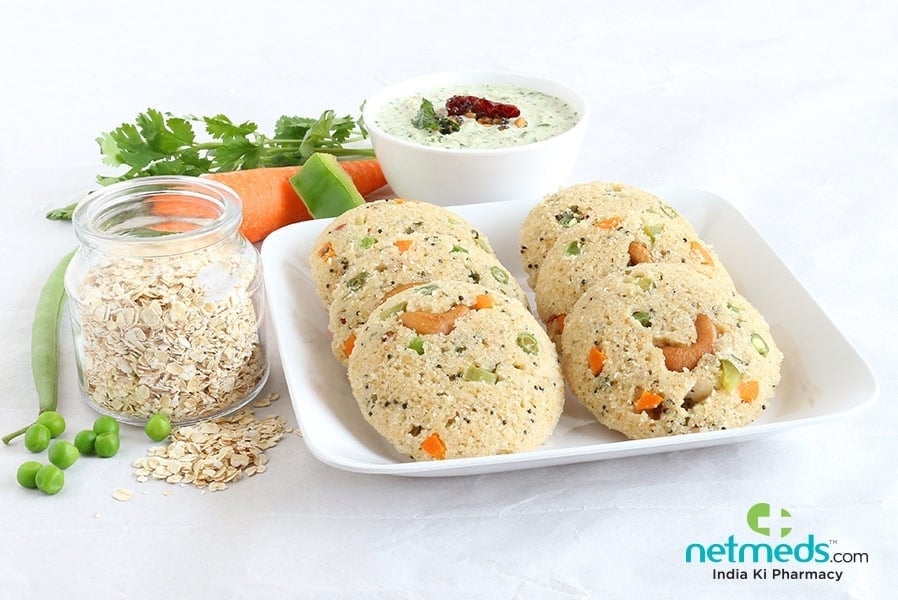
Ingredients
1 cups oats
250 ml sour curd
¼ cup soaked urad dal
1 tsp mustard seeds
1 tsp urad dal
1/2 tsp channa dal
1 tsp oil
1 tsp green chillies, finely chopped
½ cup finely chopped, carrots and onion
2 tsp finely chopped, coriander leaves
1/2 tsp turmeric powder
1 tsp salt
A pinch of fruit salt
Method
In a pan, dry roast oats until it turns slightly brown and powders it in a mixer.
Grind urad dal into a fine paste and add oats powder, mix well and keep it aside.
Add oil, mustard seeds, urad dal and channa dal in a pan and let the mustard splutter and fry dals to golden.
Now add chopped onions, carrots, green chillies and sauté for 5 minutes.
Add turmeric powder, salt and coriander leaves and stir well for a minute.
Now add the cooked vegetables to the oats mixture, add curd, salt and make a batter with an idli-like consistency.
Allow this batter to rest for an hour. Just before steaming the idli add a pinch of fruit salt.
Grease the idli plates with oil, pour the batter and steam the oats idli for about 15 minutes.
Serve delicious oats idli with onion chutney.
Nutritional Facts
One oats idli provides you with 30 calories, 1.8 gm of protein, 5 gm of carbohydrate and 1 gm of fibre. These nutritious idlis are ideal for diabetics, as rice high on the glycaemic index is replaced with fibre-rich oats. Moreover, it has urad dal, which is high in protein and makes it more filling and a low glycaemic index food. Vast reserves of beta glucagon fibre in oats idli lowers, the cholesterol, reduce blood sugar spikes, control blood pressure and lowers the risk of cardiovascular disease.
Urad dal is an impressive source of both soluble and insoluble fibre, protein, vitamin B complex, calcium, iron, phosphorus, magnesium and zinc fortifies the bone, enhances digestion, protects the heart and strengthen the nervous system. Curd is imbued with protein; vitamins A, B12, and calcium act as a good probiotic, build a robust immune system, enhance skin glow, boost brain health and help in weight reduction.
Adding vegetables to oats idli increases the fibre content and nutritional value. Carrots abound in carotenoid compounds, for enhanced skin glow and improved vision. Onions are well-known for their ability to regulate blood pressure, avert cardiac ailments and optimise heart health. Bestowed with a myriad of vitamins, minerals and antioxidants, coriander leaves promotes digestion, triggers the immune system and keep infections at bay.
Incredible Benefits Of Oats
Promotes Digestion
Vast reserves of both soluble and insoluble fibre and beta-glucan in oats act as a digestive stimulant, regularise bowel movements, and natural laxative. Adding oats to the diet is well-known to treat constipation and other digestive woes.
Potent Antioxidant Effects
Whole oats contain ample amounts of antioxidants and beneficial plant compounds which combats free radicals and avert oxidative stress. Bestowed with antioxidants avenanthramides, oats may control blood pressure by dilating the blood vessels and improving blood flow. Aside from this, it also abounds ferulic acid, a potent antioxidant that lowers inflammation and reduces the risk of chronic diseases.
Heart Healthy
Being rich in beta-glucan, adding oats to the diet helps reduce both total cholesterol and LDL cholesterol and prevents oxidation of LDL cholesterol. It also reduces inflammation in arteries and tissues and lowers the risk of stroke and cardiovascular diseases.
Promotes Weight Loss
Regular addition of oats in the diet may help you to lose weight by keeping you satiated and delaying the gastric emptying time. Beta-glucan in oats increases the secretion of the satiety hormone peptide YY, which reduces calorie intake and the risk of obesity. Also read: Top 5 Super Foods To Achieve Weight Loss - Infographic
Manages Diabetes
Oats are packed with soluble fibre beta-glucan promotes insulin sensitivity and reduces blood sugar spikes. Beta-glucan has the ability to form a thick gel that delays gastric emptying time and absorption of glucose into the blood.
Frequently Asked Questions
What Are The Benefits Of Oatmeal Idli?
Oatmeal idli is rich in fibre and can support digestion, fullness and better blood sugar control when made with other nutritious ingredients.
Which Is Better, Oats Or Idli?
Both can be healthy. Oats are higher in fibre, while traditional idli provides carbohydrates and some protein. The healthier choice depends on portion size and preparation.
Is Idli The Healthiest Breakfast?
Idli can be a valuable, light and low-fat, gut healthy breakfast, especially when paired with sambar and vegetables for added protein and fibre.
Can I Eat Idli For Breakfast For Weight Loss?
Yes. Idli can fit into a weight-loss diet when eaten in moderate portions and paired with protein- and fibre-rich foods such as sambar and vegetables.
References:
https://pmc.ncbi.nlm.nih.gov/articles/PMC8625765/
A Review of Health-Beneficial Properties of Oats
Devendra Paudel 1, Bandana Dhungana 2, Melanie Caffe 2, Padmanaban Krishnan 1,
Butt M.S., Tahir-Nadeem M., Khan M.K.I., Shabir R., Butt M.S. Oat: Unique among the cereals. Eur. J. Nutr. 2008;47:68–79. doi: 10.1007/s00394-008-0698-7.
Varma P., Bhankharia H., Bhatia S. Oats: A Multi-Functional Grain. J. Clin. Prev. Cardiol. 2016;5:9–17. doi: 10.4103/2250-3528.183984.
Sang S., Chu Y. Whole grain oats, more than just a fiber: Role of unique phytochemicals. Mol. Nutr. Food Res. 2017;61:1600715.
Lásztity R. Oat grain—A wonderful reservoir of natural nutrients and biologically active substances. Food Rev. Int. 1998;14:99–119. doi: 10.1080/87559129809541150.
Murphy J.P., Hoffman L.A. Oat Science and Technology. John Wiley & Sons, Ltd.; Hoboken, NJ, USA: 1992. The Origin, History, and Production of Oat; pp. 1–28.
Joyce S.A., Kamil A., Fleige L., Gahan C.G.M. The Cholesterol-Lowering Effect of Oats and Oat Beta Glucan: Modes of Action and Potential Role of Bile Acids and the Microbiome. Front. Nutr. 2019;6:171.
 Previous