


The knees bear most of your body weight, assisting with walking, climbing stairs, sitting down and standing up. As they work constantly, even simple habits that are repetitive can put extra strain on the joints. Remember, not all knee problems are caused by ageing or injury.
(To Get Respite From Recurrent Knee Pain, Shop From Wide Range Of Supplements)
However, constantly overstraining the knees, staying idle for long hours, or improper movements may lead to stiffness, muscle weakness and joint discomfort. This does not mean these habits will instantly damage the knees, but changing them can help promote joint health and movement as you age.
If you experience knee pain regularly, stiffness or discomfort while walking, climbing steps, or even standing, it may be worth looking at your everyday habits.
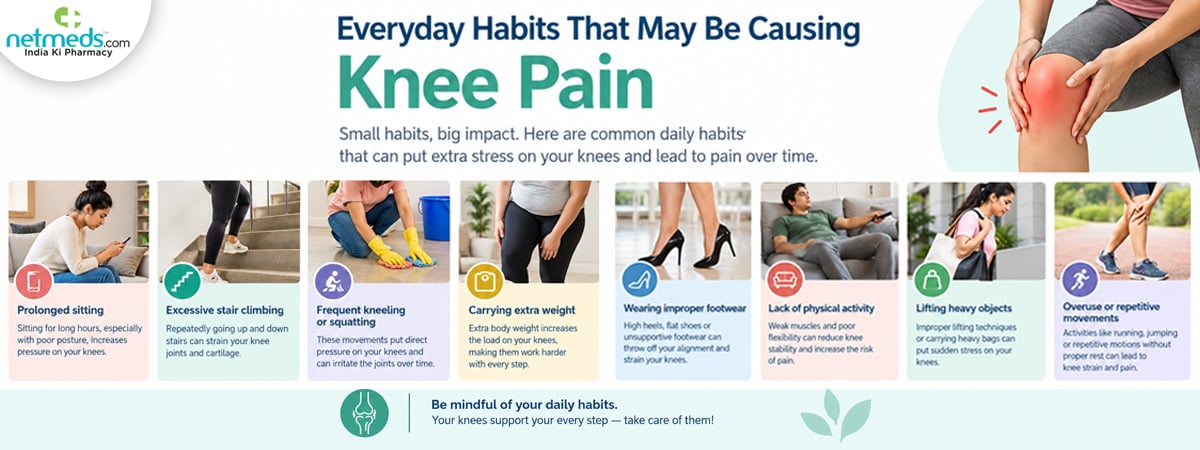
Here we have listed daily habits that may contribute to knee pain and poor knee health, and ways to support healthier knees.
Everyday Habits That Weaken Your Knees
Sitting for Long Durations
Spending most of the time in a day sitting can weaken the knee muscles and can eventually reduce movement around the knee joint. When the muscles adjacent to the knees become weaker, then the knees may have less support during regular movements. Long durations of sitting with knees bent can also result in stiffness when you finally get up.
Also Read: Treat Knee Pain With Home Remedies
Pro-Tip:
Take short walking breaks every 30–60 minutes or gently move your legs at regular intervals instead of being seated continuously for long hours. These activities improve blood circulation to the knee joint and promote mobility.
Climbing Stairs
Climbing stairs is a physical activity that benefits most people; however, repeatedly climbing many steps without adequate stamina or conditioning can increase the load on the knees. Furthermore, it may cause discomfort for most people who are already suffering from knee pain or weak leg muscles.
Pro-Tip:
Choose the right posture or controlled movements when climbing stairs. If climbing steps are part of your routine, build your strength gradually. Additionally, pay attention to your posture and avoid rushing up or down.
Avoiding Regular Exercise
Excessive workouts or high-impact workouts can at times strain the knees; avoiding physical activity completely may also impact knee health. Weak thigh and hip muscles offer less support to the knee joint.
Pro-Tip:
Engage in low-impact activities like walking, swimming, cycling or appropriate strength-training exercises in your routine. Start gradually if you have been inactive for a longer duration.
Being Overweight
Being obese or overweight can increase the mechanical load placed on the knees during daily activities such as walking and climbing stairs. Over time, this additional stress may contribute to knee discomfort and joint problems.
Pro-Tip:
Consume a wholesome and balanced diet, engage in regular physical activity gradually, sustainable weight management if weight loss is appropriate for you.
Ignoring Persistent Knee Pain
One common mistake is assuming that pain is something that should not be ignored or pushed off. While muscle soreness post-exercise can be normal, persistent or worsening knee pain needs immediate attention. Continuing activities that trigger pain without identifying the underlying cause may allow the problem to persist or worsen.
Pro-Tip:
Pay attention to recurring pain, swelling, stiffness, instability or difficulty moving the knee. Consult a doctor or physiotherapist if symptoms persist, worsen or interfere with everyday activities.
Wearing Improper Footwear
The feet and knees align together when you walk. Shoes that do not fit correctly or offer adequate support can affect the way your foot strikes the ground and affect other movement through the leg. This does not suggest that everyone needs specialised footwear.
Pro-Tip:
Wear comfortable and properly fitting shoes that are appropriate for the activity you are doing, particularly when walking or exercising for long periods.
How Can You Protect Your Knee Health?
Simple lifestyle changes can help support joint health.
Staying physically active and doing appropriate low-impact exercises.
Maintaining body weight.
Optimising the muscles that strengthen around the knees and hips.
Taking short breaks from prolonged sitting.
Using the right technique during exercise and daily activities.
Wearing comfortable and supportive footwear.
Seeking medical care for severe knee or worsening knee pain.
When Should You Seek Medical Care?
Mild, occasional discomfort may settle with adequate rest and activity modification. However, continuous or throbbing knee pain, swelling, redness or warmth, difficulty bearing weight, stiffening of the knee, instability or intense pain following an injury warrants medical help.
Conclusion
Persistent knee pain may not be caused by ageing or an injury. Everyday habits like prolonged sitting, lack of exercise, improper movement, excess weight and ignoring persistent symptoms may affect knee health. Identifying these habits early and making appropriate lifestyle changes can help support stronger, healthier knees.
References:
https://www.sciencedirect.com/science/article/pii/S0268003325000051
https://pmc.ncbi.nlm.nih.gov/articles/PMC6497093/
The Association Between Daily Physical Activity and Pain Among Patients with Knee Osteoarthritis: The Moderating Role of Pain Catastrophizing
Asimina Lazaridou 1, Marc O Martel 1, Marise Cornelius 1, Olivia Franceschelli 1, Claudia Campbell 3, Michael Smith 3, Jennifer A Haythornthwaite 3, John R Wright 2, Robert R Edwards 1,✉
The Impact of Chronic Pain, Stiffness and Difficulties in Performing Daily Activities on the Quality of Life of Older Patients with Knee Osteoarthritis
by Agata Wojcieszek 1,*,Anna Kurowska 1ORCID,Anna Majda 1ORCID,Henryk Liszka 2ORCID andArtur Gądek 2
Institute of Nursing and Midwifery, Faculty of Health Sciences, Jagiellonian University Medical College, 30-126 Krakow, Poland
Trauma and Orthopaedics Clinical Department, University Hospital, Jagiellonian University Medical College, 30-688 Krakow, Poland
https://journalmsr.com/effect-of-knee-pain-on-muscles-imbalance-and-physical-limitation-in-individuals-with-bilateral-knee-osteoarthritis-a-comparative-cross-sectional-study/
 Previous