Rice is the staple food for Indians and has also been one of the most debated foods when it comes to weight management. While some people think that eating rice at dinner leads to weight gain, others consider it a healthy part of a balanced meal. Many fad diets are emerging every day, which have only added to the confusion, encouraging most people to skip rice altogether at dinner. But is there any science-backed evidence behind this belief? Before totally restricting this staple grain from your dinner plate, it’s worth exploring what nutrition experts and researchers reveal about eating rice at dinner and its overall impact on health and weight.
(To Augment Your Overall Health And Maintain Weight, Shop From Our Broad Range Of Health Essentials)
Is It Healthy To Eat Rice At Dinner?
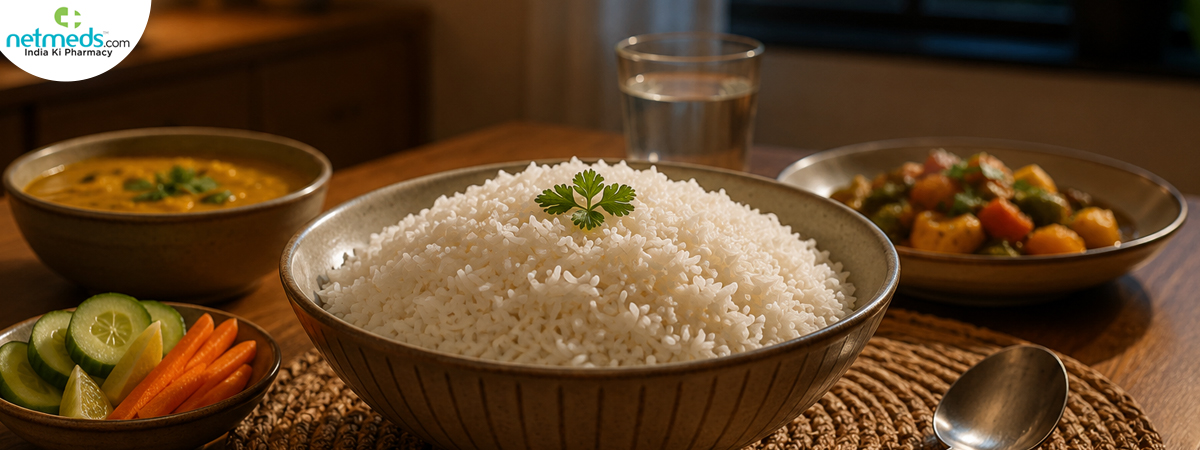
Eating rice at dinner can be part of a wholesome diet when portion size is controlled and paired with nutrient-dense foods. Rice offers carbohydrates, the body’s main source of fuel, along with vital nutrients like B vitamins, magnesium, and small amounts of protein.
There is no scientific evidence suggesting that eating rice specifically at night causes weight gain. Weight gain occurs when your total calorie intake consistently exceeds the calories you burn throughout the day.
Nutritional Value of Cooked White Rice (Per 100 g)
Calories: 130 kcal
Carbohydrates: 28 g
Protein: 2.7 g
Fat: 0.3 g
Fibre: 0.4 g
Magnesium: 12 mg
Folate: 58 mcg
Selenium: 7.5 mcg
Does Eating Rice At Night Cause Weight Gain?
According to experts, eating rice at night, by itself, does not result in weight gain. Managing weight within a healthy range depends on your overall calorie intake and expenditure rather than the timing of a single food. If you consume fewer calories than you burn, eating rice for dinner will not instantly make you gain weight.
Portion Size Is More Important Than Timing
Being mindful of the portion size is more important than avoiding rice at dinner. Moderation is the key, and also pairing rice with protein-rich foods like dal, paneer or chicken, along with vegetables, may help make the meal more balanced and wholesome than eating rice on its own.
You don’t have to eliminate rice if you are trying to lose weight. The types of rice, like single-polished, hand-pounded rice, and brown rice, are good options. Also, maintain a gap of around two hours between dinner and bedtime if you are eating rice at night and avoid overeating at night.
Also Read: How To Eat Rice The Right Way For Better Digestion And Gut Health?
Health Benefits of Eating Rice at Dinner
Provides Sustained Energy
Carbohydrates from rice replenish glycogen stores and provide energy for the body's overnight repair and recovery processes. This can be especially beneficial for physically active individuals.
May Promote Better Sleep
Rice contains carbohydrates that may help increase the availability of tryptophan, an amino acid involved in the production of serotonin and melatonin, hormones that regulate sleep. A balanced dinner containing rice may support better sleep quality in some individuals.
Naturally Gluten-Free
Rice is naturally gluten-free, making it a safe carbohydrate choice for people with celiac disease or gluten sensitivity.
Helps Build a Balanced Meal
Rice pairs well with vegetables, lentils, legumes, fish, eggs, and lean meats, helping create a balanced dinner that provides carbohydrates, protein, fibre, healthy fats, vitamins, and minerals.
Who Should Limit Rice at Dinner?
Some people may benefit from monitoring their rice intake, including:
People with diabetes
Individuals with insulin resistance
Those trying to lose weight
People with metabolic syndrome
Individuals with low physical activity
Rather than eliminating rice, they should focus on portion control and combine rice with protein, fibre, and healthy fats to reduce blood sugar spikes.
Also Read: Rice Diet Explained: Health Benefits, Foods To Add and Avoid and Side Effects
Healthy Tips for Eating Rice at Dinner
Choose Whole Grains
Whenever possible, opt for brown rice, red rice, black rice, or hand-pounded rice for additional fibre and nutrients.
Control Portions
Limit cooked rice to about ½–1 cup, depending on your calorie needs, activity level, and health goals.
Add Protein
Protein in the meal helps you stay satiated for a longer time and maintains muscle health. Pair rice with quality protein sources such as dal or legumes, paneer, tofu, soy, lean meat, eggs and fish,
Include Plenty of Vegetables
Fill half your plate with fibre-rich vegetables like green leafy vegetables, beans, broccoli, carrots, capsicum, cabbage, cauliflower and all gourd varieties.
Avoid Rich Side Dishes
Limit intake of fried foods, heavy gravies, cream-based curries, sugary desserts and sweetened beverages.
Eat Early
Aim to finish dinner 2–3 hours before bedtime to support digestion and improve sleep quality.
Best Rice Varieties for Dinner
Brown rice
Red rice
Black rice
Hand-pounded rice
Semi-polished rice
Basmati rice (moderate glycaemic index compared with many white rice varieties)
Common Myths About Eating Rice at Night
Myth
Eating Rice Increases Belly Fat
Fact
Belly fat develops due to excess calorie intake over a period, lack of physical activity, poor sleep, and hormonal factors, and not only because of rice alone.
Myth
Skipping Rice Helps Everyone Lose Weight
Fact
Weight loss depends on maintaining a calorie deficit and following a balanced diet. Many people successfully lose weight while including moderate portions of rice.
Myth
Rice Should Never Be Eaten at Dinner
Fact
There is no evidence that rice must be avoided at night. A balanced dinner with appropriate portions can be part of a healthy lifestyle.
Frequently Asked Questions
Is Eating Rice At Dinner Good For Weight Loss?
Yes. Rice can be included in a weight-loss diet if eaten in moderation and paired with protein and fibre-rich foods while maintaining an overall calorie deficit.
Which Rice Is Healthiest For Dinner?
Brown rice, red rice, black rice, and hand-pounded rice are generally healthier choices because they contain more fibre, vitamins, minerals, and antioxidants than polished white rice.
Can People With Diabetes Eat Rice At Dinner?
Yes, but portion control is important. Choosing brown or semi-polished rice and pairing it with protein, healthy fats, and non-starchy vegetables can help improve blood sugar control.
Conclusion
Experts say that eating rice at dinner is not unhealthy and does not immediately lead to weight gain. What matters more is how much rice you consume, what you pair it with and your overall eating habits throughout the day. If you are trying to shed surplus kilos, you may not need to avoid rice totally from your dinner. Instead, focus on mindfulness, portion control, and a balanced meal that contributes to your nutritional needs and long-term health.
References:
The association between dietary intake of white rice and central obesity in obese adults
Majid Kolahdouzan 1, Hossein Khosravi-Boroujeni 2,✉, Behnaz Nikkar 1, Elaheh Zakizadeh 1, Behnaz Abedi 1, Negar Ghazavi 1, Nima Ayoobi 1, Maryam Vatankhah 1
https://pmc.ncbi.nlm.nih.gov/articles/PMC3653247/
The Small Rice Bowl-Based Meal Plan was Effective at Reducing Dietary Energy Intake, Body Weight, and Blood Glucose Levels in Korean Women with Type 2 Diabetes Mellitus
Hee Jung Ahn 1,*, Kyung Ah Han 2,*, Hwi Ryun Kwon 1, Kyung Wan Min 1,2,✉
https://pmc.ncbi.nlm.nih.gov/articles/PMC3021110/
 Previous