Diwali, the festival of lights, joy, family gatherings, and sparks, fills every home with happiness and positivity. However, for those suffering from asthma, the festive season can bring respiratory problems. Increased smoke from air pollution, firecrackers, dust, incense sticks and strong fragrances can irritate airways, trigger asthma flare-ups and increase the risk of breathing issues.
People with asthma need to follow extra preventive measures during Diwali to celebrate the festivities without compromising their respiratory health. Explore this article to unravel how to celebrate Diwali safely, the necessary precautions to take and simple ways to manage asthma during the festival.
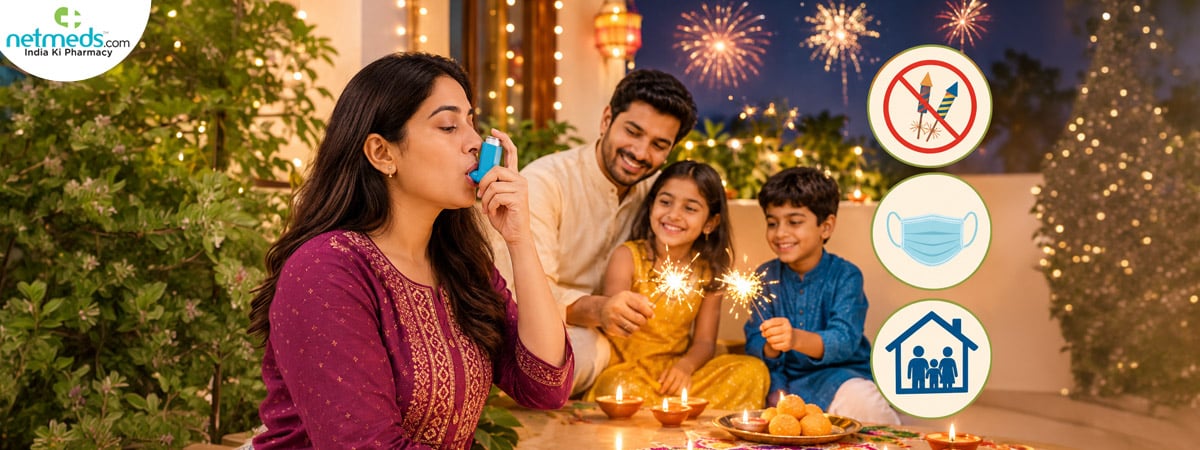
(Shop From Our Wide Range Of Essentials To Manage Asthma)
How Does Diwali Affect People with Asthma?
Bursting crackers release smoke, fine particulate matter (PM2.5 and PM10), sulphur dioxide, nitrogen oxides, and other harmful pollutants into the environment. These harmful pollutants can irritate the respiratory lining, cause inflammation in the airways and aggravate breathing issues.
People with asthma have sensitive and inflamed airways. Exposure to these airborne irritants can cause the airways to narrow, resulting in an asthma flare-up.
Also Read: Diwali Fire Safety Tips: Here Is The List of First Aid Kit Items For That Instant Respite
Some common asthma triggers during Diwali include:
Firecracker smoke emits fine particles and harmful gases that irritate the airways.
Airborne particles from pollutants can trigger coughing, wheezing and breathlessness.
Incense sticks and scented candles emit smoke and fragrances that may irritate sensitive airways.
Volatile chemicals from perfumes and room fresheners can trigger respiratory symptoms in some people.
Cold and dry air can easily aggravate asthma symptoms, particularly during outdoor celebrations.
Preventive Measures to Celebrate Diwali Safely with Asthma
Here are some effective precautions that people with asthma can follow to minimise exposure to respiratory irritants during Diwali.
Stay Away From Firecracker Smoke
The most crucial precautionary measures for people with asthma are to avoid bursting crackers and standing near places where fireworks are being used. Even short exposure to intense smoke can trigger coughing, wheezing and chest heaviness.
Opt for smoke-free celebrations, like decorating your home with diyas, electric lights and colourful rangolis.
Stay Indoors
The pollution levels peak during and after firecracker displays. Those suffering from asthma should avoid unnecessary outdoor activities during these periods.
Keep windows and doors closed when outdoor pollution is high, particularly during fireworks displays. Check local air quality updates and limit outdoor exposure when pollution levels are unhealthy.
Also Read: Smart Diwali Guide for Chronic Illness: Celebrate Safely And Protect Your Health
Keep Your Asthma Medications Handy
Never miss prescribed asthma medications during Diwali celebrations. Continue taking medications as advised by your doctor and keep your prescribed reliever inhaler readily accessible.
Ensure you know how to use your inhaler correctly. If your doctor has provided an asthma action plan, follow it whenever symptoms worsen.
Use an Air Purifier Indoors
For best indoor air quality:
Go for an air purifier suitable for your room size.
Keep doors and windows closed when outdoor pollution is high.
Clean or replace filters as recommended by the manufacturer.
Avoid devices that intentionally produce ozone, as ozone can irritate the lungs.
Use an N95 Mask When Necessary
If you have to step outdoors during periods of poor air quality, a well-fitting N95 respirator can help reduce exposure to fine particulate matter.
However, masks are not a substitute for avoiding firecracker smoke. They do not safeguard against all harmful gases, and people experiencing breathing difficulties should not rely on a mask to manage an asthma attack.
Keep Your Home Clean
Dust and allergens can worsen asthma symptoms, especially during festive cleaning and decoration. Follow these simple measures like
Use a damp cloth to clean furniture and surfaces.
Avoid dry dusting and sweeping that can easily spread dust particles.
Wash curtains, cushion covers and bedsheets regularly.
Keep carpets and soft furnishings clean.
Wear a suitable mask or ask someone else to handle dusty cleaning tasks.
Maintain Good Hydration/ Eat a Balanced Diet
Staying well hydrated improves overall well-being and supports respiratory functions. Drink plenty of water, fresh fruits, vegetables, lean proteins, legumes, and whole grains in your meal regimen.
Foods abundant in vitamin C, vitamin E and other antioxidants, such as citrus fruits, guava, amla, almonds, seeds and green leafy vegetables, boost immunity and overall lung health. However, no specific food can prevent an asthma attack or replace prescribed asthma medication.
Know the Warning Signs of an Asthma Attack
Recognising early symptoms can help prevent an asthma flare-up from becoming severe. Look out for:
Persistent coughing, especially at night.
Wheezing or whistling sounds while breathing.
Chest tightness or discomfort.
Shortness of breath.
Difficulty speaking in complete sentences during severe episodes.
When Should People with Asthma Consult a Doctor?
People with asthma should seek help from their physician if they experience frequent coughing, worsening wheezing, breathlessness or need their inhaler during Diwali. Those with poorly controlled asthma or a history of severe asthma attacks should seek guidance from their physician before the festive season.
Conclusion
This festive season should be enjoyable and safe for all, including those living with asthma. Firecracker smoke, dust, strong fragrances and increased air pollution can trigger respiratory symptoms and worsen existing asthma. Limiting firecrackers, staying indoors during times of severe pollution, having stocks of medications and maintaining good indoor air quality are some of the simple and effective measures to safeguard your lung health.
Frequently Asked Questions
Can people with asthma burst crackers during Diwali?
People with asthma should avoid bursting firecrackers and exposure to their smoke, as these can trigger coughing, wheezing, chest tightness and breathlessness.
Which mask is best for asthma patients during Diwali?
A well-fitting N95 respirator can help reduce exposure to fine particulate matter when outdoors. However, it cannot filter all harmful gases and does not replace avoiding polluted areas.
Is an air purifier useful for asthma patients during Diwali?
Yes. An air purifier with a suitable HEPA filter can help reduce airborne particles indoors. However, it cannot eliminate all pollutants or prevent every asthma flare-up.
What should asthma patients do after inhaling firecracker smoke?
Move to an area with cleaner air and use the prescribed reliever inhaler according to the asthma action plan. Seek immediate medical attention if breathing difficulties are severe or do not improve.
References:
https://www.researchgate.net/publication/307847682_HOSPITALIZATIONS_DUE_TO_RESPIRATORY_PROBLEMS_DURING_DIWALI_FESTIVAL_IN
February 2016Journal of Evidence Based Medicine and Healthcare 3(16):635-637, Raghu B.P , Swaroop H.S
Biocon,Dr Ananya Chakraborty
https://pmc.ncbi.nlm.nih.gov/articles/PMC9937863/
Pre-to-post Diwali air quality assessment and particulate matter characterisation of a western coastal place in India
Amit Chanchpara 1,2,#, Monali Muduli 1,2,#, Vinay Prabhakar 3, Anil Kumar Madhava 1,2, Ravikumar Bhagwan Thorat 1,2, Soumya Haldar 1,2, Sanak Ray
Ambade B. The air pollution during Diwali festival by the burning of fireworks in Jamshedpur city, India. Urban Climate. 2018;26:149–160. doi: 10.1016/j.uclim.2018.08.009.
Barman SC, Singh R, Negi MPS, Bhargava SK. Ambient air quality of Lucknow city (India) during use of fireworks on Diwali festival. Environmental Monitoring and Assessment. 2008;137:495–504. doi: 10.1007/s10661-007-9784-1.
Chanchpara A, Sonpal V, Mehta G, Sahoo TP, Thorat RB, Ray S, Haldar S. New normal baseline data during nationwide lock down due to Covid 19 pandemic in the world’s largest ship recycling yard at Alang, India. Environmental Science and Pollution Research. 2021;28:35051–35063. doi: 10.1007/s11356-021-12885-y.
Chhabra, A., Turakhia, T., Sharma, S., Saha, S., Iyer, R., & Chauhan, P. (2020). Environmental impacts of fireworks on aerosol characteristics and radiative properties over a mega city, India. City and Environment Interactions, 7, 100049. 10.1016/j.cacint.2020.100049
CPCB. (2009). National Ambient Air Quality Standards (NAAQS).
CPCB. (2013). Guidelines for the measurement of ambient air pollutants.
CPCB. (2015). Protocol for ambient level noise monitoring.
CPCB. (2019). National ambient air quality status and trends.
Garaga, R., & Kota, S. H. (2018). Characterization of PM10 and impact on human health during the annual festival of lights (Diwali). Journal of Health and Pollution, 8(20), 181206.
 Previous