


Whether you are a professional athlete, a fitness enthusiast, or someone who goes for regular walks, hydration plays a key role in maintaining exercise performance. During intense exercise, the human body loses water via sweat to control temperature. If the lost fluids are not replenished, dehydration sets in, resulting in poor endurance, impaired physical stamina, slower recovery, and a higher risk of heat-related illness.
(To Stay Hydrated And Nourished, Shop From Our Wide Range of Electrolyte Beverages)
Even mild dehydration can negatively impact physical and mental performance, making hydration one of the most important yet overlooked aspects of fitness and sports nutrition.
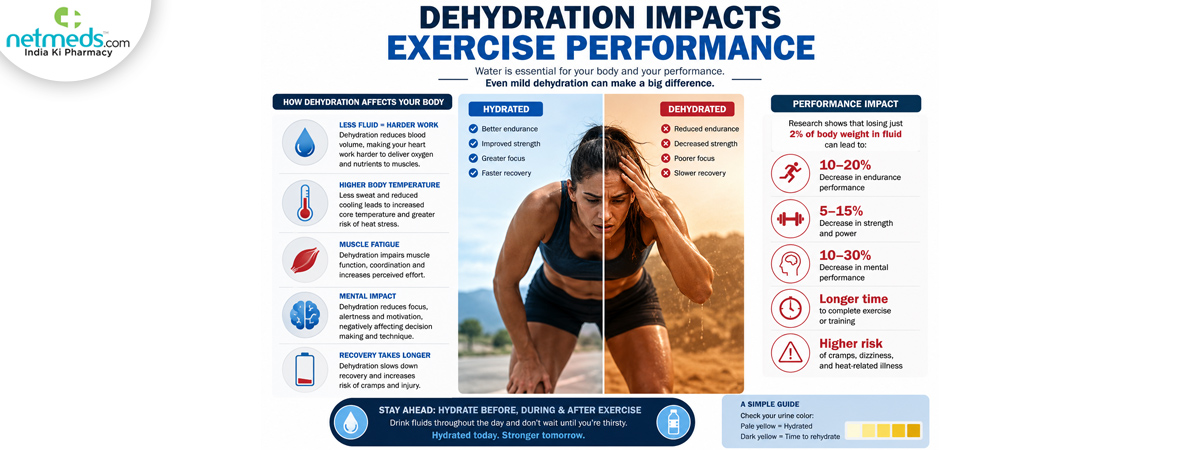
What Is Dehydration?
Dehydration happens when the body loses more fluids than it takes in. Water is vital for several important bodily functions, including regulating body temperature, carrying nutrients, lubricating joints, and supporting muscle contractions.
During any exercise, especially in hot and humid conditions, sweat losses can increase significantly. If these losses are not replaced, fluid imbalance develops, affecting overall performance and health.
How Dehydration Affects Exercise Performance
Reduces Endurance
The main effect of dehydration is a decline in endurance. As the body’s fluid levels deplete, blood volume drops, forcing the heart to work harder to deliver oxygen and nutrients to working muscles. This can result in early fatigue, reduced aerobic capacity, and shorter workout duration. Even evidence reveals that losing as little as 2% of body weight through sweat can remarkably impair endurance.
Also Read: Types Of Exercise: Amazing Health Benefits Of Aerobic, Strength, Flexibility And Balance Workouts
Decreases Muscle Strength
Muscles rely on adequate hydration to function efficiently. Dehydration can impair muscle contractions, reduce strength output, and increase the likelihood of muscle cramps. This may reduce lifting capacity, lower sprint performance and decrease explosive power and lead to much quicker muscle exhaustion.
Athletes involved in high-intensity sports may notice performance declines even with mild dehydration.
Increases Heart Rate
When dehydrated, blood volume decreases, causing the heart to pump faster to meet the body's oxygen demands. This may result in increased heart rate rises during exercise, oxygen is poorly delivered and overall performance declines. This cardiovascular strain can make workouts feel significantly harder than usual.
Impairs Thermoregulation
Sweating is the body's primary cooling mechanism. When fluid levels are low, the body struggles to dissipate heat effectively. This eventually leads to increased body temperature, excessive sweating, heat exhaustion and heat stroke in severe cases. This risk is especially high during summer workouts, outdoor sports, and endurance events.
Affects Mental Focus
Hydration is not only important for muscles but also for brain function. Dehydration can lead to poor concentration, decision-making, slower reaction times and increased mental fatigue. These effects can negatively impact athletes, gym-goers, and recreational exercisers alike.
Common Signs of Dehydration During Exercise
Recognising early symptoms can help prevent performance decline and health complications. Look out for signs:
Excessive thirst
Dry mouth
Dark yellow urine
Dizziness
Headache
Muscle cramps
Fatigue
Rapid heartbeat
Reduced sweating
Difficulty concentrating
If these symptoms occur, stop exercising and rehydrate immediately.
Also Read: Want To Build Stamina? 5 Awesome Workouts That Can Make You Fit
Who Is at Greater Risk of Exercise-Induced Dehydration?
Some people are more susceptible to dehydration, including:
Endurance athletes
Outdoor workers
People exercising in hot climates
Older adults
Children
Individuals with excessive sweating
Athletes participating in long-duration events
The risk increases further during heat waves and high-humidity conditions.
How Much Water Should You Drink During Exercise?
Fluid needs vary depending on body weight, exercise intensity, duration, and climatic conditions.
General Recommendations:
Before Exercise
Drink 400–600 ml of water 2–3 hours before activity.
Consume another 200–300 ml about 20 minutes before starting.
During Exercise
Drink 150–250 ml every 15–20 minutes.
For workouts lasting longer than one hour, consider electrolyte-rich beverages.
After Exercise
Replace lost fluids by drinking water and consuming hydrating foods.
A practical method is to weigh yourself before and after exercise and replace approximately 1.5 litres of fluid for every kilogram lost.
Best Hydrating Foods
There is a rich array of natural foods that are hydrating while offering vital nutrition.
Water-Loaded Fruits
Watermelon
Orange
Muskmelon
Strawberries
Grapes
Hydrating Vegetables
Cucumber
Lettuce
Celery
Zucchini
Tomatoes
Other Hydrating Options
Coconut water
Buttermilk
Soups
Lemon water
Herbal teas
These foods can help maintain fluid balance throughout the day.
Simple Measures to Prevent Dehydration During Workouts
Follow these simple strategies:
Carry a water bottle during exercise.
Start workouts well hydrated.
Monitor urine colour regularly.
Avoid excessive caffeine before intense exercise.
Increase fluid intake during hot weather.
Include electrolytes during prolonged training sessions.
Consume water-rich fruits and vegetables daily.
Take breaks during outdoor activities in extreme heat.
When to Seek Medical Attention
Severe dehydration can become a medical emergency.
Seek immediate help if you experience:
Confusion
Fainting
Rapid breathing
Very high body temperature
Inability to sweat
Persistent vomiting
Severe weakness
Prompt treatment can prevent serious complications.
Conclusion
Hydration is a basic component of exercise performance. Even mild dehydration can reduce endurance, impair strength, increase fatigue, and hinder recovery. Staying hydrated before, during, and after physical activity helps optimize athletic performance, supports cardiovascular function, and protects against heat-related illnesses.
References:
Effects of dehydration on exercise performance
S I Barr 1
https://pubmed.ncbi.nlm.nih.gov/10198142/
https://www.sciencedirect.com/science/article/pii/S2095254615000046
 Previous