


Does your hair look thinner than it used to, or does your once-voluminous ponytail now feel noticeably smaller? You are not alone. Hair thinning, reduced volume and excessive shedding are common concerns, and everything from genetics and ageing to stress, hormonal changes, nutritional deficiencies and harsh styling can affect how full your hair looks.
Here is the good news: while there is no magical food or DIY remedy that can instantly transform thin hair into thick locks, a few simple natural hair-care and lifestyle habits can support healthy hair growth and help minimise preventable damage.
Hair is primarily made of keratin, a protein, so adequate protein and essential nutrients are important for normal hair growth. At the same time, persistent hair thinning can sometimes signal an underlying issue that needs medical attention.
Also Read: 7 Common Diet Mistakes That Lead to Hair Loss And Healthier Alternatives
Why Is Your Hair Losing Volume?
Seeing more hair on your pillow or in the shower doesn't necessarily mean you are going bald. It is normal to shed some hair every day as part of the natural hair-growth cycle.
Also Checkout: Hair Health: 5 Must-to- Add Vitamins For A Lustrous And Stronger Mane-Infographic
However, excessive shedding or gradual thinning may be associated with several factors, including:
Genetics and hereditary hair loss
Ageing
Hormonal changes
Pregnancy and postpartum changes
Stress or illness
Nutritional deficiencies
Certain medications
Thyroid disorders
Scalp conditions
Tight hairstyles
Excessive heat or chemical treatments
So, before loading up on every trending hair-growth supplement, it is worth figuring out why your hair is thinning in the first place.
Can You Naturally Make Hair Thicker?
This depends on what you mean by "thicker."
You cannot permanently change the natural diameter of your individual hair follicles through food alone. However, good nutrition, gentle hair care and a healthy scalp can support normal hair growth and reduce breakage, helping your hair appear fuller.
Some natural ingredients have also been studied for their potential role in hair health, but evidence varies considerably.
The best approach is therefore less about finding one miracle ingredient and more about building consistent habits.
Now, let us explore five simple ways to support healthier, fuller-looking hair naturally.
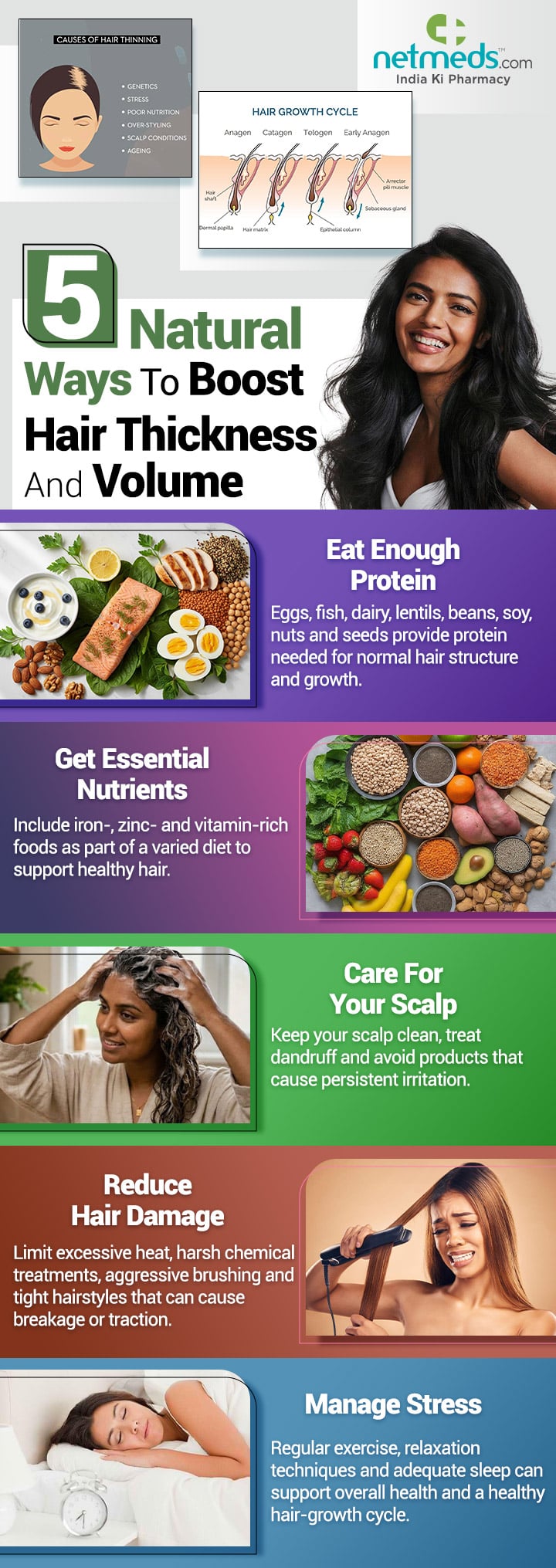
Thicker-looking hair isn't necessarily about finding the latest miracle oil, supplement or DIY mask.
Start with the basics: eat enough protein and nutrient-rich foods, take care of your scalp, minimise heat and chemical damage, avoid consistently tight hairstyles, manage stress and get adequate sleep.
Natural approaches can support healthy hair, but they cannot reverse every type of hair loss. If you are experiencing persistent or significant thinning, getting the underlying cause checked by a dermatologist is one of the smartest things you can do.
After all, the goal isn't simply to make your hair look thicker, it is to support healthy hair growth and protect the hair you already have.
References:
- American Academy of Dermatology Association. Hair loss: Diagnosis and treatment.
- American Academy of Dermatology Association. Hair loss: Tips for managing.
- National Institutes of Health, Office of Dietary Supplements. Biotin Fact Sheet for Health Professionals.
- Almohanna HM, et al. The Role of Vitamins and Minerals in Hair Loss: A Review. Dermatology and Therapy.
- Panahi Y, et al. Rosemary oil vs. minoxidil 2% for the treatment of androgenetic alopecia. SKINmed Journal.
- Cleveland Clinic. Telogen Effluvium: Symptoms, Causes, Treatment & Regrowth.
 Previous