Pregnancy is an important phase of life, when the body requires additional nutrition to promote the baby’s growth and development, while maintaining the overall health of pregnant women. Thus, the nutritional needs are higher during pregnancy.
A well-balanced and tailored pregnancy diet plan should deliver sufficient amounts of vital vitamins, minerals, protein, healthy fats, and complex carbohydrates.
Explore Our Extensive Range Of Nutritional Supplements for Pregnancy And Maternal Wellness
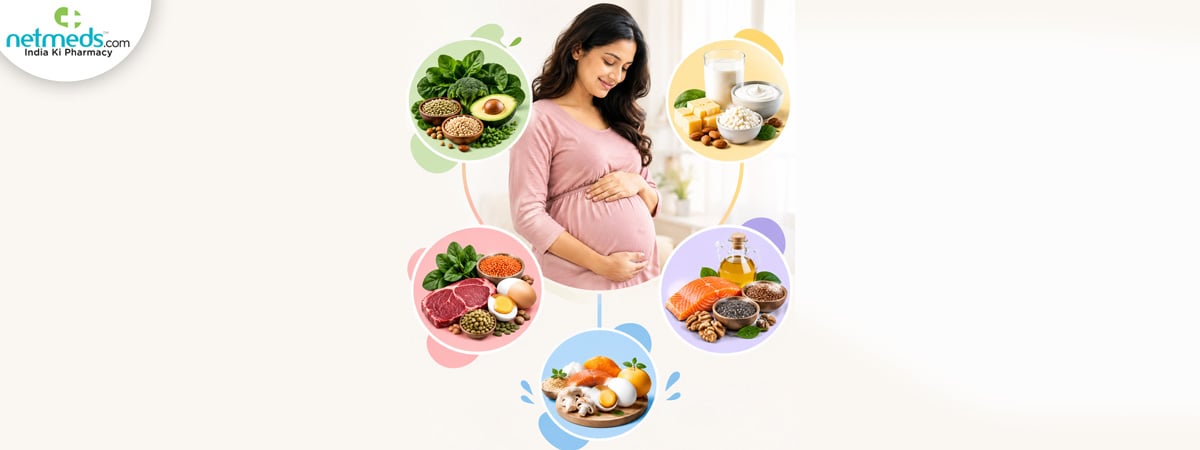
Among the numerous key nutrients required during pregnancy, some play specifically important roles in fetal development, blood formation, bone health, and overall maternal well-being. However, a few nutrients in pregnancy deserve special attention. Here are 5 essential nutrients every pregnant woman should include in her diet, along with their food sources and benefits.
5 Essential Nutrients For Mom And Baby’s Health
Prenatal nutrients are multivitamins particularly critical for every pregnant woman. Compared to regular multivitamin supplements, these have more nutrients that meet the demands during pregnancy.
Folic Acid
Folic acid is a B vitamin, and its supplemental form, folate, is one of the most vital nutrients during pregnancy. This B vitamin supports the formation of the baby’s neural tube, which later develops into the brain and spinal cord. Having folic acid supplement in the recommended dose before and during pregnancy can help prevent birth defects, including spina bifida. In addition, folic acid can lower the risk of premature birth. The recommended folic acid intake during pregnancy is 600 mcg.
Also Read: Eat-Smart Guide, If You Are Eating For Two
Dietary Sources Rich In Folate:
Green leafy vegetables such as spinach and amaranth
Legumes and lentils
Oranges and other citrus fruits
Fortified cereals and grains
Peanuts
Pro-Tip: Doctors commonly recommend folic acid supplements before conception and during early pregnancy.
Iron
The body uses iron to make a protein in red blood cells called haemoglobin, which carries oxygen to all cells and the body’s tissues. During pregnancy, the requirements of iron doubles than non-pregnant women. The body needs iron to make more blood to supply oxygen to both the mother and the developing baby. The requirement of iron is 27 mg per day during pregnancy.
If you are not getting enough iron during pregnancy, it can raise your risk of a condition called iron deficiency anaemia. Common symptoms include headache and extreme tiredness, and if the condition becomes very severe, it can increase the risk of premature birth and low birth weight in babies.
Food Sources Abundant In Iron:
Lentils and beans
Soybeans and tofu
Spinach and other leafy greens
Sesame seeds
Nuts and seeds
Iron-fortified cereals
Meat, poultry and seafood, if included in the diet
The best way to improve iron absorption is to pair plant-based sources of iron with vitamin C-rich foods such as amla, guava, oranges or tomatoes.
Calcium
Calcium is required for the development of the baby's bones and teeth. It also helps maintain the mother's bone health and plays a role in normal muscle and nerve function. The recommended intake of calcium is 1000 mg per day.
Food Sources Loaded With Calcium:
Paneer and other dairy products
Ragi
Sesame seeds
Tofu
Green leafy vegetables
Calcium-fortified foods
Vitamin D
Vitamin D is an important nutrient that helps the body to absorb calcium. Additionally, it is also involved in the proper functioning of muscles, nerves, and the immune system and promotes the growth of stronger bones and teeth. As per the ICMR the recommended intake of vitamin D during pregnancy is 600 IU (international units) daily.
Food Sources Rich In Vitamin D
Fatty fish low in mercury, like sardines and mackerel
Mushroom
Fish liver oils
Fortified dairy products, cereals and orange juice
Omega-3 Fatty Acids
Omega-3 fatty acids, especially DHA, promote the development of the baby’s brain and eyes. Adding suitable sources of omega-3 fatty acids is a vital part of a healthy pregnancy diet regimen.
Food Sources Rich In Omega-3 Fatty Acids:
Low-mercury oily fish such as salmon and sardines
Walnuts
Chia seeds
Flaxseeds
DHA-fortified foods or supplements, when recommended
Pro-Tip: Pregnant women should choose fish carefully and avoid high-mercury fish. If you do not eat fish, speak to your doctor about suitable DHA sources or supplements.
Also Read: Pregnancy Test: What Is It And What To Expect?
Other Nutrients Pregnant Women Need
While these five nutrients are considered particularly important, the nutrition needs during pregnancy comprise more than these alone. Protein, vitamin B12, C, iodine,
However, the appropriate nutritional requirements can vary depending on factors such as age, stage of pregnancy, dietary pattern, and any prevailing nutritional deficiencies. Your doctor or registered dietitian can help determine whether you need supplements.
Why Is a Balanced Pregnancy Diet Important?
A wholesome and balanced diet should include a rich array of colourful vegetables, fruits, whole grains, pulses, protein-rich foods, dairy or suitable alternatives, nuts and seeds. Staying adequately hydrated and limiting highly processed foods and excess added sugar can also support overall health.
Additionally, pregnancy is not the time to follow strict dietary guidelines or choose supplements without proper medical guidance. A few prenatal vitamins can be harmful when taken in excessive quantities.
Frequently Asked Questions
What Are The Most Important Nutrients During Pregnancy?
Folic acid, iron, calcium, protein and omega-3 fatty acids are among the key nutrients required during pregnancy. In addition, vitamin D, B12, iodine, choline and zinc are also important.
Which Food Is Best For Pregnancy?
There is no single best food for pregnancy. A varied and nutritious diet comprising fresh and seasonal vegetables, fruits, whole grains, pulses, dairy or alternatives, protein-rich foods, nuts and seeds provides a broad spectrum of essential nutrients.
Should Pregnant Women Take Supplements?
Some women may need prenatal supplements such as folic acid, iron, vitamin D or B12, depending on their individual needs. Any supplements should only be taken according to medical advice.
Can A Vegetarian Woman Get Enough Nutrients During Pregnancy?
Yes. A well-planned vegetarian diet can provide many essential nutrients during pregnancy through foods such as pulses, beans, soy, dairy, nuts, seeds, whole grains and vegetables. However, nutrients such as vitamin B12, iron and DHA may require special attention.
Conclusion
Getting adequate amounts of the key nutrients during pregnancy supports the growth and development of the baby and well-being of the mother. Folic acid, iron, calcium, protein and omega-3 fatty acids are among the key nutrients to focus on, but they should form part of an overall balanced and varied pregnancy diet.
Always talk about prenatal supplements, dietary restrictions and individual nutritional needs with your gynaecologist before making any huge changes to your pregnancy diet.
References:
https://pmc.ncbi.nlm.nih.gov/articles/PMC10420914/
Nutrition and Supplements during Pregnancy: A Vital Component in Building the Health and Well-Being of Both the Mother and the Developing Baby
Yushu Qin 1, Linglin Xie 1,*
Koivuniemi E., Hart K., Mazanowska N., Ruggeri S., Egan B., Censi L., Roccaldo R., Mattila L., Buonocore P., Löyttyniemi E., et al. Food Supplement Use Differs from the Recommendations in Pregnant Women: A Multinational Survey. Nutrients. 2022;14:2909. doi: 10.3390/nu14142909.
Qin Y., Bily D., Aguirre M., Zhang K., Xie L. Understanding PPARgamma and Its Agonists on Trophoblast Differentiation and Invasion: Potential Therapeutic Targets for Gestational Diabetes Mellitus and Preeclampsia. Nutrients. 2023;15:2459. doi: 10.3390/nu15112459. [
Dingena C.F., Arofikina D., Campbell M.D., Holmes M.J., Scott E.M., Zulyniak M.A. Nutritional and Exercise-Focused Lifestyle Interventions and Glycemic Control in Women with Diabetes in Pregnancy: A Systematic Review and Meta-Analysis of Randomized Clinical Trials. Nutrients. 2023;15:323. doi: 10.3390/nu15020323
Chen H., Hu Y., Li Y., Zhou W., Zhou N., Yang H., Chen Q., Li Y., Huang Q., Chen Z. Association of Folic Acid Supplementation in Early Pregnancy with Risk of Gestational Diabetes Mellitus: A Longitudinal Study. Nutrients. 2022;14:4061. doi: 10.3390/nu14194061.
Jankovic-Karasoulos T., Smith M.D., Leemaqz S., Williamson J., McCullough D., Arthurs A.L., Jones L.A., Bogias K.J., Mol B.W., Dalton J., et al. Elevated Maternal Folate Status and Changes in Maternal Prolactin, Placental Lactogen and Placental Growth Hormone Following Folic Acid Food Fortification: Evidence from Two Prospective Pregnancy Cohorts. Nutrients. 2023;15:1553. doi: 10.3390/nu15071553.
Gerontidis A., Grammatikopoulou M.G., Tzimos C., Gkiouras K., Taousani E., Athanasiadis L., Goulis D.G. Effectors of Pregorexia and Emesis among Pregnant Women: A Pilot Study. Nutrients. 2022;14:5275. doi: 10.3390/nu14245275. [DOI] [PMC free article]
Bold J., Rostami K. Non-coeliac gluten sensitivity and reproductive disorders. Gastroenterol. Hepatol. Bed Bench. 2015;8:294–297
Lee J.H., Lee M., Min H., Youn E., Shim Y.H. Maternal Gliadin Intake Reduces Oocyte Quality with Chromosomal Aberrations and Increases Embryonic Lethality through Oxidative Stress in a Caenorhabditis elegans Model. Nutrients. 2022;14:5403. doi: 10.3390/nu14245403.
Bros-Konopielko M., Bialek A., Johne M., Czajkowski K. Increased LC PUFA Levels in the Serum of Pregnant Women and Their Children as a Result of Dietary Supplementation with ‘Omega’ Fatty Acids. Nutrients.
Tain Y.L., Hou C.Y., Chang-Chien G.P., Lin S., Tzeng H.T., Lee W.C., Wu K.L.H., Yu H.R., Chan J.Y.H., Hsu C.N. Reprogramming Effects of Postbiotic Butyrate and Propionate on Maternal High-Fructose Diet-Induced Offspring Hypertension. Nutrients. 2023;15:1682. doi: 10.3390/nu15071682.
 Previous