Kids are bundles of energy. They love to run around, climb on things, and basically turn the house into their own playground. But with all the screens, online classes, video games, and TV, it is easy for them to end up sitting for hours. After a while, all that sitting takes a toll. Their bodies feel sluggish, their moods dip, and focusing on homework gets even harder.
Also Read: Yoga Day 2025: Theme, Significance And How Kids Can Practice Yoga Daily
Here is the good news: you don’t need fancy equipment or a gym membership to keep kids active. Just a little space and some playful ideas go a long way. When exercise feels like a game instead of a boring ‘workout,’ kids actually want to join in. And once they start moving, they get stronger, healthier, and more confident.
Also Read: Family Fitness: 7 Fun Exercises Everyone Can Do Together
Exercise isn’t just about burning off extra energy, either. Moving around helps kids build strong muscles and bones, sharpen their coordination, and even boost their immune systems. Plus, it is great for their mental health. The habits they build now can stick with them for life.
Why Does Exercise Matter for Kids?
Kids are always growing and changing. Moving around keeps their heart, lungs, muscles, and bones in top shape. Here is what regular exercise really does for them:
Builds strength, balance, and coordination
Supports healthy bones
Lifts their mood and eases stress
Makes it easier to focus and learn
Experts say kids need at least an hour of physical activity every day. It doesn’t have to be a strict workout; fun and games totally count.
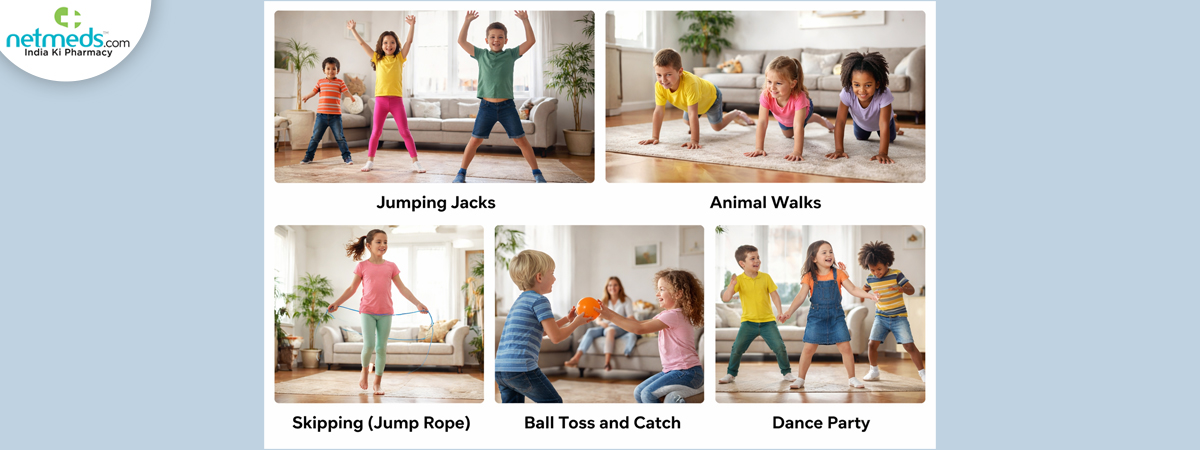
Five Fun Exercises Kids Can Do Right at Home
Jumping Jacks
Jumping jacks are quick, easy, and get the blood pumping. Have your child stand up straight, arms at their sides. Then they jump, spreading their legs and swinging their arms overhead. Jump again to bring everything back in. Keep going for 20 or 30 seconds, or as long as it stays fun.
Benefits:
Doing jumping jacks at home gets the heart rate up, strengthens legs, and boosts energy.
Animal Walks
Pretend play meets exercise! Ask your kids to try walking like a bear, a crab, or even a frog. For the bear walk, they move on their hands and feet with their hips high. With the crab walk, they scoot backwards on their hands and feet. And frog jumps? Just big, silly leaps across the room.
Benefits:
This fun exercise works the arms, legs, and core while improving balance.
Skipping (Jump Rope)
If you have a jump rope, grab it. Skipping is wonderful for building coordination and endurance. Start with basic jumps, then let them speed up or try tricks. Even a minute or two makes a difference.
Benefits:
The jump rope exercise strengthens the heart and legs and sharpens coordination.
Ball Toss and Catch
You don’t need a big backyard; just toss a softball back and forth in the living room. Or bounce it off a wall and see how many times your child can catch it in a row.
Benefits:
The toss and catch movement improves hand-eye coordination and quick reflexes, and helps with focus.
Dance Party
Crank up your child’s favourite song and let them dance like nobody’s watching. Ten or fifteen minutes of silly moves is all it takes.
Benefits:
Dance is one of the best forms of exercise that immediately lifts their mood, gets their whole body moving, and builds flexibility.
How to Get Kids Moving at Home?
Getting kids excited about exercise isn’t hard if you make it fun. Here is what helps:
Turn activities into games or friendly little challenges
Join in and exercise together
Stick to a simple daily routine
Keep things short and upbeat
Celebrate every effort and little win
When kids see exercise as playtime, they will want to do it again and again.
Who Benefits from These Workouts?
These simple moves are excellent for:
Kids are stuck inside a lot
Children who don’t get much outdoor play
Students sitting through long online classes
Any child who needs more movement in their day
Families looking for active things to do together
A Few Precautions
Ensure that there is enough space for kids to move safely. It helps to start with a quick warm-up and offer water when they are done. Don’t push too hard; if they are worn out, let them rest. And for younger kids, stay nearby to keep things safe.
Conclusion
Keeping kids active does not have to be complicated. With a little creativity and encouragement, simple exercises at home can turn into exciting playtime activities. These five playful workouts help children stay physically active, improve coordination, and support healthy growth. More importantly, they make exercise enjoyable and stress-free. Encouraging kids to move, play, and stay active today helps build strong bodies, confident minds, and lifelong healthy habits.
Even a few minutes of fun movement every day can make a big difference in a child’s health and happiness.
References
- https://www.cdc.gov/physicalactivity/basics/children
- https://www.who.int/news-room/fact-sheets/detail/physical-activity
- https://www.nhs.uk/live-well/exercise/physical-activity-guidelines-children-and-young-people/
 Previous