


Does your weight loss journey make you exhausted? Do you suffer from diet fatigue and are stressed out most of the time? Worry not, you are not alone. Trying to lose a few kilos can be exhausting, and the intense pressure to achieve the target can cause anxiety. The simple way to manage weight loss, fatigue and stress is to target the cause, so that you can handle the source.
What Is Diet Fatigue?
Diet fatigue is the physical, mental and emotional tiredness that comes from prolonged dieting or severe food restriction. It is a state at which your motivation goes down, you easily give up, and healthy eating begins to feel like an impossible task rather than a positive lifestyle choice.
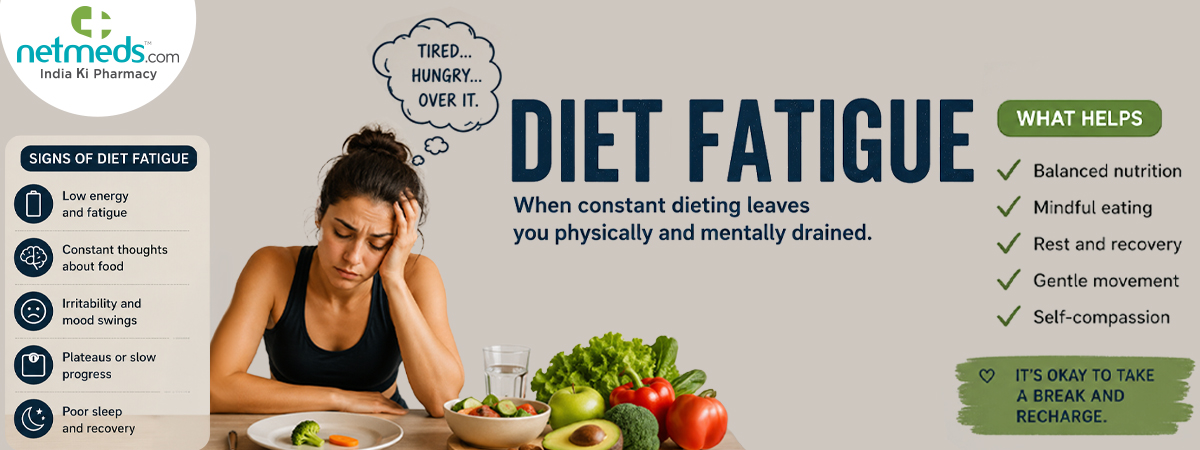
Unlike usual hunger or a poor eating day, diet fatigue is an intense state of burnout. It impacts how you think about food, how your body functions and how you feel about yourself. It is very common and totally understandable, yet it is rarely talked about with the seriousness it needs.
Whether you have been counting calories for days, going through restrictive eating habits or simply trying to eat clean for a long time without any flexibility, diet fatigue can set in and slowly undermine all your progress.
What Causes Diet Fatigue?
Knowing the root causes of diet fatigue is the first step toward overcoming it. The triggers are biological and psychological.
Prolonged Caloric Restriction
When you cut down on calories significantly more than what your body needs for a prolonged period, your metabolism adapts to the situation by slowing down; this phenomenon is called metabolic adaptation. The human body perceives this deficit as a threat and responds by preserving energy, which can lead to constant tiredness and sluggishness.
Decision Fatigue Around Food
Every meal becomes a mental calculation: Is this allowed? How many calories does it have? Should I skip the rice? This restless mental effort is exhausting. Research in cognitive psychology shows that making repeated decisions depletes mental energy, and food choices made under strict rules compound this fatigue quickly.
Social Isolation/ Food Guilt
Going on a strict diet means avoiding social gatherings, avoiding foods at family events or feeling guilty after eating something off plan. Over time, this emotional burden, combined with food deprivation, becomes very draining.
Lack of Flexibility/ Variety
Restrictive diets with a few food options remove pleasure from eating. Food is not just fuel; it is emotion, culture and connection. When meals become very monotonous and joyless, motivation and drive inevitably decline.
Unrealistic Expectations
Most weight loss diets promise quick results and transformation, but when outcomes slow, the gap between expectation and reality triggers fatigue and annoyance.
How Does Diet Fatigue Affect Your Health?
Diet fatigue does not drain you mentally. It has real, measurable consequences impacting your physical and mental health.
Physical Health Effects
Hormonal Disruption
Being on a calorie-restricted diet can raise cortisol, stress hormone levels, lower levels of leptin (satiety hormone) and disrupt ghrelin levels, making you feel hungrier than normal and less satisfied after food intake.
Nutrient Deficiencies
Restrictive diets often limit consumption of entire food groups, increasing the risk of deficiencies in iron, B vitamins, magnesium, and healthy fats all of which are important for energy, brain function, and immunity.
Muscle Loss
Without adequate protein and sufficient calories, the body may break down muscle tissue for energy. This slows metabolism further and leaves you physically weaker.
Also Read: My Dinner Was Dal And Rice For A Month And This Is How Transformed Me
Disrupted Sleep
Low-calorie diets and erratic eating patterns can interfere with sleep quality. Poor sleep can trigger hunger hormones, creating a vicious cycle.
Immune Suppression
Chronic dieting and stress related to it can weaken immune function, making you more susceptible to illness.
Mental Health Effects
Increased Anxiety
Blood sugar fluctuations due to undereating or a calorie deficit can cause irritability, brain fog, and anxiety. This is worsened by the constant mental pressure of food rules.
Disordered Eating Patterns
Diet fatigue often leads to binge-restrict cycles, periods of strict dieting followed by episodes of overeating, which can evolve into disordered eating behaviours over time.
Reduced Self-Esteem
When fatigue leads to "breaking" the diet, many people blame themselves rather than the diet itself. This self-criticism takes a serious toll on mental health and self-worth.
Loss of Food Enjoyment
One of life's genuine pleasures is eating well, but when this becomes a source of stress and anxiety rather than nourishment and joy.
Evidence-Backed Strategies to Overcome Diet Fatigue
Take a Structured Diet Break
Go for planned diet breaks, periods of two to four weeks, where you eat at maintenance calories. This method has been proven in several studies to reduce metabolic adaptation and restore hormonal balance. Rather than "falling off" your diet, a planned break is a strategic tool. This is not failure; it is smart physiology.
Shift Your Focus from Rules to Principles
Replace strict rules with more flexible principles. Remember, rigid principles only create structure without the psychological burden of rules that, when broken, you may feel devastating.
Eat More, Not Less
Contrary to common sense, eating slightly more, especially adding good quality protein and fibre-rich foods, can stimulate long-term progress by restoring energy, preserving muscle mass and reducing fatigue that leads to binge eating. A modest calorie restriction of about 10-15% is far more sustainable than aggressive restriction.
Also Read: No Crash Diets No Gym Crazy Hours How Lost 14 Kg Smartly And Kept My New Year Promise
Reintroduce Variety
Deliberately add back foods you enjoy, even those you had labelled as "bad." Eliminating entire food categories increases their psychological power and your desire for them. A diet that includes occasional treats is one you can maintain long-term.
Address the Mental Load of Eating
Meal prepping, using a simple flexible framework like the plate method (half vegetables, quarter protein, quarter wholegrains), and reducing daily food decisions all decrease decision fatigue significantly. When eating is simpler, it is less tiring.
Move Your Body for Joy, Not Punishment
If exercise has become a way to "burn off" food or earn the right to eat, it is adding to, not reducing, your fatigue. Shift toward movement you genuinely enjoy, such as walking, dancing, yoga, and swimming. Exercise should energise you, not feel like a penalty.
When to Seek Professional Help
If diet fatigue has led to persistent disordered eating patterns, severe anxiety around food, or significant physical symptoms, it is important to speak with a healthcare provider. A doctor, registered dietitian, or therapist specialising in eating behaviours can provide personalised support and ensure your approach to health is safe and sustainable.
Conclusion
Diet fatigue is not a personal failing. It is a predictable physiological and psychological response to approaches that are too restrictive, too rigid, or simply not designed with sustainability in mind. Recognising it for what it is, a signal that something needs to change and is an act of intelligence, and not weakness. Healthy dieting is more about a flexible, nourishing, and compassionate relationship with food and your body, one built on principles that can last a lifetime, not rules that expire in weeks.
References:
https://www.mdpi.com/journal/nutrients/special_issues/Fatigue_Nutrition_Diet
https://pmc.ncbi.nlm.nih.gov/articles/PMC9583472/
Efficacy of diet on fatigue, quality of life and disability status in multiple sclerosis patients: rapid review and meta-analysis of randomized controlled trials
María Dolores Guerrero Aznar 1,✉, María Dolores Villanueva Guerrero 1, Jaime Cordero Ramos 1, Sara Eichau Madueño 2, María Morales Bravo 2, Rocío López Ruiz 2, Margarita Beltrán García 1
 Previous