Bronchoscopy is an endoscopic procedure that enables viewing the internal structures of the lungs and airways. This advanced diagnostic technique is carried out in the patient by a doctor specializing in respiratory ailments known as a pulmonologist.
Why It Is Done:
The main purpose of performing a bronchoscopy is to view the interior pathways of the lungs and spot any warning signals of disease early on, to ensure timely treatment of the pulmonary disorder and augment respiratory wellness. This protocol is predominantly used to determine signs of the following maladies in the patient:
- Lung Infection
- Pulmonary Tumours And Lung Cancer
- Blockages In Breathing Passages
- Excess Mucus Buildup And Chronic Cough
Also Read: Lung Cancer: Causes, Symptoms And Treatment
Procedure:
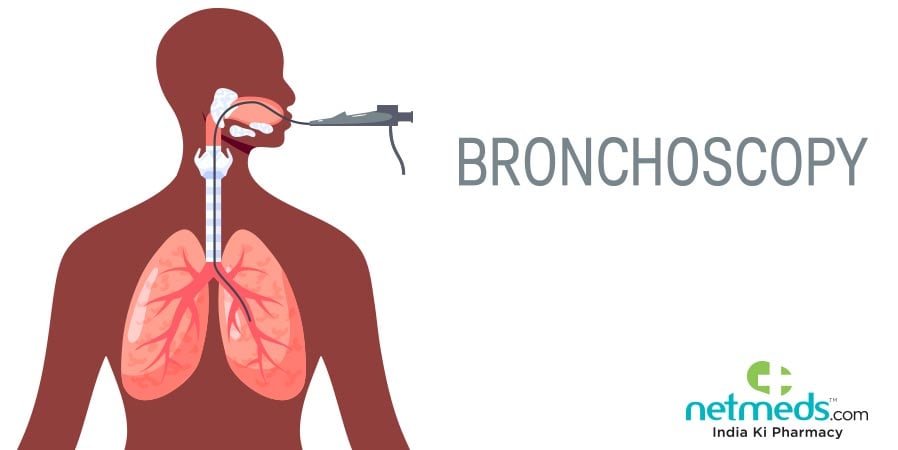
Bronchoscopy employs an instrument known as a bronchoscope, which enables clear visualization of the internal assemblies of the lungs, the larynx or voice box, trachea i.e. windpipe and tubular pathways of the lungs namely the bronchi and bronchioles. A bronchoscope is typically composed of a pliable fiber optic substance carrying a light source and a camera lens to capture images of the lungs internally, which is linked to a colour video screen on the outside to enable viewing of the lung components. In certain instances, a biopsy of the lung tissue sample is also collected alongside a bronchoscopy to analyse if any foreign particles or microbial infectious/pathogenic agents are present.
This invasive method is painful and hence the patient is administered a local anaesthetic – a substance that numbs sensations and dulls pain, in the nose and throat initially. Moreover, a sedative is also given to make the individual drowsy but ensure they are awake during the process. Oxygen supply to the lungs is provided as well, for continuous support to the respiratory passages and uninterrupted breathing of the patient. Additionally, the patient must not consume any food or drink for at least 6 – 12 hours before the procedure. The doctor also advises the patient to cease taking prescription blood-thinning medications prior to bronchoscopy.
The patient is requested to sit or lie down on their back in a seat or bed, placing both arms on their sides. Vital parameters such as heart rate and blood pressure are constantly monitored throughout the procedure by connecting the patient to tracking monitors. Then a sedative is injected intravenously, an anaesthetic is sprayed on the nose and throat and the bronchoscope is inserted into the nose or mouth. This instrument is gradually made to traverse down the back of the throat, via the vocal cords into the trachea and the lungs. Once the internal structures are viewed thoroughly and required samples of tissue or mucus are collected, the instrument is slowly reverted outside. The entire procedure of bronchoscopy takes between 30 – 60 minutes and the patient is monitored for a few hours post completion.
Risks:
A bronchoscopy protocol is generally safe for most individuals. The patient feels numb in their nose and throat for some time after the procedure, making it difficult to swallow. Once they become normal, they are advised to slowly sip on a glass of water first and take solid food only after some time.
Certain risks associated with bronchoscopy include:
- Bleeding within the lungs
- Difficulty in breathing
- Low blood oxygen concentrations
These issues are addressed immediately by a team of medical experts and the patient recovers completely.
Results:
Results of the bronchoscopy are given to the patient after 1 – 3 days post the procedure. The pulmonologist informs the individual of any potential lung problems such as COPD (chronic obstructive pulmonary disease), infections in the lungs or bronchitis.
Also Read: Acute Bronchitis Is Contagious, Seek Timely Help
If biopsy samples are collected, they are examined for the presence of cancer and the patient is given the proper course of treatment, to restore lung function.
Frequently Asked Questions
1. What is bronchoscopy and why is it done?
Bronchoscopy is a procedure that allows doctors to examine the airways and lungs and may be used to investigate infections, lung cancer, persistent cough, abnormal imaging or coughing up blood.
2. Is bronchoscopy a painful procedure?
Bronchoscopy is generally well tolerated, with local anaesthesia and, when appropriate, sedation used to improve comfort and reduce discomfort during the procedure.
3. What are the possible risks of bronchoscopy?
Possible complications include cough, temporary low oxygen levels, bleeding, fever, abnormal heart rhythm and, less commonly, pneumothorax or other serious complications.
4. How long does it take to recover from bronchoscopy?
Recovery time varies depending on the type of bronchoscopy, sedation and any biopsy performed, so patients are usually monitored until their breathing and alertness have adequately recovered.
5. What can bronchoscopy results show?
Bronchoscopy findings and samples may help identify infections, inflammation, cancer or other lung abnormalities, although additional tests may sometimes be needed to establish a diagnosis.
References:
Guidelines for Diagnostic Flexible Bronchoscopy in Adults – Indian Chest Society/NCCP(I)/Indian Association for Bronchology
American College of Chest Physicians Consensus Statement on Anaesthesia, Analgesia and Sedation During Flexible Bronchoscopy
Guidelines on Analgosedation, Monitoring and Recovery Time for Flexible Bronchoscopy: A Systematic Review
Complications and Discomfort of Bronchoscopy: A Systematic Review
Diagnostic Yield and Safety of Diagnostic Techniques for Pulmonary Lesions: Systematic Review and Meta-analysis
Sensitivity of Radial Endobronchial Ultrasound-Guided Bronchoscopy for Lung Cancer: Updated Meta-analysis
Radial Probe Endobronchial Ultrasound for Diagnosis of Peripheral Lung Cancer: Systematic Review and Meta-analysis
Sedation for Flexible Bronchoscopy: Current and Emerging Evidence
Anaesthesia for Bronchoscopy
Endobronchial Ultrasound-Driven Biopsy in the Diagnosis of Peripheral Lung Lesions
 Previous