Sesame seeds are one of the oldest cultivated oilseeds by human beings and have been revered for ages in Ayurveda, Traditional Chinese Medicine and modern nutrition. These tiny nutrient-dense seeds have the power to transform any dish, changing its flavour, texture and visual appeal. And it’s not just about looks; the colour you choose can impact the taste and nutritional profile too. White sesame seeds offer a mild, nutty sweetness, while black sesame renders a bold, earthy flavour.
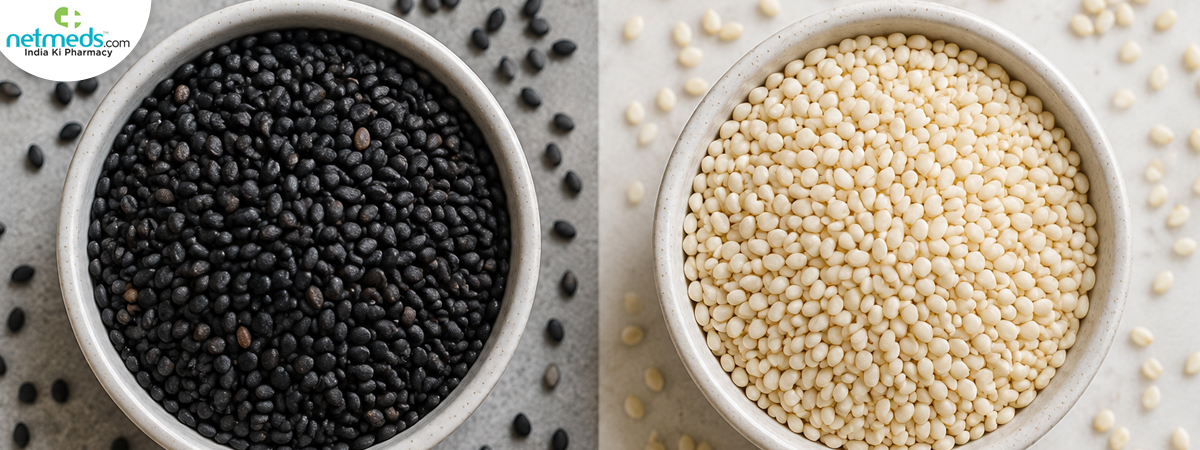
If you are wondering black sesame seeds vs white sesame seeds: which is healthier? This article compares their nutrition, benefits, and uses to help you make the right choice.
What Are Sesame Seeds?
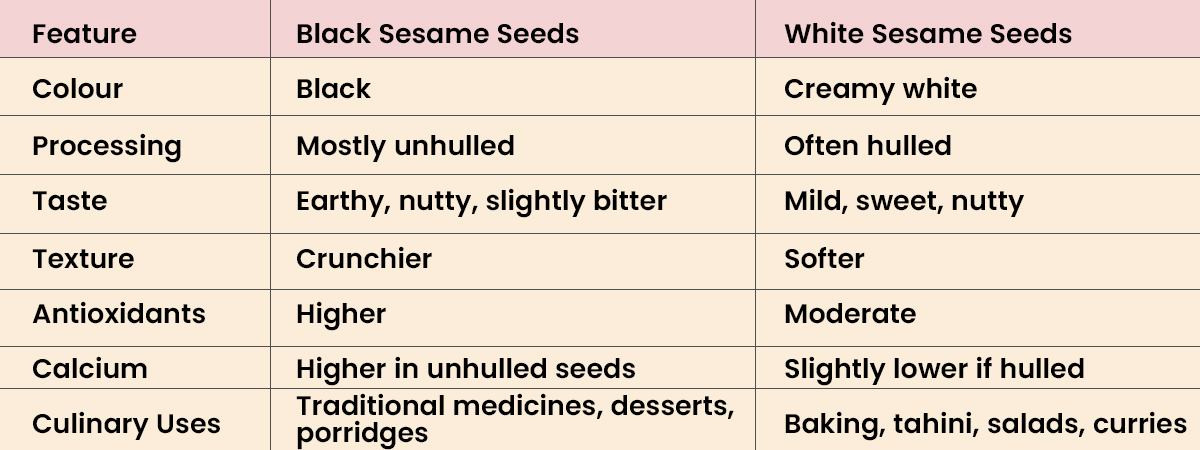
Sesame seeds are edible seeds of the plant Sesamum indicum and are available in different colours such as white, black, brown, and golden. White sesame seeds are generally hulled (outer shell removed), making them softer and milder in taste. Black sesame seeds usually retain their outer hull, giving them a stronger flavour and slightly higher antioxidant content.
Also Read: Sesame Seeds- Tiny with Huge Benefits
Black Sesame Seeds Vs White Sesame Seeds: Key Differences
Nutrition Comparison: Black Sesame Seeds Vs White Sesame Seeds
Black Sesame Seeds
Nutrient Density
Compared to their white variants, black sesame seeds are bestowed with a dense profile of nutrients. They exhibit potent antioxidant activity owing to their dark pigment, which hosts a rich array of beneficial bioactive compounds like anthocyanins.
Minerals: It has a higher proportion of calcium, magnesium and iron content, supporting bone health and boosting iron levels.
Fiber: Black sesame seeds are a little higher in dietary fiber than white sesame seeds, as it retains the hull portion, which helps promote digestion and gut health.
White Sesame Seeds
Refining: White sesame seeds are dehulled; as their outer skin is removed, they seem to be smoother and easier to digest but have a slightly lower nutrient density than the black sesame seeds.
Fat: White sesame seeds contain slightly higher amounts of fat, making them richer and more indulgent.
Minerals: Though not as mineral-loaded as black sesame seeds, white sesame seeds offer a considerable amount of calcium, especially when they are left dehulled.
Flavour and Culinary Purposes
Black sesame seeds: They have an earthy, nutty flavour and are more aromatic than white sesame seeds. Typically, they are used in Asian cuisines for a wide range of culinary delicacies such as desserts, baking and toppings for rice dishes. They are also used to make tahini, black seed oil and sesame paste.
White Sesame seeds: It is less bitter and even more mellow with a hint of sweetness. They are versatile and used in both sweet and savoury dishes. It is used in baked goods, as a topping for bread and bagels, puffs and in making tahini
Health Benefits Of Black Sesame Seeds
Antioxidant Effects
Black sesame seeds are endowed with a storehouse of anthocyanins, sesamin, sesamolin, and vitamin E compared to white sesame seeds, helping reduce oxidative stress and inflammation. They protect cells from free radical damage, slow down signs of premature ageing and mitigate the risk of chronic inflammation.
Bone Health
Black sesame seeds are usually consumed with their hull intact, and they naturally offer more calcium. Regular addition improves bone mineral density, strengthens teeth, and lowers risk of fractures and osteoporosis.
Strengthens Hair Volume
Black sesame seeds are highly valued in traditional medicine and are beneficial for averting premature greying, strengthening hair and promoting hair growth. The goodness of hair-friendly nutrients such as iron, zinc, and antioxidants helps nourish hair follicles.
Enhances Heart Health
The presence of healthy fats, phytosterols and lignans helps lower LDL cholesterol levels, improve HDL cholesterol levels, maintain lipid profile and regulate blood pressure.
Health Benefits Of White Sesame Seeds
Plant Protein
White sesame seeds are widely used to boost protein intake in vegetarian diets. Including white seeds may help build muscle mass, repair tissues, and promote satiety
Supports Healthy Digestion
The dietary fibre content helps prevent constipation, improve gut microbiome balance and regularise bowel movements.
Boosts Skin Health
Vitamin E, healthy fats, and antioxidants in white sesame seeds revamp skin health by boosting hydration, promoting collagen production and offering protection against oxidative damage.
Triggers Immunity
White sesame seeds provide zinc, copper and small amounts of selenium; these nutrients boost immune cell response and augment overall health.
Also Read: Amazing Uses, Health And Nutritional Benefits of Sesame Seeds & Oil
Black Sesame Seeds Vs White Sesame Seeds: Which Is Healthier?
Both are highly nutritious, but the choice depends on your health goals and culinary usage.
Choose Black Sesame Seeds If You Want:
More antioxidants
Better support for bone health
Traditional benefits for hair health
Stronger anti-ageing properties
Choose White Sesame Seeds If You Want:
A milder flavour
Easier digestion
Baking and cooking versatility
Smooth tahini and sesame paste
Daily nutritional support
Black sesame seeds have a slight nutritional edge because they are usually consumed with their hull intact, preserving more calcium, fibre, and antioxidant compounds. However, both varieties are excellent additions to a balanced diet.
How To Include Sesame Seeds In Your Diet
Try adding sesame seeds to:
Smoothies
Yogurt
Salads
Stir-fried vegetables
Soups
Homemade energy bars
Chutneys
Rotis
Tahini
Sesame laddoos
Lightly roasting sesame seeds enhances their flavour without significantly affecting nutrition.
Are There Any Side Effects?
Sesame seeds are generally safe when consumed in moderation. However:
Excess intake may increase calorie consumption.
In people with allergies, it may cause severe allergic reactions.
Those with kidney stones should monitor overall oxalate intake.
A serving of 1–2 tablespoons daily is sufficient to obtain nutritional benefits.
Frequently Asked Questions
Which Is Healthier, Black Sesame Seeds Or White Sesame Seeds?
Black sesame seeds are generally considered slightly healthier because they usually retain their outer hull, providing more calcium, fibre, and antioxidants. However, both varieties are highly nutritious.
Can Black Sesame Seeds Improve Hair Growth?
Black sesame seeds contain iron, zinc, copper, healthy fats, and antioxidants that support healthy hair. While they nourish hair follicles, they should be part of an overall nutrient-rich diet rather than viewed as a standalone remedy.
Are White Sesame Seeds Good For Weight Loss?
Yes. White sesame seeds are rich in protein, healthy fats, and fibre, which promote fullness and may help reduce overeating when included in a balanced diet.
Can Diabetics Eat Sesame Seeds?
Yes. Sesame seeds have a low carbohydrate content and provide fibre, healthy fats, and magnesium, which may support healthy blood sugar management when eaten in moderation.
Conclusion
Whether you choose black sesame seeds or white sesame seeds, both are nutritional storehouses loaded with healthy fats, plant protein, fibre, vitamins, and essential minerals. Black sesame seeds offer a slight advantage due to their higher antioxidant and calcium content, while white sesame seeds are more versatile in cooking and have a milder taste. Regularly including either variety can support heart health, bone strength, digestion, immunity, and overall wellness.
References:
Sesame (Sesamum indicum L.): A Comprehensive Review of Nutritional Value, Phytochemical Composition, Health Benefits, Development of Food, and Industrial Applications
Panpan Wei 1, Fenglan Zhao 1, Zhen Wang 1, Qibao Wang 2, Xiaoyun Chai 3,*, Guige Hou 4,*, Qingguo Meng 1,*
Editor: Adam Matkowski
https://pmc.ncbi.nlm.nih.gov/articles/PMC9573514/
https://www.researchgate.net/publication/341993122_An_Evaluation_of_dark_sesame_seeds_versus_white_sesame_on_blood_glucose_oxidative_stress_markers_and_kidney_function_in_streptozotocin-induced_diabetic_rats
 Previous