


Winter brings cosy blankets, hot beverages, and comforting meals. It can also make acid reflux symptoms more noticeable for some people. A burning sensation in the chest, a taste in the mouth, or discomfort after eating may indicate acid reflux. Cold weather itself is not an established cause of acid reflux. However, winter habits such as eating meals, drinking more tea or coffee, and snacking close to bedtime may aggravate symptoms.
Understanding your triggers and making lifestyle changes can help you manage the discomfort.
Also Read: Tips To Prevent Heartburn During Pregnancy
What Is Acid Reflux?
Acid reflux occurs when stomach contents flow backwards into the oesophagus the tube that carries food from your mouth to your stomach. This happens when the lower oesophageal sphincter, a valve between the stomach and oesophagus, relaxes or does not close properly. Common symptoms include heartburn, a bitter taste in the mouth, regurgitation, bloating, and frequent belching. Symptoms may worsen after meals, when bending over or when lying down. Frequent or persistent reflux may indicate gastroesophageal reflux disease (GERD), a condition that may require treatment.
Also Read: Bloating During Pregnancy: Causes, Effects, And Home Remedies For Instant Relief
Why Can Acid Reflux Get Worse in Winter?
Several seasonal habits may contribute to reflux symptoms:
Meals: Rich gravies, fried snacks, creamy dishes, and high-fat foods may worsen symptoms in some people.
Tea and coffee: Caffeine can trigger reflux symptoms in susceptible individuals, although not everyone reacts in the same way.
Late-night eating: Eating close to bedtime increases the likelihood of reflux when you lie down.
Reduced physical activity: Less movement during winter may contribute to weight gain over time. Excess body weight can increase pressure on the abdomen. Aggravate reflux.
Spicy foods: Chilli dishes and spicy sauces may intensify heartburn in some people, although they are not universal triggers.
Also Read: Hormone Imbalance And Weight Gain: Causes, Symptoms, And Remedies
5 Foods That May Help Manage Acid Reflux in Winter
No single food can cure acid reflux. However, choosing foods that are lower in fat and identifying what you tolerate well may help manage symptoms.
Oatmeal
Oatmeal is a grain that provides fibre and makes a filling breakfast. Choosing oatmeal instead of a rich fried breakfast may help you avoid excess fat, which can worsen symptoms in some people.
How to eat it: Prepare oats with water or low-fat milk. Add sliced banana or pear. Limit butter, cream, and other ingredients that trigger your symptoms.
Bananas
Bananas are generally well tolerated by people with reflux and provide fibre and potassium. However, individual responses vary, so they may not suit everyone.
How to eat them: Enjoy a banana as a snack or add slices to oatmeal.
Green Vegetables
Spinach, broccoli, green beans, and bottle gourd are fibre-containing options that can fit into a balanced reflux-conscious diet.
How to eat them: Prepare cooked vegetables, simple sabzis, or vegetable soups using moderate amounts of oil.
Non-Citrus Fruits
Apples, pears, and melons may be alternatives for people who find citrus fruits trigger heartburn. Fruit tolerance varies, so choose options that do not worsen your symptoms.
How to eat them: Enjoy fruit between meals or add chopped apple or pear to oatmeal.
Ginger
Ginger is traditionally used to support digestion. May help with nausea. However, strong evidence that ginger directly treats reflux is limited. It can also aggravate symptoms in some individuals.
How to eat it: Add an amount of fresh ginger to soup or try a mild ginger infusion if you tolerate it well. Stop if it worsens your heartburn.
When Should You See a Doctor?
Consult a healthcare professional if heartburn occurs frequently, disrupts sleep, or persists despite lifestyle changes. Difficulty swallowing, persistent vomiting, unexplained weight loss, vomiting blood, or black stools require medical assessment. Seek medical attention for chest pain accompanied by breathlessness, sweating, dizziness or pain spreading to the arm or jaw may indicate a heart problem rather than acid reflux.
Frequently Asked Questions
Why does acid reflux increase in winter?
Heavier meals, increased caffeine intake, late-night snacking and reduced physical activity may aggravate symptoms. Cold weather itself is not an established cause.
Which foods may help with reflux?
Oatmeal, bananas, green vegetables, and non-citrus fruits may suit some people. Ginger may help with nausea. Evidence for treating reflux is limited.
Is water good for acid reflux?
Warm water can help maintain hydration. There is limited evidence that it directly reduces acid reflux. Avoid drinking large amounts at once if this increases discomfort.
What should I avoid eating at night?
Avoid high-fat meals and any foods or drinks that trigger your symptoms. Finish eating at least three hours before bedtime.
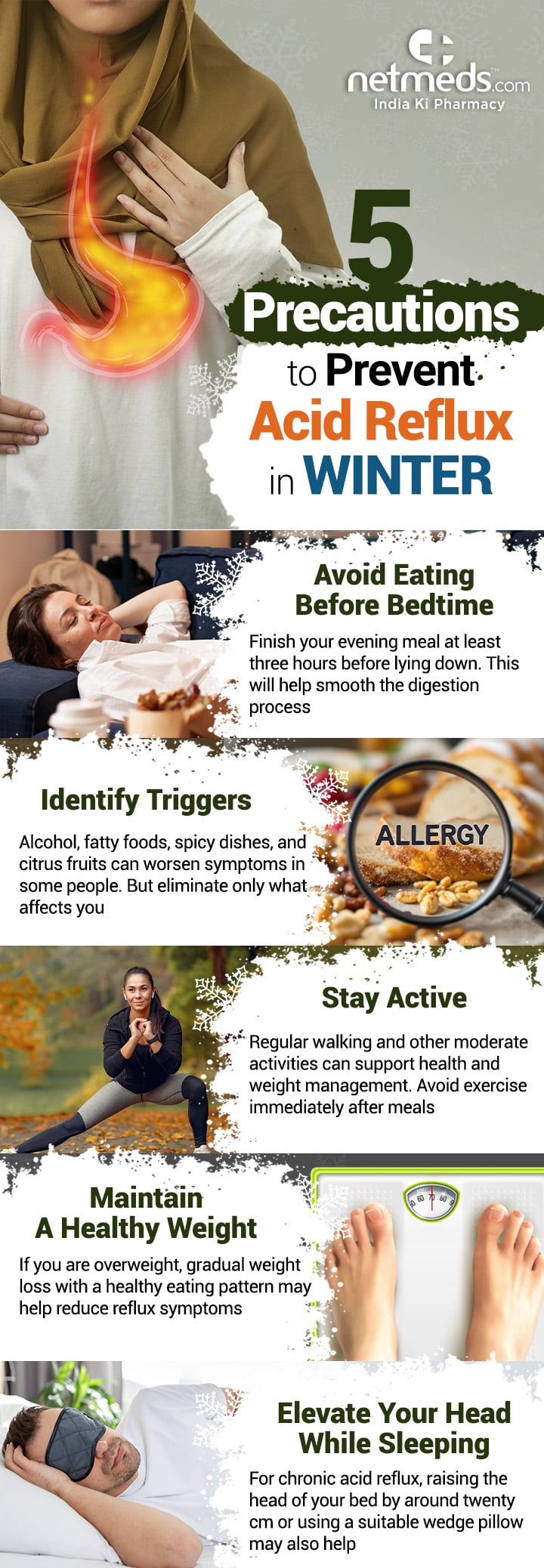
In conclusion, eating meals while avoiding personal triggers and allowing time between dinner and bedtime may help manage symptoms. If reflux is persistent, seek advice. Browse through the infographic to learn more:
References:
https://www.ncbi.nlm.nih.gov/books/NBK554462/
https://pmc.ncbi.nlm.nih.gov/articles/PMC6140167/
https://gi.org/topics/acid-reflux/
https://bcmj.org/articles/gastroesophageal-reflux-disease-diagnosis-and-management-primary-care-setting
https://www.jnmjournal.org/journal/view.html?uid=1890&vmd=Full
https://link.springer.com/article/10.1186/s12876-024-03143-9
https://www.ijpsjournal.com/article/Review+Article+On+Hyperacidity+?pfrom=home-khabar_career
https://pmc.ncbi.nlm.nih.gov/articles/PMC2988245/
https://ndl.iitkgp.ac.in/re_document/springer_link/1234_Springer_10973/11095
https://pmc.ncbi.nlm.nih.gov/articles/PMC8966100/
 Previous


