Plantar fasciitis is a foot condition caused due to inflammation and damage of the plantar fascia ligaments that extend along the bottom of the foot and connecting the heel to the toes. It is one of the common causes of pricking heel pain while walking, jogging, or doing any activities that apply pressure to the heels, eventually leading to plantar fasciitis. This ligament in the feet acts as a shock absorber, adapting the tension on the foot during mobility. Generally, this condition affects only one foot at a time, but in some cases, both feet are affected.
The main reason for plantar fasciitis is overuse of the foot as well as a heel while standing or walking for a long duration. When excess stress is put on the foot, it results in wearing and tearing of the tissue, with mild injuries to the plantar fascia.
Get Instant Relief From Heel Pain and Cramps, Shop From Our Wide Range Of Essential Oils!
Some of the possible treatment options include:
- Rest
- Ice
- Massage
- Essential oils and aromatherapy
- Medications
- Physical therapy
- Orthotics offer support to the arch
- Using night splints provide support to the heel while sleeping
- Weight loss
Also Read: 5 Amazing Essential Oils To Treat Rheumatoid Arthritis
Well, essential oils have proven to offer remarkable relief and support the body’s normal healing functions. These concentrated plant extracts are imbued with active chemicals that possess strong anti-inflammatory traits, which ease pain without any harmful side effects. Essential oils also improve blood circulation and trigger the immune response. Thereby making them an excellent natural cure for muscle pain, foot pain and back pain as well.
How To Use Essential Oils For Plantar Fasciitis?
First, dilute essential oils in a carrier oil like jojoba oil or coconut oil, then add 2-3 drops of essential oil per 1 teaspoon of carrier oil.
You can use it as a massage oil and mildly rub the affected region
Add essential oils, Epsom salts to warm water for a healing foot soak
Blend oils to make your own DIYs, this has a positive impact and offers respite from pain.
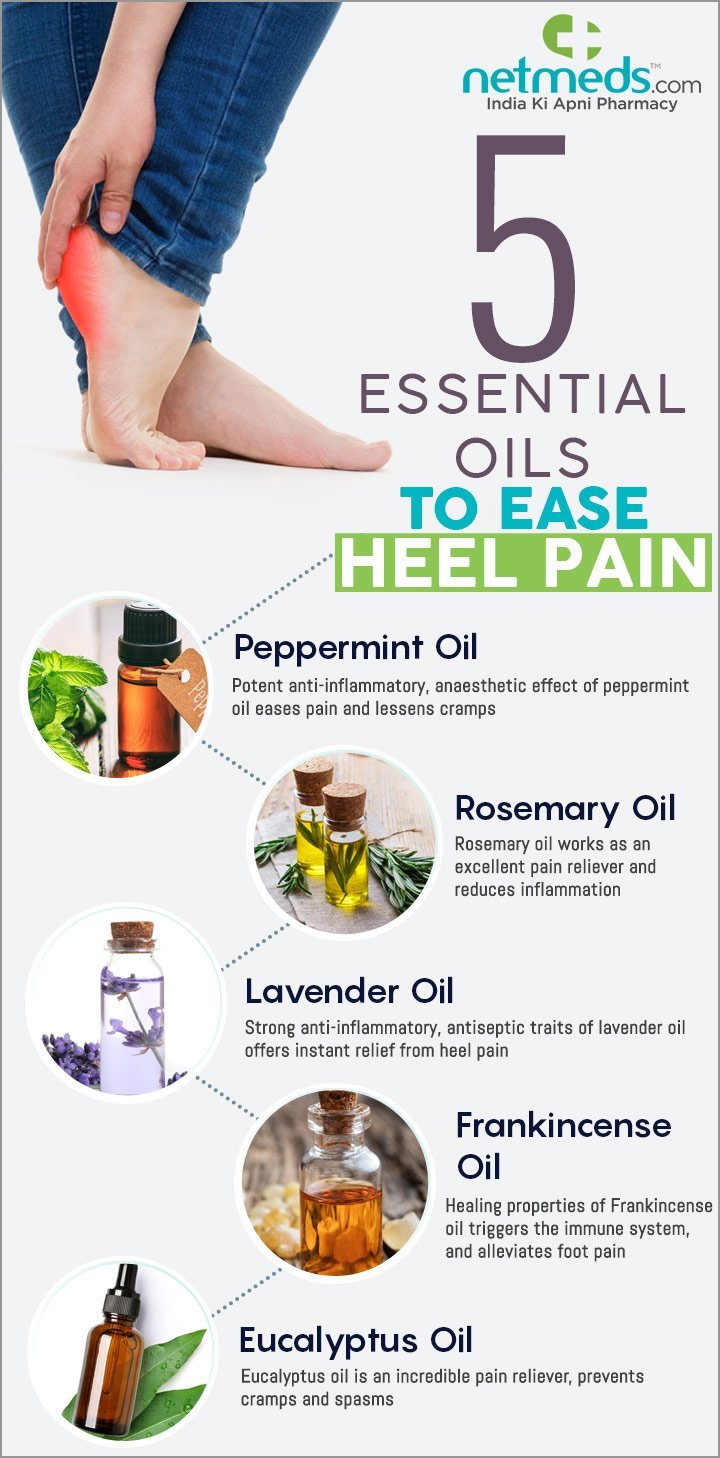
Try some of these essential oils that work remarkably well in alleviating heel pain.
Foray into this infographic for more details.
Frequently Asked Questions
What Is The Best Essential Oil For Plantar Fasciitis?
Several essential oils can help reduce pain and inflammation, but none cure the condition. The most recommended essential oils include:
Peppermint oil offers cooling and pain-relieving.
Lavender oil reduces inflammation and relaxes muscles.
Eucalyptus oil possesses anti-inflammatory effects.
Rosemary oil improves circulation and eases stiffness.
Frankincense oil reduces chronic inflammation.
Dilute 2–3 drops in a carrier oil (coconut, almond, or olive oil) and massage the heel and arch.
What Vitamin Deficiency Causes Plantar Fasciitis?
While plantar fasciitis has many causes, certain deficiencies may increase risk:
Common Deficiencies Linked to Foot Pain / Fascia Weakness
Vitamin D deficiency is linked to weakened bones, foot pain, and heel inflammation.
Vitamin B12 deficiency can cause nerve pain in the feet.
Magnesium deficiency affects muscle tightness and calf tension.
Vitamin C deficiency slows tissue healing and collagen repair.
A blood test can confirm deficiencies.
What Can I Rub On My Heel For Plantar Fasciitis?
You can apply several topical remedies to help reduce heel pain:
Topical Options
Anti-inflammatory creams (diclofenac gel, ibuprofen gel)
Magnesium oil helps relax tight muscles.
Essential oils in a carrier oil (peppermint, lavender, eucalyptus)
Capsaicin cream reduces pain signals.
Arnica gel eases inflammation and pain.
What Is The Fastest Way To Heal Plantar Fasciitis?
Fastest recovery comes from combining rest, stretching, and support:
To Do Immediately:
Ice pack heel 10–15 minutes
Avoid barefoot walking
Switch to cushioned, supportive shoes
To Do Daily:
Calf stretches and towel stretches.
Plantar fascia stretching before standing in the morning.
Roll foot on a frozen water bottle or massage ball.
Support such as orthotic inserts and wear night splints.
Reduce strain
Avoid running or jumping temporarily.
Consider doing low-impact exercise (cycling, swimming).
Following a strict routine can reduce pain significantly within 2–4 weeks.
References:
https://pmc.ncbi.nlm.nih.gov/articles/PMC4853481/
Management of plantar fasciitis in the outpatient setting
Ang Tee Lim 1,✉, Choon How How 2, Benedict Tan 1
https://journals.sagepub.com/doi/10.1177/2473011419896763
 Previous