


Datura stramonium, or Jimson weed, is a well-known wild herb bearing bold and bright pearl white flowers. Called by many vernacular names such as thorn apple, angel's trumpet, moonflowers, devil's snare, devil's trumpet, and angel’s trumpets, this genus comprises nine species of poisonous plants belonging to the nightshade family Solanaceae. The herb that is best known for its hallucinogenic and hypnotic properties and infamous for many reasons has a lot more to offer. While it is toxic and even deadly to a certain degree, when used in the right quantities, it has myriad health and wellness benefits and has been used for medicinal effects, as an intoxicant, and as a mind relaxant for ages. The various alkaloids, minerals, and organic compounds found in this herb make it beneficial in many ways. Since time immemorial, it has been widely used to alleviate pain, treat fever, enhance heart function, improve fertility, and ease childbirth, besides augmenting hair and skin health.
Also Read: Datura: Benefits, Uses, Formulations, Ingredients, Method, Dosage and Side Effects
Shop from our range of ointments,d herbal medicines, and tonics
Therapeutic Uses Of This Narcotic Herb
Native to dry, temperate, and subtropical regions of America, specifically Mexico, in India, jimson weed is found in the Himalayan regions ranging from Kashmir to Sikkim. A strong narcotic plant, jimson weed has potent analgesic, anthelmintic, and anti-inflammatory properties that offer the following umpteen health benefits:
- The antispasmodic effect of this herb soothes the respiratory tract and prevents it from producing mucus.
- In case of painful pregnancy or delivery, topical application of jimson weed proves to be very helpful in reducing labor pain.
- Jimson weed contains ascorbic acid that plays an essential role in helping reduce uric acid in the blood and protect against gout attacks.
- The extracts of this plant stimulate the production of white blood cells and neutralize various free radicals throughout the body.
- Ayurveda strongly recommends various ointments made from jimson weed extracts. When they are topically applied to the scalp, it helps to cure male pattern baldness, besides preventing greying of hair.
- A well-known property of jimson weed is its sedative effect. A calming herb that produces a relaxation effect. Due to the presence of hyoscyamine and atropine in this herb, it is used as a powerful mind-altering drug.
- Some species of jimson weed are found to be capable of inhibiting human breast, larynx, and colon cancer cell growth.
- Since olden times, Jimson weed has been used to improve sexual performance and ensure the satisfaction of both men and women, and is widely used to treat erectile dysfunction and premature ejaculation.
- The herb has also shown promising results for treating symptoms of Parkinson’s disease.
- It has been used as an effective mosquito repellent cream.
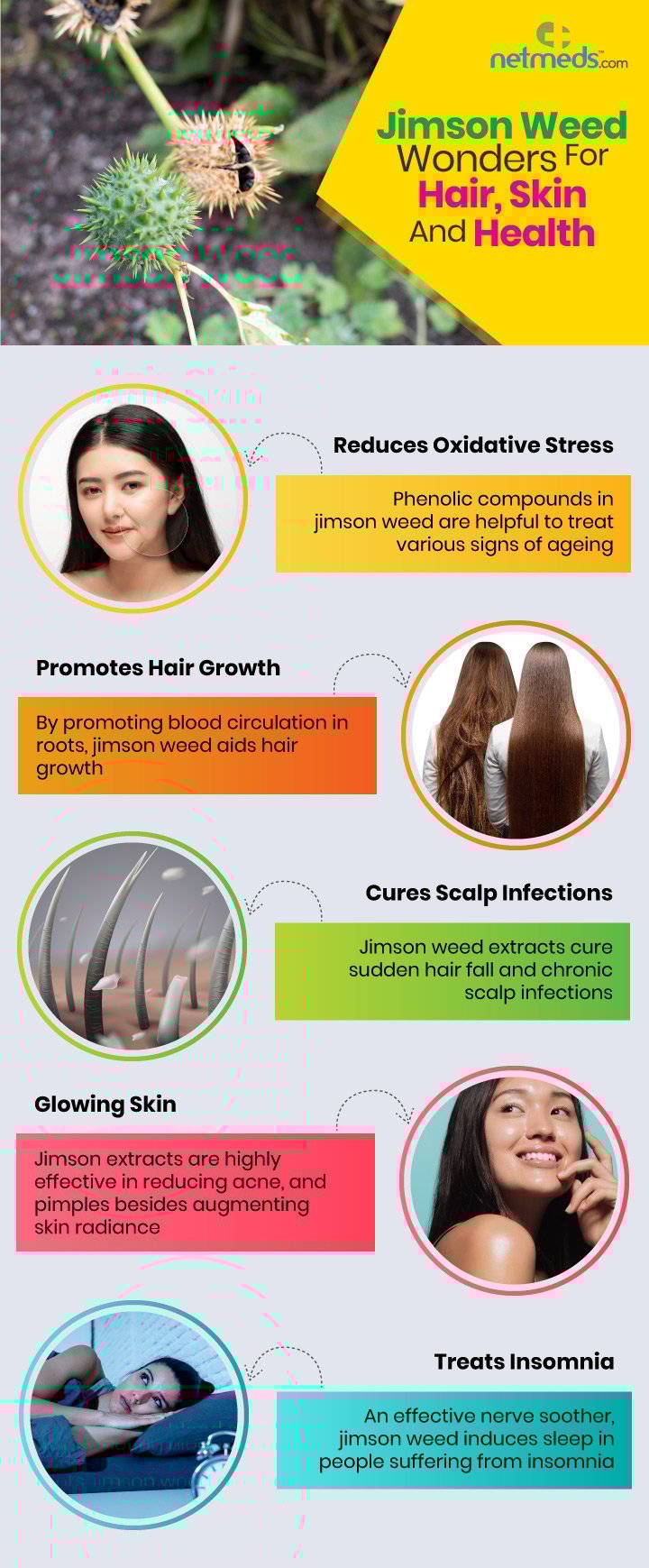
Isn’t it surprising that this popular narcotic herb has many wellness benefits to offer? To know more, delve into this infographic:
Frequently Asked Questions
What does Jimson weed do?
Jimson weed (Datura stramonium) is a highly poisonous plant that can cause confusion, hallucinations, rapid heartbeat, dilated pupils, and potentially life-threatening poisoning when ingested.
Is Jimson weed poisonous to touch?
Simply touching Jimson weed generally does not cause poisoning, but its sap can irritate the skin, and all parts of the plant are toxic if swallowed. Wash your hands thoroughly after handling it.
What are the traditional uses of jimsonweed?
Jimsonweed has a history of traditional use in various cultures, but its toxic alkaloids make it unsafe for self-medication. Modern medical use is extremely limited because of the risk of severe poisoning.
What kills Jimson weed?
Jimson weed can be controlled by pulling young plants out by the roots while wearing protective gloves, or by using an appropriate herbicide according to its label. Remove plants before they produce seeds and dispose of them safely to prevent further spread.
References:
https://pubmed.ncbi.nlm.nih.gov/9274142/
https://extension.psu.edu/toxic-weed-in-the-landscape-jimsonweed
https://pubmed.ncbi.nlm.nih.gov/9274142/
https://link.springer.com/article/10.1007/s10343-026-01391-1
https://pmc.ncbi.nlm.nih.gov/articles/PMC6220643/
https://dergipark.org.tr/en/download/article-file/1209146
https://journals.tubitak.gov.tr/agriculture/vol35/iss6/7/
 Previous