


Dry Eye Syndrome is a chronic progressive condition in which the eyes do not produce enough tears. Tears are made of water, oil, and mucus, and an adequate layer of tears on the eye surface plays a vital role in keeping your eyes healthy and comfortable.
The condition is caused by insufficient lubrication and moisture on the surface of the eyes. The outcome of dry eyes may be mild but may also lead to persistent irritation, inflammation, and even scarring of the eye surface. In severe cases, dry eyes can damage and impair vision.
Frequently Asked Questions
Is Dry Eye Painful?
Yes, dry eye syndrome can cause discomfort, burning, stinging, or a gritty sensation in the eyes. Symptoms may range from mild irritation to significant pain in severe cases.
Can Dry Eyes Go Away?
Dry eyes may improve when the underlying cause is identified and treated appropriately. However, some people may need ongoing management to keep symptoms under control.
How To Cure Dry Eyes Naturally?
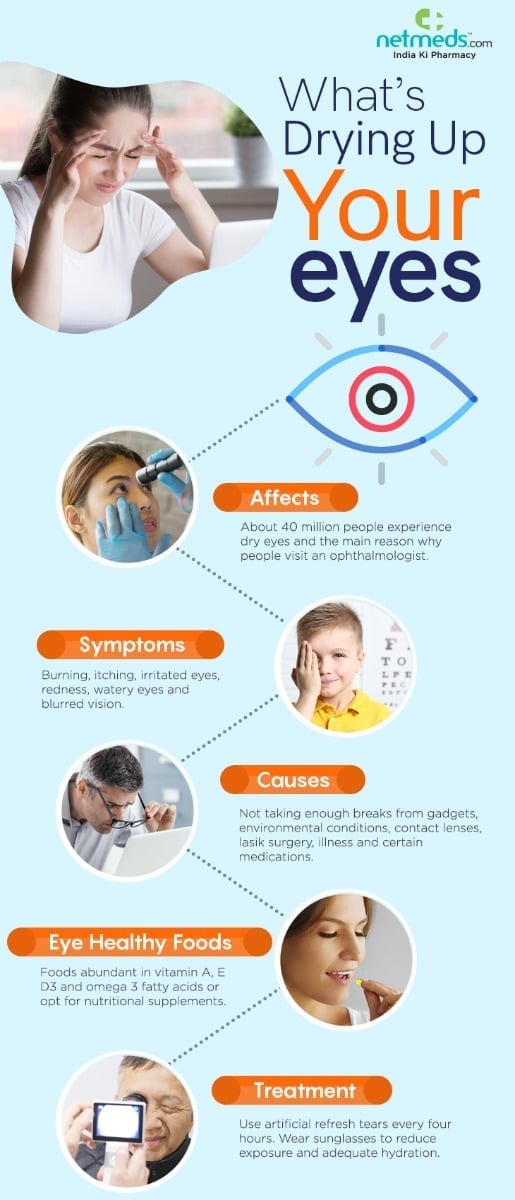
Natural approaches include staying hydrated, using a humidifier, taking breaks from screens, and consuming omega-3-rich foods. Good eyelid hygiene can also help reduce symptoms.
What Is The Best Lubricant For Dry Eyes?
Preservative-free artificial tears are often recommended for frequent use. The best option depends on the severity of symptoms and the individual's eye needs.
What Are The Two Main Causes Of Dry Eyes?
The two primary causes are reduced tear production and excessive tear evaporation. Factors such as ageing, screen use, medications, and environmental conditions can contribute to both.
What Vitamins Help Dry Eyes?
Vitamins A, D, and E, along with omega-3 fatty acids, may support eye health and tear production. A nutrient-rich diet can help maintain healthy eyes and reduce dryness symptoms.
References:
https://www.ncbi.nlm.nih.gov/books/NBK470411/
https://pmc.ncbi.nlm.nih.gov/articles/PMC4335585/
 Previous