Indeed, the changing of the seasons is a welcome sight for some, but on the other hand, it is often a source of considerable concern for others who suffer from a variety of allergy disorders.
Allergic rhinitis, commonly known as hay fever, poses a seasonal challenge for many, disrupting daily life with its unwelcome symptoms. Sneezing fits, nasal congestion, itchy eyes, and a perpetually stuffy nose become familiar companions during allergy seasons. While traditional antihistamines offer relief, the allure of herbal supplements that boost immunity and alleviate symptoms without adverse effects has drawn increasing interest in the general populace.
How Does Herbal Antihistamine Supplements Treat Allergic Rhinitis?
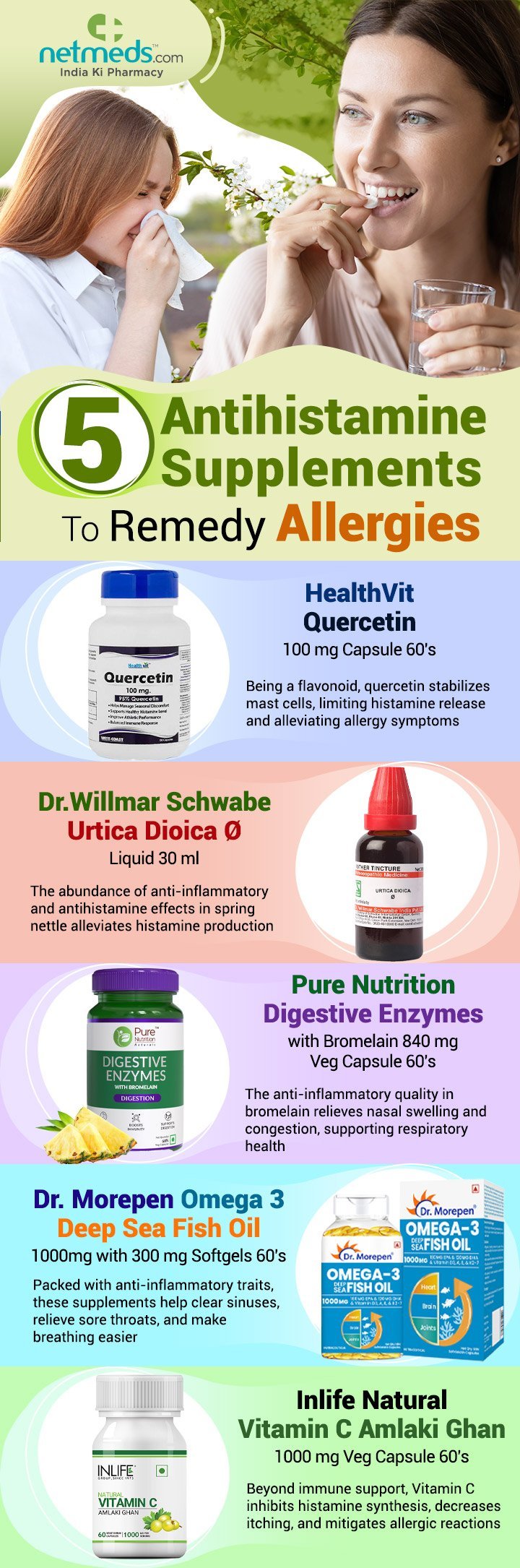
Herbal antihistamine supplements treat allergic rhinitis by mitigating the body's histamine response, thereby reducing allergy symptoms. These supplements, like quercetin, stinging nettle, bromelain, omega-3 fatty acid, and vitamin C, exert multifaceted actions. Quercetin, prevalent in fruits and vegetables, stabilizes mast cells, curtailing histamine release upon allergen exposure. Stinging nettle, known for its anti-inflammatory properties, inhibits histamine production when taken in the form of tea, while vitamin C supplements modulate histamine synthesis. Bromelain enzyme supplements extracted from pineapples and butterbur demonstrate anti-inflammatory effects, reducing nasal swelling and congestion linked to allergies.
Moreover, these supplements boast antioxidant qualities, diminishing oxidative stress and potentially attenuating allergic reactions. By supporting respiratory health and immune modulation, they aid in alleviating allergic symptoms sans any harsh reactions. Harnessing the power of nature, these herbal supplements offer a holistic approach to relieving allergic rhinitis symptoms and promoting well-being and vitality naturally.
Also Read: 5 Best Natural Antihistamines For Effective Relief from Allergic Rhinitis
Note: Always consult healthcare professionals before incorporating new supplements, especially if you have pre-existing health conditions or are under specific medications, to ensure their safety and efficacy for your individual needs.
Without further ado, embrace these herbal antihistamine supplements in conjunction with a healthy lifestyle to foster long-term relief from allergic reactions, promoting overall well-being.
Frequently Asked Questions
What Is The Best Remedy For Allergic Rhinitis?
The best remedy for allergic rhinitis involves a combination of avoiding allergy triggers and managing symptoms. Common treatments include antihistamines, nasal corticosteroid sprays, saline nasal rinses, and decongestants.
What Can Trigger Allergic Rhinitis?
Allergic rhinitis is triggered when the immune system overreacts to airborne allergens. Common triggers include:
Pollen from trees, grasses, and weeds
Dust mites
Pet dander
Mold spores
Cockroach allergens
Air pollution and smoke can worsen symptoms
How Long Does Allergic Rhinitis Last?
The duration depends on the type of allergy. Seasonal allergic rhinitis may last for a few weeks or months during pollen seasons, while perennial allergic rhinitis caused by indoor allergens such as dust mites or pet dander can persist throughout the year.
What Are The 7 Allergy Symptoms?
Seven common symptoms of allergic rhinitis include:
Sneezing
Runny nose
Itchy nose
Itchy or watery eyes
Postnasal drip
Coughing or throat irritation
Some individuals may also experience fatigue, headache, or reduced concentration due to persistent symptoms.
What is the 3-day rule for allergies?
The "3-day rule" is not a formal medical guideline for allergies. It is sometimes used informally to monitor symptoms. If symptoms such as sneezing, congestion, or itchy eyes persist beyond three days, worsen, or interfere with daily activities, it may be advisable to seek medical advice to confirm whether allergies, a cold, or another condition is responsible. Persistent symptoms may require targeted treatment for effective relief.
References:
- The Natural Products Targeting on Allergic Rhinitis: From Traditional Medicine to Modern Drug Discovery
Suhyun Lim,1,† Iwah Jeong,1,† Jonghyeok Cho,1 Chaewon Shin,1 Kwan-Il Kim,2 Bum-Sang Shim,1 Seong-Gyu Ko,1,3 and Bonglee Kim1,3,*
https://www.ncbi.nlm.nih.gov/pmc/articles/PMC8532887/
- Health supplements for allergic rhinitis: A mixed-methods systematic review
Author links open overlay panelJanice Pellow a, Anna Nolte b, Annie Temane b, Elizabeth M. Solomon a
https://www.sciencedirect.com/science/article/abs/pii/S0965229920307615
Disclaimer:
The content provided here is for informational purposes only. This blog is not intended to substitute for medical advice, diagnosis, or treatment. Always seek the advice of a qualified healthcare provider for any questions or concerns you may have regarding a medical condition. Reliance does not endorse or recommend any specific tests, physicians, procedures, opinions, or other information mentioned on the blog.
 Previous