Choline is one of the key nutrients which is essential for performing several bodily functions and optimal health. A minimal amount of choline is produced in the liver endogenously, however, you must get an adequate amount supplemented through diet. It is an organic water-soluble compound, which is neither a vitamin nor a mineral. Also Read: Choline Makes Babies Smarter
The body requires choline to synthesize phosphatidylcholine and sphingomyelin, the two main phospholipids which are involved in metabolic processes and maintain the structure and integrity of cell membranes. Choline is also needed to make acetylcholine, a vital neurotransmitter for improving memory, mood, muscle movement, regulates heartbeat and brain and nervous system functions.
Choline plays a crucial role in several other bodily processes and is involved in the secretion of a compound that functions as cell messengers.
It is vital for producing lipoproteins which are needed for clearing cholesterol from the liver and fat transport.
This nutrient works together with vitamins B12 and folate, which supports DNA synthesis.
Choline deficiency is very rare, but deficiency of this vital nutrient can lead to liver and muscle damage, mostly seen in post-menopausal women, athletes and alcoholics. Low level of choline in pregnancy can increase the risk of neural tubal defects, preeclampsia, low birth weight and preterm deliveries.
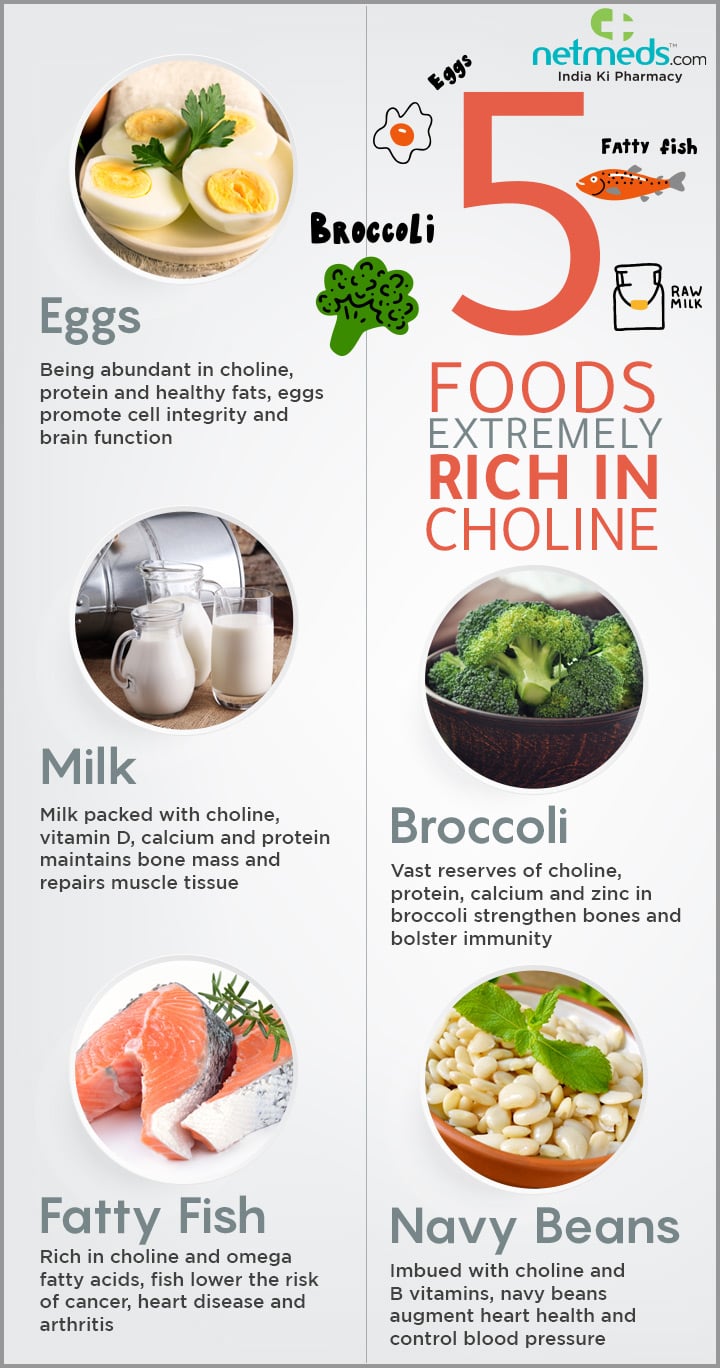
Choline is bountiful in a wide range of natural food sources in the form of phosphatidylcholine, a type of fat that includes eggs, fatty fish, cauliflower, broccoli and soybean oil.
Check out this infographic, to know more.
Frequently Asked Questions
Which Foods Are Highest In Choline?
Choline is an essential nutrient important for liver function, brain health, and metabolism. The richest food sources include:
Top choline-rich foods:
Egg yolks are one of the best and most easily accessible sources.
Lean and red meat
Fish (salmon, cod)
Dairy products (milk, yogurt)
Soybeans and tofu
Cruciferous vegetables (broccoli, cauliflower)
Quinoa and peanuts
Animal-based foods generally contain higher levels, but plant sources can still contribute meaningfully.
Is 2 Eggs A Day Enough To Meet Choline Needs?
Two eggs provide roughly 250–300 mg of choline, mainly from the yolk.
The recommended intake is about:
Men: ~550 mg/day
Women: ~425 mg/day
So, 2 eggs alone are not enough to meet the daily requirement, but they cover a significant portion. You can meet your needs by combining eggs with other choline-rich foods like fish, meat, or legumes.
What Are Signs Of Choline Deficiency?
Choline deficiency is uncommon but can occur, especially with a poor diet. Common signs include:
Fatty liver (non-alcoholic fatty liver disease)
Muscle damage or weakness
Memory problems or brain fog
Poor concentration
In severe cases, it may affect liver and muscle function significantly.
References:
https://pmc.ncbi.nlm.nih.gov/articles/PMC8160433/
Food Sources Contributing to Intake of Choline and Individual Choline Forms in a Norwegian Cohort of Patients With Stable Angina Pectoris
Anthea Van Parys 1,*, Therese Karlsson 2, Kathrine J Vinknes 3, Thomas Olsen 3, Jannike Øyen 4, Jutta Dierkes 5,6,7, Ottar Nygård 1,5,8, Vegard Lysne 1
https://journals.lww.com/nutritiontodayonline/fulltext/2018/11000/choline__the_underconsumed_and_underappreciated.4.aspx
 Previous