PCOD isn’t just a medical term; it is a daily reality for a lot of women. Maybe you are dealing with irregular periods, stubborn weight that won’t budge, breakouts, mood swings, or hair thinning. These symptoms sneak up and start messing with both your body and your mood. It is honestly exhausting when your body doesn’t feel like it’s on your side anymore.
Also Fead: Yoga For Ovarian Cyst: 5 Amazing Yogasanas To Prevent Formation Of Abscess
Modern life doesn’t help much, either. Stress, late nights, sitting at a desk all day, and eating on the go can make everything worse. Sure, medical treatment matters, but plenty of women are also looking for ways to feel better naturally. Yoga is at the top of that list.
Yoga isn’t just stretching or deep breathing, it works on your body and mind together. It gets your blood moving, supports your hormones, calms you down, and gives your metabolism a boost. With regular practice, you can see your periods become more regular, PCOD symptoms calm down, and your hormones start to find their balance again.
So, What Exactly Is PCOD?
Polycystic Ovarian Disease (PCOD) is a hormonal disorder. The ovaries start making too many androgens (those are male hormones). This throws things off: your periods get irregular, cysts might form on your ovaries, and you deal with things like acne and weight gain.
From an Ayurvedic point of view, PCOD is about imbalances in your Kapha and Vata doshas. Too much Kapha can slow down your metabolism and make you gain weight, while Vata out of balance can mess with your periods.
The upside? Yoga can help restore that balance. It calms your nerves, gets blood flowing in your pelvic area, and supports your hormones in getting back on track.
How Does Yoga Actually Help With PCOD?
Yoga isn’t a magic pill, but it helps your body find its natural rhythm again. Here is what it does:
Calms your stress and lowers those cortisol levels
Boosts blood flow to your reproductive organs
Supports a healthy metabolism and helps you manage your weight
Gets your menstrual cycle back on track
Improves insulin sensitivity and brings your hormones into balance
Let us look at five yoga poses that really make a difference if you are managing PCOD.

5 Yoga Poses That Support PCOD Management
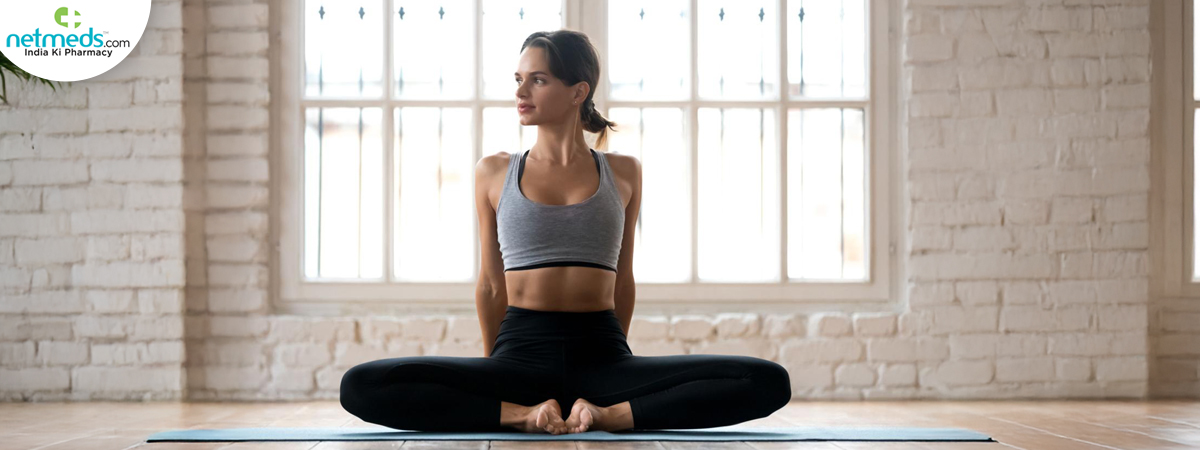
Butterfly Pose (Baddha Konasana)
Sit up straight and bring the soles of your feet together. Hold onto your feet and gently flap your knees up and down like butterfly wings. Breathe slowly and keep going for a minute or two.
Benefits:
This pose wakes up your pelvic area, gets blood moving to your ovaries, and supports your reproductive health.
Cobra Pose (Bhujangasana)
Lie on your stomach, palms under your shoulders. Inhale, then lift your chest while keeping your lower body grounded. Hold for 20–30 seconds, breathing evenly.
Benefits:
It strengthens your abdominal organs, improves blood flow to your reproductive system, and helps regulate your cycle.
Bridge Pose (Setu Bandhasana)
Lie on your back, knees bent, feet hip-width apart. Lift your hips up, pressing your feet and arms into the floor. Hold for 20–30 seconds, then lower yourself gently.
Benefits:
This pose boosts your thyroid, balances hormones, and makes your pelvic muscles stronger.
Boat Pose (Navasana)
Sit with your legs straight out in front. Lean back a bit, lift your legs off the ground, and balance on your seat bones. Keep your back straight and reach your arms forward. Hold for 10–20 seconds.
Benefits:
The Boat pose strengthens your core, revs up your metabolism, and helps with the weight issues that often come with PCOD.
Cat–Cow Pose (Marjaryasana–Bitilasana)
Get on all fours with wrists under shoulders and knees under hips. Inhale and arch your back, lifting your chest (Cow). Exhale, round your spine, and tuck your chin (Cat). Repeat for 10–12 rounds.
Benefits:
This pose improves spine flexibility, gently massages your abdominal organs, and boosts circulation in your pelvic area.
A Few Tips If You Are Practicing Yoga for PCOD
Try to practice at least 4–5 times a week.
Pair yoga with mindful breathing or even a little meditation.
Eat a balanced, nutrient-rich diet.
Stay active, avoid sitting for hours on end.
Be patient. Hormonal balance doesn’t happen overnight.
Even 20–30 minutes a day can gradually help you feel better and more balanced.
Who Benefits Most From These Poses?
Women with PCOD or irregular cycles
Anyone dealing with hormonal imbalance
Women who notice stress messes with their periods
People managing weight linked to PCOD
Anyone wanting a natural way to support reproductive health
Precautions
Listen to your body. Don’t force any pose. If something hurts or makes you dizzy, stop and rest. If you have other health conditions or injuries, talk to a doctor or certified yoga teacher before you start something new. Your health comes first.
Conclusion
Managing PCOD goes way beyond just taking medicine. It is really about helping your body out with healthier habits. Yoga steps in here, not as some magic fix, but as a gentle, steady way to cut down stress, get your blood flowing, and help balance those hormones in a natural way.
Stick with these five yoga asanas, and you will probably notice your body finding its own rhythm again. You will feel the difference in your reproductive health and your overall sense of well-being. It takes patience, though. Nothing changes overnight, but regular practice honestly pays off.
References
- https://www.ncbi.nlm.nih.gov/pmc/articles/PMC5198313/
- https://www.ncbi.nlm.nih.gov/pmc/articles/PMC6971776/
- https://www.frontiersin.org/articles/10.3389/fendo.2019.00672/full
 Previous