Stiff hips have a way of making everything else ache, don’t they? It starts as a dull tightness, maybe after a long day at your desk or a tough workout. Pretty soon, your lower back feels cranky, your knees complain, and even sitting cross-legged turns into a struggle. You might blame your chair or your schedule, but honestly, your hips take the brunt of all that sitting.
Here is the thing: your hips are built to move. They are supposed to rotate, swing, and open up with ease. Yoga is one of the best ways to wake them up again. With slow stretches, deep breaths, and a little patience, yoga helps tight hips relax, gets the joints moving, and brings back the flexibility you probably didn’t realise you had lost.
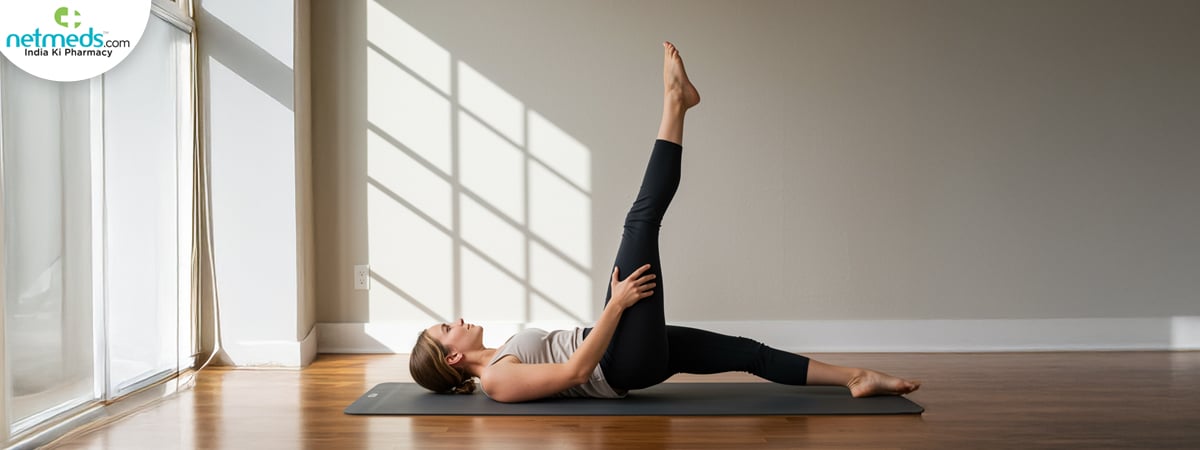
It doesn’t matter if you run marathons, work at a computer, or just want to move without that familiar ache. These five yoga poses target your hips and make everyday movement feel smoother and lighter.
Let us get right to it; grab your mat, take a breath, and give your hips some much-needed attention.
Also Read: Lower Back Pain Relief: Best Yoga Poses To Ease Stiffness Naturally
Why Bother With Hip Mobility?
Your hips do a lot. They carry your weight, connect your upper and lower body, and keep you steady when you walk or climb stairs. When the muscles around your hips, think hip flexors, glutes, and adductors, get tight, everything stiffens up. That is when problems start spreading to your back and knees.
What does yoga actually do for your hips?
It opens up your range of motion.
It loosens hip flexors that get stiff from sitting.
It boosts blood flow to your muscles and joints.
It helps with posture and keeps your spine happy.
It even helps your muscles chill out when you are stressed.
5 Best Yoga Poses for Hip Mobility
Butterfly Pose (Baddha Konasana)
Sit tall and bring the soles of your feet together. Let your knees drop outward. Hold your ankles, lengthen your spine, and either flap your knees gently or stay still for about half a minute.
Benefits:
This pose opens your inner thighs and hips, improves flexibility in the groin area, and reduces stiffness caused by long sitting hours.
Low Lunge (Anjaneyasana)
Step one foot forward, drop your back knee to the mat, and let your hips sink forward. Reach your arms overhead. Hold, then switch sides after 20–40 seconds.
Benefits:
This pose gets right into your hip flexors, the muscles that tighten up most from sitting.
Pigeon Pose (Eka Pada Rajakapotasana)
Start on all fours. Bring one knee forward and stretch the other leg behind you. Keep your hips level and, if it feels good, fold forward. Hold for 30–60 seconds, then switch.
Benefits:
This pose really digs into deep hip tension and helps you rotate your hips outward.
Garland Pose (Malasana)
Stand with your feet a bit wider than your hips. Drop into a deep squat, bring your palms together at your chest, and keep your heels down if you can. Stay here for 20–40 seconds.
Benefits:
This squat pose opens up your hips and strengthens your pelvic floor. You will feel it in your ankles, too.
Supine Figure-Four Stretch (Supta Kapotasana)
Lie on your back. Bend your knees, and cross one ankle over the opposite thigh. Pull your other leg gently toward your chest. Hold for 30–60 seconds on each side.
Benefits:
It is a gentle stretch for your hips and low back, great if you are new to yoga or your hips are extra tight.
Bonus Tips for Better Results
Stick with it. Aim for four or five short sessions a week.
Always warm up before going into deep stretches.
If something hurts (especially your knees), back off.
Add some light walking or mobility work if you can.
Drink water, your joints need it.
Finish your practice with a few minutes of relaxation.
Who Needs Hip-Opening Yoga?
Anyone who sits a lot and feels stiff.
Runners or athletes with tight hips.
People with mild back or knee aches.
Beginners who want to get more flexible without pushing too hard.
Older adults who want to keep moving easily.
Precautions
Skip deep hip stretches if your hips are injured or you have had surgery.
Change up the poses if your knees get sore.
Pregnant? Only practice with a qualified teacher.
If you feel sharp pain, stop right away.
Note: And if you have a chronic joint condition, check with your doctor before starting yoga.
Your hips are meant to move; don’t let stiffness steal your comfort. Give these poses a try and see how much better you feel.
Frequently Asked Questions
Can yoga really improve hip mobility?
Definitely. If you stick with yoga, you will notice your hips get looser, your muscles more flexible, and your joints move better. It also gets your blood flowing around the area, which helps a lot.
How often should I practice yoga for tight hips?
Shoot for 4 or 5 sessions a week. That is when you will start to see real progress.
Are hip-opening poses safe for beginners?
Yes. Most hip openers can be adjusted for beginners, as long as you take it slow and listen to your body.
Can yoga help hip pain from sitting too long?
Absolutely. Yoga is great for stretching out those tight hip flexors and shaking off the stiffness that comes from sitting all day.
When is the best time to practice yoga for hip mobility?
Both mornings and evenings work well; just try to practice on an empty or light stomach.
Conclusion
Healthy hips make everything easier; they keep you moving freely, help your posture, and just make life more comfortable. Start adding these five hip-focused yoga poses to your routine, even if it is just a few times a week. You will loosen up, get more flexible, and find daily movement a lot more comfortable.
Give yourself 15 to 20 minutes for each session. Stay patient, breathe deep, and let your hips open up on their own schedule. Your body will thank you.
References:
- https://www.google.com/url?sa=t&source=web&rct=j&opi=89978449&url=https://pubmed.ncbi.nlm.nih.gov/29573916/&ved=2ahUKEwiL0P3A3JKSAxX7RmwGHddwCSoQFnoECEsQAQ&usg=AOvVaw3-2sdnEo5zcPrt8VEa6zux
- https://www.google.com/url?sa=t&source=web&rct=j&opi=89978449&url=https://journals.ipinnovative.com/ijcap/archive/volume/9/issue/4/article/22915&ved=2ahUKEwiL0P3A3JKSAxX7RmwGHddwCSoQFnoECEoQAQ&usg=AOvVaw2l54aze--htdU7CVI3qcEz
- https://www.google.com/url?sa=t&source=web&rct=j&opi=89978449&url=https://juniperpublishers.com/jyp/pdf/JYP.MS.ID.555832.pdf&ved=2ahUKEwiL0P3A3JKSAxX7RmwGHddwCSoQFnoECFoQAQ&usg=AOvVaw0POTdV8pJvHFLecE8XKthw
 Previous