If your eyes feel heavy, dry, watery, irritated, or fatigued from endless screen staring, you are not alone. Digital eye strain, or computer vision syndrome, has afflicted many people in today's time due to long working hours on laptops, mobile phones, and TVs. Problems such as blurred vision, headaches, burning sensations, difficulties focusing, and sensitivity to light have become extremely common for adults and children.

Also Read: Ayurveda For Dry Eyes: Remarkable Herbs To Soothe Discomfort And Enhance Vision
Yoga is not about flexibility; it is about restoration, relaxation, and internal healing. You will be able to strengthen the eye muscles, improve the blood circulation, soothe the optic nerves, and naturally reduce strain with certain simple but powerful yogasanas and some eye-focused practices. What is best? One doesn't need special equipment to perform these asanas—just the yoga mat, soft breathing, and dedication.
Also Read: Yoga For Migraine: Superb Yogasanas To Mitigate That Pounding Head Pain
Thus, if what you are looking for is an easy and non-invasive way in which to decrease eye fatigue and keep your vision relaxed, then these six yogasanas will be what you need.
Why Yoga For Eye Health?
The fatiguing of eye muscles from continuous near-focus tasks, reduced blinking, and poor lighting environments are all contributors to eye strain. Yoga, therefore, directly addresses these issues by:
Increasing blood flow in the eyes and forehead
Strengthening of the eye muscles at work during focusing
This technique relaxes tension in the orbit and the surrounding nerves.
Supporting natural tear production and moisture
Relaxing mental stress, which adds to eye fatigue.
While yoga itself cannot 'cure' refractive errors of vision or eliminate the use of glasses, it can considerably reduce strain and prevent further deterioration, thus improving eye comfort and clarity.
5 Best Yogasanas For Eye Strain Relief
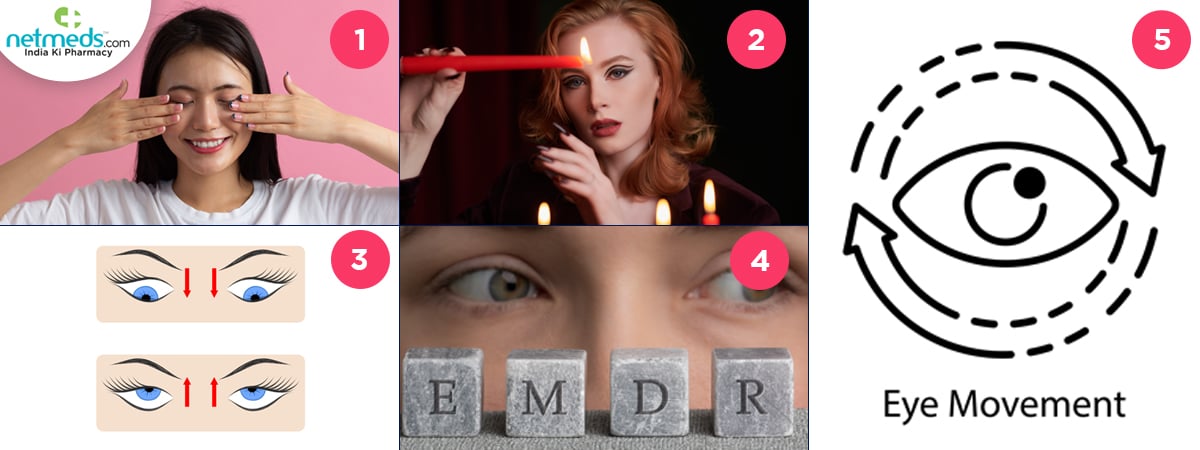
Palming (Netra Palming)
Sit comfortably, rub your palms together until they are warm, then gently cover your closed eyes without pressing with your palms. Breathe very slowly and deeply for 1-2 minutes.
Benefits:
This simple practice instantly relaxes the eye muscles, helping to reduce dryness and tiredness while also calming the optic nerves and relieving stress.
Trataka: Steady Candle Gazing
Place the candle or any other object of your choice directly at eye level, 2–3 feet away. Sit up straight and focus on the flame without blinking until your eyes water. Then close your eyes and visualize the light internally.
Benefits:
Trataka helps improve concentration and focus while strengthening the eye muscles for better visual endurance. It also eases mental fatigue and can provide relief from mild headaches, making it beneficial for both eye and mind wellness.
Up And Down Eye Movement (Urdhva-Adhah Drishti)
Following this, still maintaining your head in the same position, look up towards the ceiling, then down towards the floor. Repeat 10-12 times without holding your breath.
Benefits:
This practice enhances the flexibility of the vertical eye muscles, helping the eyes move more freely and efficiently. It also reduces strain caused by prolonged reading or typing and supports better concentration and eye coordination for smoother visual tasks.
Side-to-Side Eye Movement - Dakshina-Vama Drishti
Keep your head still and then only move your eyes to the right and left as far as you can without any discomfort. Repeat 10 sets and blink between each to keep moisture.
Benefits:
Dakshina-Vama Drishti exercise strengthens the lateral eye muscles, which play a key role in side-to-side eye movement and overall visual balance. It also enhances peripheral vision, making your eyesight more responsive, and helps relieve stiffness caused by continuous screen exposure.
Circular Eye Rotation (Chakra Drishti)
Sit straight. Slowly rotate your eyes clockwise in a large circle and then anticlockwise. Let your movement be smooth and wide. Do it 5 times in each direction.
Benefits:
This circular eye rotation technique improves the mobility of the eye muscles, helping them move more smoothly and efficiently. It also boosts blood circulation around the eyes and temples, which in turn eases tension and helps relieve headaches caused by strain or stress.
Frequently Asked Questions
Can yoga improve eyesight permanently?
While yoga cannot change your prescription, it can reduce strain and improve your overall eye comfort.
Which yoga is best for eye strain?
Trataka and palming are the most efficient practices for relaxing tired eyes.
Is eye yoga safe to do for children?
Yes, these exercises are gentle and beneficial for kids who spend long hours on screens.
How long should I practice yoga for eye health?
Practice eye yoga for at least 10 minutes daily for noticeable results.
Can yoga help alleviate headaches brought about by screen time?
Yes, yoga decreases muscle tension and increases blood flow, relieving tension headaches.
Conclusion
Such screen-heavy lifestyles take a greater toll on our eyes than ever before, but yoga has an easy, soothing, and natural way to counter the damage. These yogasanas improve circulation, relieve the optic nerves, increase the mobility of the eyes, and reduce tension in the surrounding muscles. Eye yoga, if combined with conscious blinking, proper screen breaks, hydration, and good lighting, can make all the difference in visual comfort and long-term eye health. Roll out your mat, slow down your breath, and give your eyes that restorative care they truly deserve.
References:
- https://pmc.ncbi.nlm.nih.gov/articles/PMC6937872/
- https://www.sciencedirect.com/science/article/abs/pii/S1876382024000969
- https://pmc.ncbi.nlm.nih.gov/articles/PMC3602039/
 Previous