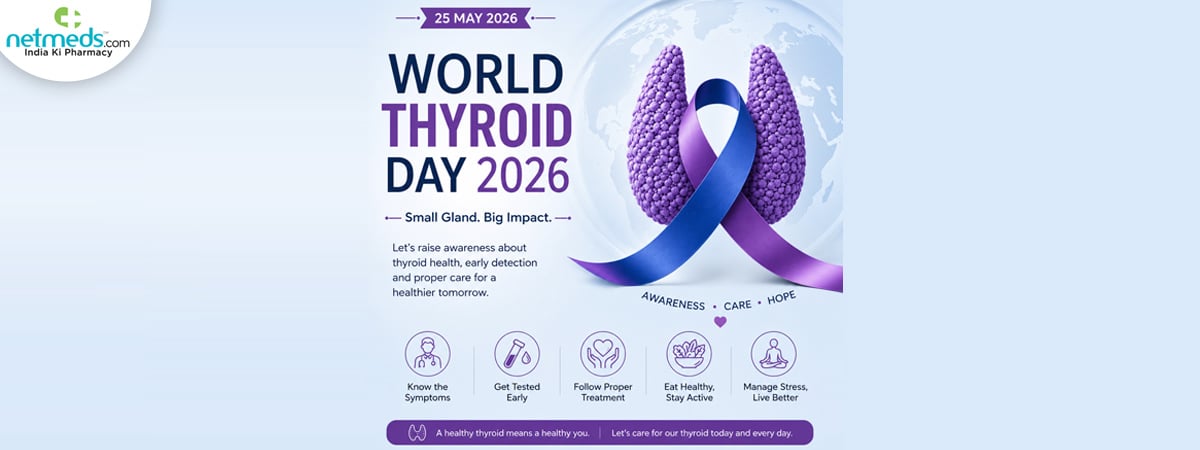
World Thyroid Day is earmarked on May 25 annually to raise awareness about thyroid disorders, encourage early diagnosis and proper treatment. Thyroid disease affects 1 in 10 people globally, yet most cases are undiagnosed. Reports reveal that in India, nearly 42 million people are estimated to suffer from thyroid-related conditions, while most of them remain undiagnosed. Despite a high prevalence rate, this medical condition is often overlooked, as symptoms are subtle or simply mistaken for fatigue, stress, or ageing. This health event primarily focuses on shifting beyond medication towards achieving a more comprehensive approach that includes good nutrition, healthy lifestyle, preventive screening, and patient education to manage thyroid diseases.
Understanding the Thyroid Gland
The thyroid gland is a small butterfly-shaped organ located in the neck, but it has a huge impact on overall health. It functions as the major controller of metabolism and works closely with the brain, heart, liver, and reproductive system. Even a small imbalance in thyroid hormone levels can impact the functioning of several vital organs simultaneously.
Role of Thyroid Hormones in the Body
Thyroid hormones are involved in important physiological processes in the human body. From metabolism and heart function to brain activity and hormonal balance, these hormones guarantee that the system functions well and becomes accustomed to changing demands.
Metabolic regulation and energy production: It controls how fast your body converts food into energy. If the hormone levels are low, it slows down metabolism, while high hormone levels trigger it, resulting in weight and energy changes.
Cardiovascular health and heart rhythm: Thyroid hormones control heart rate and blood pressure. An imbalance in hormones can lead to palpitations or an irregular heartbeat, or result in long-term cardiovascular complications if left untreated.
Brain function and emotional health: Dysfunction of the thyroid gland can impact mood, memory, and focus. People suffering from thyroid disorders complain about brain fog, anxiety, or depression as early warning signs.
Reproductive and hormonal balance: Thyroid hormones influence menstrual cycles, fertility, and pregnancy outcomes. If left undiagnosed, thyroid disorders can lead to severe issues such as infertility or miscarriage.
Significance of World Thyroid Day 2026
World Thyroid Day 2026 focuses on increasing awareness about the rising prevalence of thyroid disorders across all age groups. Hypothyroidism, hyperthyroidism, thyroid nodules, autoimmune thyroid disease, and thyroid tumours are becoming highly prevalent.
Most thyroid disorders develop slowly and remain unidentified for years. These health campaigns encourage people to recognize symptoms early and seek prompt screening.
Symptoms such as fatigue, depression, sudden weight changes, hair loss, menstrual irregularities, and anxiety are often overlooked as lifestyle stress. Mass public education and awareness help improve diagnosis rates.
Generally, women are more likely than men to develop thyroid disorders, especially during pregnancy, postpartum, and menopause.
Understanding Common Thyroid Disorders
Hypothyroidism
Hypothyroidism occurs when the thyroid gland does not produce adequate thyroid hormone, slowing down the metabolism.
Symptoms
Weight gain
Dry skin
Constipation
Hair thinning
Depression
Cold intolerance
Common Causes
Hashimoto's thyroiditis
Iodine deficiency
Thyroid surgery
Radiation therapy
Hyperthyroidism
Hyperthyroidism, or overactive thyroid, occurs when the thyroid produces excessive hormones, speeding up the metabolism.
Symptoms include:
Rapid heartbeat
Anxiety
Weight loss
Sweating
Tremors
Sleep disturbances
Common Causes
Thyroid nodules
Excess iodine intake
Thyroid Nodules / Thyroid Cancer
Thyroid nodules are abnormal growths within the gland. Most nodules are benign, but certain nodules may require further evaluation.
Warning Signs
Neck swelling
Difficulty swallowing
Hoarseness
Enlarged lymph nodes
Role of Nutrition in Thyroid Disease Management
Nutrition plays a crucial role in thyroid function because the thyroid gland depends on several essential nutrients for hormone production, activation, and regulation.
A balanced and wholesome diet cannot replace prescribed thyroid medication, but it can significantly improve symptom management and overall thyroid health.
Key Nutrients for Thyroid Health
Iodine
Iodine is a key mineral that helps synthesise T3 and T4 hormones. With insufficient iodine, the thyroid gland cannot produce hormones, leading to hypothyroidism and goitre. The daily recommended intake for adults is 150 micrograms, and the levels increase to 220 micrograms during pregnancy and 290 micrograms during lactation. In India, iodised salt remains the most feasible and effective source.
Food Sources
Iodized salt
Seaweed
Fish
Dairy products
Eggs
Note: Both deficiency and excess of iodine can trigger thyroid dysfunction. Hence, excessive supplementation should be avoided unless prescribed.
Selenium
Selenium promotes thyroid hormone metabolism and helps reduce oxidative stress. It is required for the conversion of T4 to the active T3 hormone and may help reduce autoimmune thyroid inflammation.
Also Read: Selenium: Functions, Food Sources, Deficiency And Toxicity
Food Sources
Brazil nuts
Sunflower seeds
Tuna
Eggs
Zinc
Zinc is a key mineral that contributes to T4 and T3 hormone synthesis, fuels cellular metabolism throughout the body, and regulates the immune system.
Food Sources
Pumpkin seeds
Chickpeas
Meat
Nuts
Lentils
Iron
Iron is an important mineral required for proper thyroid function. It supports the production of thyroid peroxidase (TPO), the enzyme that synthesizes thyroid hormones. Iron deficiency restricts hormone production and reduces the body's ability to convert inactive T4 into active T3. Low iron can severely worsen or mimic hypothyroidism symptoms.
Food Sources
Spinach
Lean meats
Beans
Beetroot
Dates
Pairing plant-based iron with vitamin C improves absorption.
Also Read: Foods Rich In Essential Minerals Your Body Needs For Optimal Health
Vitamin D
Vitamin D deficiency is very common among people with thyroid disorders. Though vitamin D does not directly help produce thyroid hormones, it acts as an immune modulator that may ease autoimmune attacks, such as Hashimoto's or Graves' disease, that cause thyroid dysfunction.
Food Sources
Sunlight exposure
Fatty fish
Egg yolks
Fortified foods
Nutrition Tips for People Taking Thyroid Medication
Ensure to take medication on an empty stomach and wait for an hour before eating.
Avoid having calcium or iron supplements immediately after medication.
Maintain consistent meal timings.
Lifestyle Changes
Thyroid management combines medical care with healthy lifestyle practices.
It is essential to be physically active and engage in regular exercise for at least 150 minutes per week.
Get sound, quality sleep for 7-9 hours daily.
Go for routine thyroid screening as advised by your physician.
Maintain body weight within a healthy range.
Yoga and mindfulness practices may also help reduce stress-related hormonal disturbances.
Importance of Regular Screening
Routine thyroid testing can help detect problems before severe complications occur.
Common Tests
TSH (Thyroid Stimulating Hormone)
Free T3
Free T4
Thyroid antibodies
People with a family history of thyroid disease, autoimmune disorders, obesity, infertility, or unexplained fatigue should consider regular medical evaluation.
Conclusion
World Thyroid Day serves as an important reminder that thyroid health influences every key aspect of both physical and mental well-being. This health day works to promote awareness, early screening, access to treatment, and balanced nutrition; all of these can remarkably improve the outcome for people living with thyroid disorders.
References:
https://www.eurothyroid.com/events/world-thyroid-day-2026.html
https://www.thyroid-federation.org/international-thyroid-awareness-week/
The Role of Nutrition on Thyroid Function
Anna-Mariia Shulhai 1, Roberta Rotondo 1, Maddalena Petraroli 2, Viviana Patianna 2, Barbara Predieri 3, Lorenzo Iughetti 3, Susanna Esposito 1,2, Maria Elisabeth Street 1,2,*
 Previous