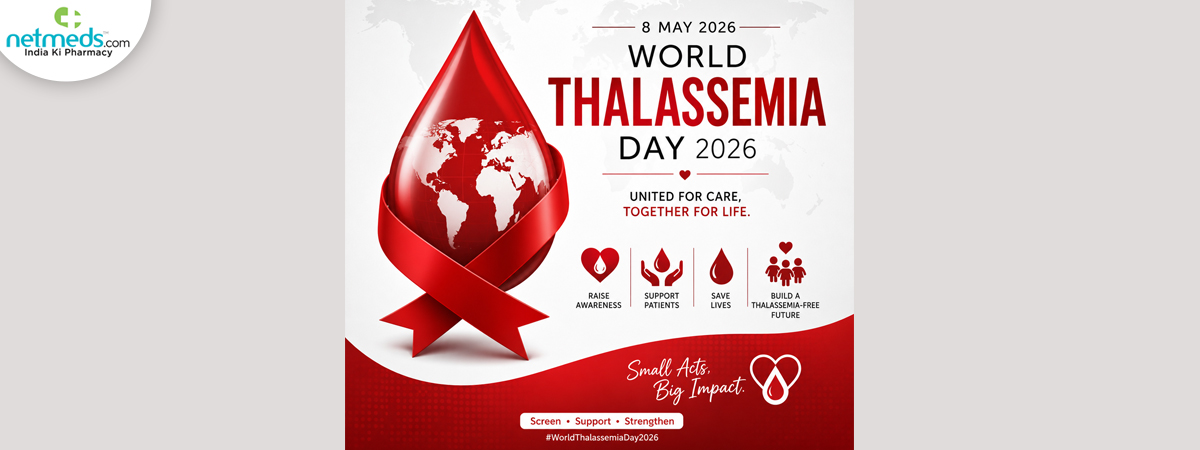
World Thalassemia Day is observed on May 8 every year to educate the population about thalassemia, a genetic blood disorder that affects millions of people globally. This health event is not about creating awareness, but it is a call to action for prevention, prompt diagnosis and improved care for those living with this blood disorder.
What is Thalassemia?
Thalassemia is an inherited blood disorder in which the body cannot effectively produce healthy haemoglobin, a protein in red blood cells that transports oxygen throughout the body. Completely healthy parents can still have a child with severe thalassemia, as both silently carry the gene with no signs.
Why Does Awareness Still Matter?
As per reports, in India, 3 to 4 in every 100 people carry this gene without even knowing. And when two carriers have a child, there is a 1 in 4 chance of the child being born with thalassemia. This is where thalassemia awareness, as just one test before marriage, can change everything.
(Manage This Genetic Disorder With Our Wide-Range Of Nutritional Formulations!
World Thalassemia Day 2026 Theme
The theme for this year is “Hidden No More: Finding the Undiagnosed. Supporting the Unseen”. And this theme hits badly in India, as more than a thousand carriers go undiagnosed. High rates of thalassemia are observed in states like Punjab, Gujarat, Maharashtra, West Bengal, and Delhi NCR, which shows that premarital screening remains far from regular. If there is unexplained anemia that runs in your family, you are planning marriage, or you are on the family way, get tested first.
Significance of World Thalassemia Day
This day holds deep importance for several reasons:
Many people remain unaware that thalassemia is genetic and preventable. Awareness campaigns educate individuals about carrier status and risks.
In many communities, genetic disorders carry stigma. Open discussions help normalise the condition and support affected families.
Governments and health organisations use this day to push for:
National screening programs
Affordable treatment access
Patients with severe thalassemia often require lifelong blood transfusions and medical care. This day highlights their needs and rights.
6 Symptoms You Should Never Ignore
The symptoms of thalassemia depend on severity, as a carrier feels nothing, while a child suffering from thalassemia clearly displays signs within the first 2 years of life. In babies and young children, the common signs families observe are
Unusual paleness in the skin, inner eyelids, and lips washed out.
Constant fatigue and weak feeling.
Slow growth, not gaining weight as expected.
Swollen belly, liver and spleen enlarging.
Yellow tinge in skin or eyes.
Prominent forehead or cheekbones in untreated cases.
However, in adults with thalassemia, mild fatigue and consistently low haemoglobin levels are the most common thalassemia symptoms, and most people carry this for decades undiagnosed.
How Can Thalassemia Be Prevented?
Thalassemia cannot be “caught” or prevented after birth, but it can be prevented before birth through informed decisions.
Key Prevention Strategies
Carrier Screening
A simple blood test can determine whether a person is a carrier (thalassemia trait). Carriers are usually healthy but can pass the gene to their children.
Premarital Testing
If both partners are carriers, there is a 25% chance with each pregnancy that the child will have severe thalassemia.
Genetic Counselling
Genetic counselling serves as a key tool for couples known as carriers, they get guidance on:
Risks to offspring
Family planning options
Reproductive technologies
Prenatal Testing
There are a few prenatal tests performed during pregnancy (such as chorionic villus sampling or amniocentesis) that help detect thalassemia in the foetus.
How Early Diagnosis Lowers Risk?
Early diagnosis is one of the most powerful strategies in managing thalassemia.
Prevents Severe Complications
Prompt diagnosis and getting appropriate treatment, like regular blood transfusions and iron chelation therapy, can prevent complications and organ damage.
Improves Life Expectancy
With timely, easy access to medical care, individuals with thalassemia can lead longer, healthier lives.
Enables Better Family Planning
Identifying carriers earlier allows couples to make informed reproductive decisions, decreasing the number of babies affected with this disorder.
Reduces Healthcare Burden
Prompt interventions can reduce long-term treatment costs and mitigate the strain on the healthcare systems.
What Is The Way Forward?
The fight against thalassemia is not just medical; it is also social, educational, and policy-driven. Eradicating severe thalassemia cases is attainable through:
Encourage mass awareness campaigns
Compulsory screening programs
Accessible genetic counselling
Community engagement
Conclusion
World Thalassemia Day is a reminder that while thalassemia is a serious genetic condition, it is largely preventable. Through awareness, early diagnosis, and responsible decision-making, we can significantly reduce its impact.
References:
https://thalassaemia.org.cy/news/international-thalassaemia-day-2026-a-new-theme-for-global-action/
https://pmc.ncbi.nlm.nih.gov/articles/PMC3552345/
https://www.mdpi.com/2039-4365/14/4/10
https://www.researchgate.net/publication/355677452_An_Early_Diagnosis_of_Thalassemia_A_Boon_to_a_Healthy_Society
 Previous