Oh, the winter season is finally here with the crisp air, and the comforting scent of hot cocoa filling the house! But as much as we love this magical time of the year, our skin mostly does not share our enthusiasm. Chilly winds, indoor heating, and lower humidity can make even the most healthy skin look dull and dry.
Also Read: Body Butter: Splendid Benefits To Soothe Dry Skin And The Different Types
But here is the good news: nature has a way of restoring the balance. The secret to supple, glowing, dewy skin through the frosty months lies in the nurture of fruit-based oils, which are rich in vitamins, antioxidants, and essential fatty acids that deeply hydrate, adding that enviable luminous sheen.
So, whether parched or just generally not looking quite as radiant as it did during the summer months, these five fruit oils are your ticket to round-the-year radiance.
Add To Cart From Our Top-Selling Range Of Natural Fruit Oils For Dry Skin Today!
What Are Fruit-Based Oils?
Fruit-based oils are nutrient-rich concentrates drawn from the seeds, pulp, or skins of various fruits. In contrast to mineral and synthetic oils, these botanical oils are packed with vitamin C, E, A, and essential fatty acids, which naturally help lock in moisture, strengthen the skin barrier, and repair dryness.
Also Read: 7 Superfoods To Add To Your Winter Diet To Boost Immunity And Energy
They are lighter than heavy creams and more nourishing than regular lotions; hence, they are ideal for winter skincare. The regular use of fruit oils will help in:
Restore lost hydration and elasticity
Antioxidant-providing; protects against oxidative stress
Minimise fine lines and dryness
Restore the natural brightness in flaky and dull skin.
Why Fruit Oils Are Winter Essentials?
Winter can strip the skin of natural oils, rendering it dry and flaky. Fruit oils are also intense sealants for moisture and act as a nutrient booster because they fill in the lipid layer of the skin, thereby infusing your skin with antioxidants that wage war against free radicals.
These oils not only help in moisturising the skin but also heal micro-cracks, reduce itchiness, and increase the natural glow without clogging pores. Rich in vitamins, they ensure long-term rejuvenation, hence becoming an ideal ally for your skin in winter.
How To Incorporate Fruit Oils Into Your Winter Skin Care Routine?
As a Moisturiser: Apply 3-4 drops of your favourite fruit oil on damp skin just after cleansing.
Face Masks: Combine a few drops with honey or aloe vera gel to create a hydrating winter mask.
As a Serum Base: Apply fruit oils underneath makeup or sunscreen to achieve that dewy glow.
In Bath Water: Add a spoonful to warm bath water for an all-over nourishing effect.
As a Lip or Hand Oil: Rub gently over lips and hands to prevent winter dryness.
Foray through this infographic to find 5 superb fruit oils that will leave you glowing and nourished all through the winter.
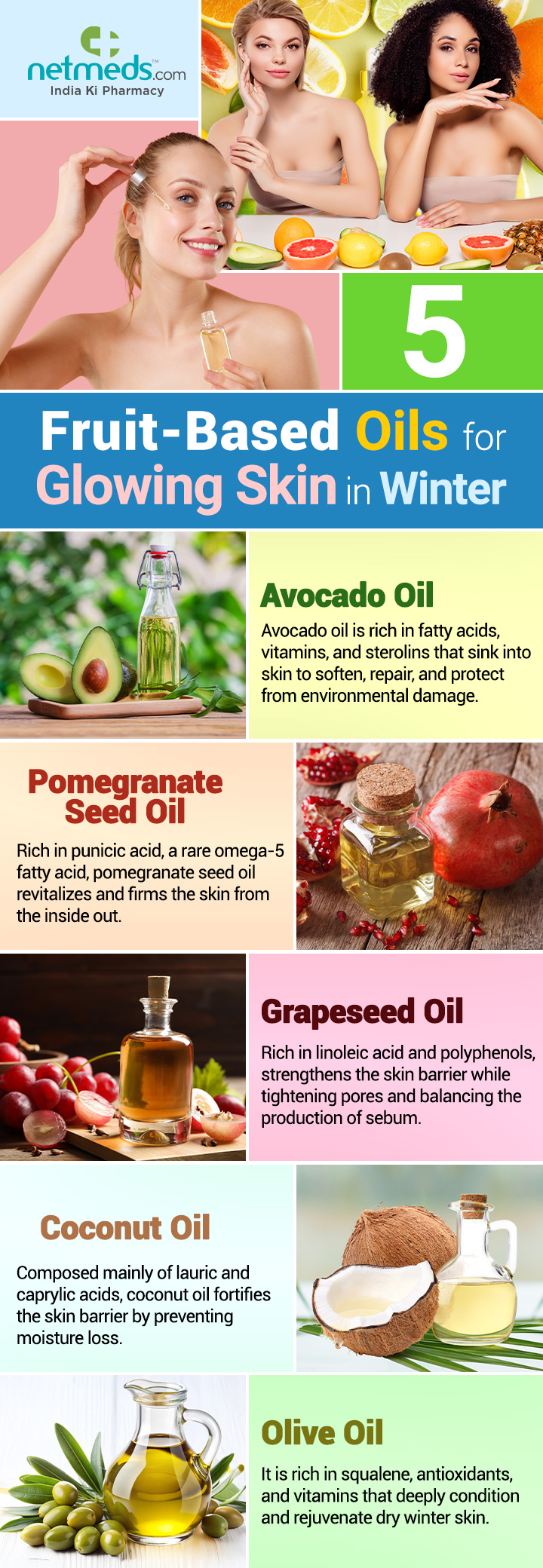
Incorporating fruit-based oils into your winter skincare routine is like feeding your skin a vitamin-rich feast. From the depth of nourishment provided by avocado to the rejuvenating power of pomegranate, these natural oils restore the glow, shield against dryness, and improve the overall texture of your skin.
Frequently Asked Questions
Can fruit-based oils be applied to oily skin?
Yes, some light oils are good for oily or acne-prone skin, such as grapeseed and pomegranate seed oil, because they regulate sebum and do not clog pores.
Are fruit oils safe for sensitive skin?
Absolutely; most fruit oils are non-irritating, though it is always advisable to do a patch test before using them fully.
How often should one use fruit oil in winter?
The best results are achieved when fruit oil is applied once daily, at night, for its better absorption and repair of the skin.
Can fruit oils actually replace moisturiser?
Yes, fruit oils can work alone or in combination with moisturisers to boost hydration and radiance in skin.
Which fruit oil is best for anti-ageing?
Pomegranate seed oil is a powerhouse for mature skin because of its regenerative and collagen-boosting properties.
References:
1. https://pmc.ncbi.nlm.nih.gov/articles/PMC5796020/
2. https://pubs.acs.org/doi/10.1021/acsomega.4c04277
3. https://www.mdpi.com/2079-9284/12/3/87
4. https://www.researchgate.net/publication/331527370_Oils_from_fruit_seeds_and_their_dietetic_and_cosmetic_significance
 Previous