Vitamin C is a famous ingredient in nutrition and skin beauty, valued for its incredible role in keeping the skin healthy, glowing, and youthful. Yes, from easing dark spots to promoting collagen production, this key nutrient contributes greatly to numerous aspects of skin health. But when it comes to picking between vitamin C serum and supplements, which is the right choice for your skin?
(For A Radiant And Supple Skin, Shop From Our Extensive Range Of Skincare Essentials!)
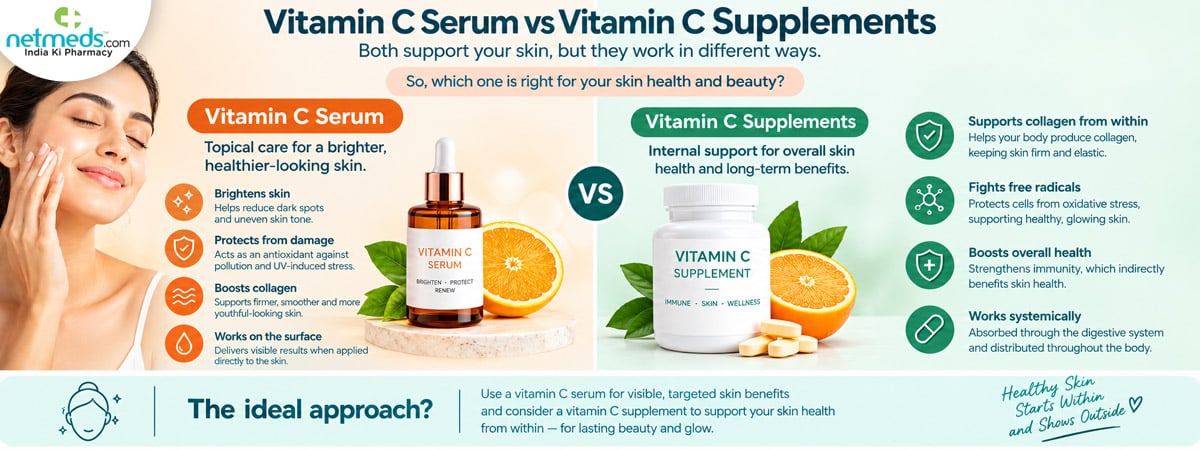
The answer depends on your individual skincare goals, eating pattern and preferences. Vitamin C serum is a topical skincare product that is applied directly to the skin; on the other hand, vitamin C supplements nourish the body from the inside out and help meet nutritional gaps. Both can play a vital role in sustaining healthy skin, but they are not interchangeable.
Dive into this article to explore the differences between vitamin C serum and vitamin C supplements, their benefits, and how to choose the right option for your skin health and beauty routine.
What Is Vitamin C and Why Is It Important for Skin Health?
Vitamin C is a powerful antioxidant. The skin is constantly exposed to sunlight, environmental stressors, and other oxidative stressors; this is where antioxidants play a key role in safeguarding the skin cells from damage caused by free radicals. It is also involved in collagen production, a protein that offers the skin its defined structure and firmness.
Vitamin C is a powerful skincare agent for easing skin pigmentation. Topical application may help lower excess melanin production, which can fade away dark spots and uneven skin tone. It also supports faster wound healing.
Never considered this as magical remedy and function as an overnight filter. The skin needs consistent care, and the results usually depend on the type of formulation, strength, and duration of usage.
Also Read: Vitamin C: Unravel Skin Healing Benefits And Side Effects Of This Beauty Component
What Is Vitamin C Serum?
Vitamin C serum is an external skincare component especially designed to supply vitamin C to the skin. It is available in different preparations, concentrations, and forms, such as L-ascorbic acid and other vitamin C derivatives.
Vitamin C serum improves the appearance of dull skin and makes the skin look glowing with daily use. Applying a perfectly formulated vitamin C serum may support skin firmness and help fade away the appearance of fine lines over time. Vitamin C serum safeguards the skin against oxidative stress caused by pollutants. With regular use, people may observe improvements in skin texture, brightness and overall complexion and appearance.
How to Use Vitamin C Serum
Cleanse your face with a gentle cleanser.
Gently smear a few drops of vitamin C serum onto clean, dry skin, following the product instructions.
Follow with a moisturiser.
Apply broad-spectrum sunscreen with SPF 30 or higher during the day.
Those with sensitive skin, start with a lower strength or use serum minimally and less frequently. Always do a patch test when using new products and discontinue use if irritation or itching occurs continuously.
What Are Vitamin C Supplements?
Vitamin C supplements are oral products readily available as tablets, capsules, chewable tablets, powders and effervescent formulations. They help meet the body’s needs for vitamin C when dietary intake is insufficient or when supplementation is medically advised.
Benefits of Vitamin C Supplements for Skin
Vitamin C supplements promote collagen synthesis, which aids in maintaining the normal structure of the skin, blood vessels and connective tissues.
It promotes normal wound healing and faster tissue repair. A deficiency can impair these processes. Sufficient intake of vitamin C promotes normal skin function.
How to Get Enough Vitamin C
Vitamin C can be obtained in sufficient amounts through a varied and balanced diet. Include foods such as:
Oranges and sweet lime
Kiwi and strawberries
Capsicum and broccoli
Tomatoes and other vitamin C-containing vegetables
Dietary supplements may be beneficial when food intake is inadequate or when a physician recommends treating nutritional deficiency. Avoid taking high doses unnecessarily, as they may cause diarrhoea, nausea and abdominal discomfort and may increase the risk of kidney stones in susceptible individuals.
Is Vitamin C Serum or Supplements Good For Skincare?
There is no single winner because vitamin C serum and vitamin C supplements serve different purposes.
Vitamin C serum and vitamin C supplements serve different uses; choose according to your primary goal. Go for vitamin C serum if you wish to:
Ease away dark spots and uneven skin tone.
Make dull-looking skin appear brighter.
Address visible signs of photoageing as part of a broader skincare routine.
Use an antioxidant-based skincare product in your morning beauty regimen.
Consider vitamin C supplements if you need to:
Correct insufficient vitamin C intake.
Meet increased nutritional requirements under healthcare provider advice.
For most healthy adults, a wholesome and balanced diet, the right skincare routine, and daily sun protection are the basics of healthy skin. Vitamin C serum may be useful for cosmetic issues, while supplements are most beneficial when they address a nutritional need.
Also Read: Vitamin C, Skin Acids And Retinoids: Benefits, Precautions. When To Start Using Them?
Taking supplements when your vitamin C intake is adequate does not guarantee you extra protection to improve your complexion, prevent wrinkles, or make your skin glow.
Can You Use Vitamin C Serum and Supplements Together?
Yes. For most people, using topical vitamin C serum while obtaining vitamin C from food or when appropriately indicated, supplements can be taken. They serve different purposes and can complement each other.
Frequently Asked Questions
Which is better: vitamin C serum or vitamin C supplements for skin?
Vitamin C serum may help improve the appearance of dull skin and uneven pigmentation. Supplements are useful for meeting nutritional needs, especially when intake is inadequate. Neither guarantees glowing skin.
Can vitamin C supplements reduce dark spots?
Oral vitamin C is not an established standalone treatment for dark spots. Topical vitamin C may help improve the appearance of pigmentation, while sunscreen helps prevent existing spots from darkening and new sun-related pigmentation from developing.
Does vitamin C increase collagen production?
Yes. Vitamin C is essential for collagen synthesis. Adequate dietary intake supports normal collagen formation, and topical vitamin C may help support the skin as part of a well-designed skincare routine.
What is the best time to apply vitamin C serum?
Vitamin C serum is applied to the skin in the morning routine after cleansing and before moisturiser and sunscreen.
Conclusion
A well-formulated vitamin C serum is a good option if you want glowing, radiant skin. Vitamin C supplements may benefit you when the diet doesn’t offer enough, and they can fill nutritional gaps. Nevertheless, a wholesome diet with ample vitamin C-rich foods may help you meet your needs, and you may not need a supplement at all. The right approach is not using numerous products, but to use one that completely matches individual body and skin needs.
References:
https://pmc.ncbi.nlm.nih.gov/articles/PMC5579659/
The Roles of Vitamin C in Skin Health
Juliet M Pullar 1, Anitra C Carr 1, Margreet C M Vissers 1,
https://www.ijord.com/index.php/ijord/article/view/1790
Rhie G, Shin MH, Seo JY, Choi WW, Cho KH, Kim KH et al. Aging- and photoaging-dependent changes of enzymic and nonenzymic antioxidants in the epidermis and dermis of human skin in vivo. J Invest Dermatol. 2001;117(5):1212-7.
Matsuda S, Shibayama H, Hisama M, Ohtsuki M, Iwaki M. Inhibitory effects of novel ascorbic derivative VCP-IS-2Na on melanogenesis. Chem Pharm Bull. 2008;56(3):292-7.
Farris PK, Draelos ZD, Dover JS, Alam M. Cosmetical vitamins: vitamin C cosmeceuticals. Proced Cosmet Dermatol. 2nd ed. New York: Saunders Elsevier. 2009;51-6.
Talakoub L, Neuhaus IM, Yu SS, Alam M, Gladstone HB, Tung RC. Cosmeceuticals cosmetic dermatology. Vol 1. Requisites in Dermatology. 1st ed. Gurgaon: Saunders Elsevier. 2009;13-4.
Institute of Medicine. Food and Nutrition Board. Dietary reference intakes for vitamin C, vitamin E, selenium, and carotenoids. Washington, DC: National Academy Press. 2000.
Jacob RA, Sotoudeh G. Vitamin C function and status in chronic disease. Nutr Clin Care. 2002;5(2):66-74.
Francescone MA, Levitt J. Scurvy masquerading as leukocytoclastic vasculitis: a case report and review of the literature. Cutis. 2005;76(4):261-6.
Padayatty SJ, Levine M. Vitamin C: the known and the unknown and Goldilocks. Oral Dis. 2016;22(6):463-93.
 Previous