


The world of anti-ageing skincare is constantly evolving. Now and then, many new ingredients make bold promises. Once a little-known beauty secret and now a must-have in serums, moisturisers, facial oils, and supplements, squalene has recently become every skin lover’s favourite, thanks to its remarkable ability to nourish and protect the skin. Naturally produced by the skin’s sebum, squalene is more like a built-in moisturiser, helping maintain softness, hydration, and a healthy glow.
In this short read, let’s understand more about this amazing skin-healing ingredient and ways to add it.
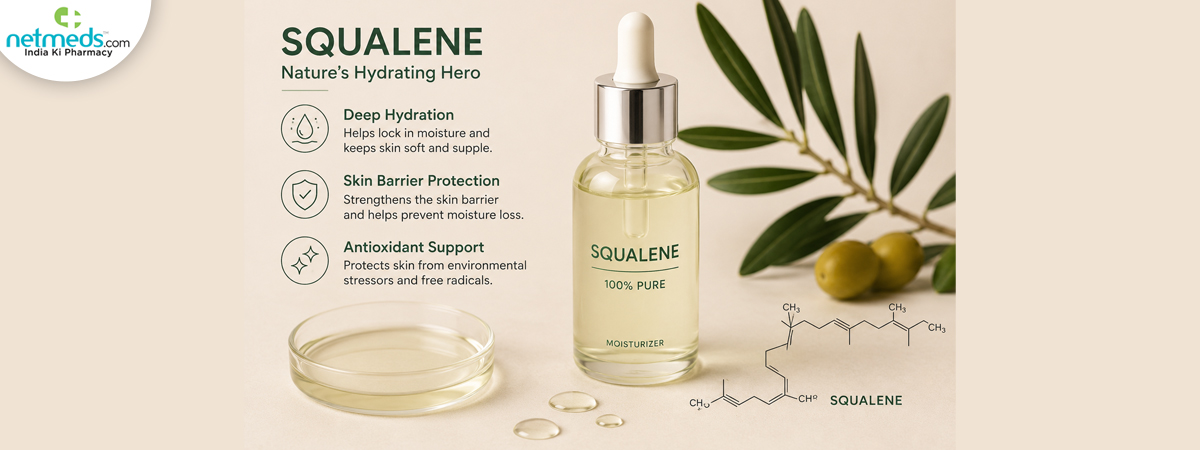
Is Squalene A Smarter Choice For Skin Health?
As we grow older, our natural squalene production tends to decrease, causing dryness, loss of firmness, and visible signs of ageing. Therefore, adding squalene to the skin through targeted skincare products or supplements has gained popularity among skin lovers. What makes squalene stand out from other facial oils is its love for the skin. Identical to the skin’s natural oils, it sinks in effortlessly without leaving a greasy finish. Besides hydrating the skin, it also helps in fighting skin stressors.
Also, check out: P-Coumaric Acid: Skin Health Benefits And Uses Of This Trendy Skin-Lightening Ingredient-Infographic
Key Differences Between Squalene and Squalane
Squalene and Squalane are two different compounds and differ in the following way:
Squalene
- Less stable and more prone to oxidation when exposed to air
· Produced by the skin’s sebaceous glands
- Less commonly used directly in skincare products due to its instability
- Naturally found in olive oil and amaranth oil
- Has a shorter shelf life compared to squalane
Squalane
- A stabilised and hydrogenated form of squalene
- More stable, lightweight, and has a longer shelf life
- Widely used in skincare products like moisturisers, serums, and facial oils
- Usually derived from plant-based sources of squalene, such as sugarcane and olives
- Has better shelf life while providing similar skin-hydrating benefits
(Get Blemish-Free, Soft, Supple Skin With Our Wide Variety Of Skincare Products!)
What Are the Key Skin Care Benefits of Squalene?
Intense Skin Hydration
Squalene is known for its ability to lock in moisture. It strengthens the skin's moisture barrier, leaving the skin feeling soft and comfortable without a heavy or oily finish.
Powerful Antioxidant Protection
Daily exposure to UV rays, pollution, and environmental stress creates free radicals, accelerating skin ageing. Squalene acts as a natural antioxidant, helping neutralise these free radicals and protecting skin cells from mild to severe damage.
Skin Barrier Support
To retain moisture and prevent irritation, the skin barrier must be healthy. Squalene can effectively strengthen this protective barrier and improve skin elasticity while keeping dryness and sensitivity at bay.
Fights Early Ageing
This ingredient is known to lessen the damage caused by sun exposure. Moreover, it can support the production of collagen and elastin, which are responsible for firm, youthful-looking skin. Its anti-inflammatory properties may also help soothe an inflamed or stressed skin.
Suitable For Every Skin Type
Squalene skincare products are generally ideal for all skin types. Whether you have dry, oily, combination, or acne-prone skin, it can mimic the skin's natural oils and can blend in without clogging pores or leaving a heavy finish.
What Foods Are Rich in Squalene
Besides skincare products, you can also increase your intake through foods rich in squalene. Some of the best dietary squalene sources include olive oil, amaranth oil, rice bran oil, and even wheat germ oil
Squalene Supplements: Do They Work?
Squalene supplements are increasingly being chosen to support healthy, radiant skin from the inside out. Our body can absorb a significant portion of ingested squalene (about 70 %) under normal conditions. Since it is a fat-soluble compound, it is transported through the bloodstream with the help of cholesterol-carrying lipoproteins. However, the amount of squalene people get through their diet can vary widely depending on their eating habits. In such cases, supplementation can help in maintaining consistent squalane intake. When selecting a supplement, consider a plant-derived source, which is a more sustainable and ethical option than animal-derived squalene.
Also Read: Ferulic Acid: Uses, Benefits And Side Effects Of This Amazing Skin Healing Ingredient
Precautions Before Using Squalene
Mostly safe for both topical and oral use, a few precautions are worth keeping in mind when adding squalene.
· Follow the dosage recommended on the product label
· Choose plant-derived squalene whenever possible for environmental sustainability
· Although topical squalene is suitable for most skin types, excessive use can clog pores in highly sensitive skin
· Consult a healthcare professional before taking supplements, especially if you are pregnant, breastfeeding, or on medications
References:
https://pmc.ncbi.nlm.nih.gov/articles/PMC6253993/
https://www.cerave.com/skin-smarts/skincare-tips-advice/squalane-benefits-for-skin
 Previous


