


Quince, also known as the golden apple (scientifically called Cydonia oblonga), is a fragrant, firm-textured fruit native to the Himalayan regions of India and parts of Western Asia. Increasingly recognized as a superfruit, quince offers a wide range of benefits for immunity, heart health, digestion, and skin wellness, making it an excellent addition to a balanced diet. Too hard and tart to eat raw for most people, cooking transforms it into a naturally sweet and aromatic delight.
In this article, we explore the nutritional value of quince, its top health benefits, and a simple stewed quince recipe anyone can try.
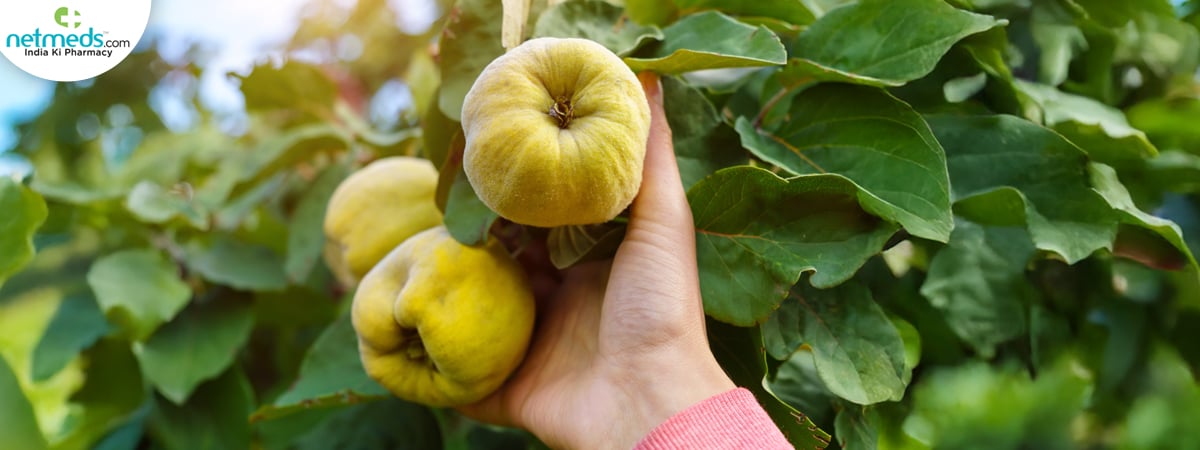
Where Is Quince Fruit Grown?
Quince originally comes from Western Asia, especially regions around Iran, Turkey, and the Caucasus. Today, it is grown in the temperate areas worldwide, including:
- Europe (Spain, Portugal, Italy, Greece)
- Middle East and Central Asia
- South America
- North America
In India, quince is locally called Bihi or Safarjal and is found mainly in hilly areas like Kashmir, Himachal Pradesh, and Uttarakhand. Its long shelf life and versatility make it a popular ingredient in jams, preserves, desserts, and traditional remedies.
(Buy Our Top-Selling Vitamin, Mineral, And Antioxidant Supplements Today, To Complement Your Health And Keep Diseases At Bay!)
Nutritional Value Of Quince
Quince fruit is a low-calorie fruit packed with essential nutrients such as:
· Vitamin C for immunity and antioxidant defence
· Dietary fibre for healthy digestion
· Potassium to support heart and blood pressure health
· Magnesium and antioxidants to reduce inflammation and protect cells
· Low in calories and fat for weight management and overall wellness
Also Read: Paw Paw: Benefits Of This Wonder Fruit On Skin And Health- DIY Recipe
Health Benefits Of Quince/Golden Apple Fruit
Quince fruit offers several wellness benefits thanks to its rich nutritional profile and antioxidant content.
Supports Digestive Health
A traditional remedy to soothe the gut lining and support overall gastrointestinal health, Quince is rich in dietary fibre, which helps regulate bowel movements and improve digestion. It is especially beneficial for relieving constipation, bloating, and indigestion.
Boosts Immunity
Packed with a high dose of vitamin C, quince fruit strengthens the immune system and helps in keeping seasonal illnesses and infections at bay. Regular consumption can protect cells from oxidative stress.
Promotes Heart Health
Quince contains potassium and soluble fibre, both of which support heart health. These nutrients lower bad cholesterol levels and improve blood circulation, thus reducing the risk of heart-related problems.
Supports Blood Sugar Control
Quince fruit has a low glycaemic index and high fibre content, which helps slow sugar absorption in the bloodstream. This makes it beneficial for people managing blood sugar levels and supports overall metabolic health.
Reduces Inflammation
Anti-inflammatory compounds in quince can reduce inflammation in the body. This can support joint health, improve digestion, and lower the risk of mild to chronic inflammatory conditions
Also Read: Egg Fruit: Health Benefits, Culinary Uses, And Recipe Of This Exotic Fruit
Skin Benefits Of Quince Fruit
Incorporating quince into your diet can enhance skin health naturally in the following ways:
- Supports collagen production for elasticity and reduced fine lines
- Antioxidants protect against environmental stress and free radical damage
- Anti-inflammatory properties may calm sensitive or irritated skin
- Aids detoxification through healthy digestion
- Promotes hydration, leaving skin soft, glowing, and supple
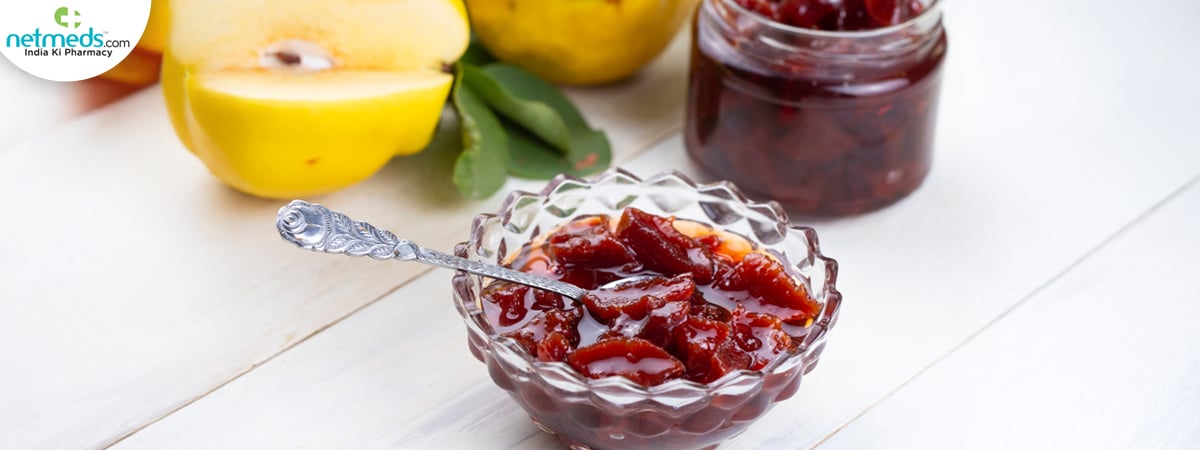
Want something a little bit fancy without trying too hard and yet delicious? Try this stewed quince recipe. A simple and quietly impressive one, it is made with just a few ingredients and minimal effort.
Simple Stewed Quince
Ingredients:
2 medium quince fruits
2 tablespoons honey
1 cup water
1 cinnamon stick
2 teaspoons lemon juice
Method:
· Wash the quince fruit thoroughly under running water to remove dirt and fuzz
· Peel the quince, remove the core, and cut it into even-sized slices or cubes
· Place the chopped quince pieces into a heavy-bottom saucepan
· Add enough water to cover the fruit
· Mix a little honey to taste
· Add the cinnamon stick
· Add the lemon juice to enhance the taste
· Bring the mixture to a gentle boil over medium heat
· Reduce the heat and let it simmer until the quince turns soft and pink
· Stir occasionally to prevent sticking
· Remove from the heat and allow it to cool slightly
· Serve with yogurt, oatmeal, pancakes, ice cream, or enjoy on its own as a simple and comforting dessert.
Frequently Asked Questions
Can You Eat Quince Raw?
Hard and very sour, it is not generally eaten raw. Cooking softens the fruit and releases its natural aroma, making it easier to digest and tasty.
How Long Does Stewed Quince Last?
Stewed quince can be stored in an airtight container in the refrigerator for up to five days. Allow it to cool completely before storing to maintain flavour and texture.
Is Stewed Quince A Healthy Way To Eat It?
Yes, stewed quince is healthy when made with minimal sweetener. It is rich in fibre, antioxidants, and vitamin C, which support digestion, immunity, and overall wellness while also satisfying sweet cravings.
References:
Cardiovascular Effects of Cydonia oblonga Miller (Quince)
Atefeh Amerizadeh
https://pmc.ncbi.nlm.nih.gov/articles/PMC9576383/
https://www.researchgate.net/publication/267800315_Nutritional_composition_and_processed_products_of_Quince_Cydonia_oblonga_Mill
 Previous


