If your periods have become irregular, acne is acting up, unwanted facial hair is showing up, or managing your weight feels harder than usual, you may be wondering if your hormones are out of balance. Polycystic ovary syndrome (PCOS) is a common hormonal and metabolic condition that can affect menstrual cycles, ovulation, androgen levels, insulin sensitivity and overall wellbeing.
Also Read: Women’s Health: 7 Incredible Herbs For Managing PCOS Naturally
While PCOS cannot be “cured” with a single herb or home remedy, a holistic approach involving healthy eating, regular exercise, adequate sleep, stress management and appropriate medical care can help manage symptoms. Some herbs and plant-based compounds have also been studied for their potential effects on insulin resistance, androgen levels, inflammation and menstrual regularity, but the evidence is still developing.
Also Checkout: PCOS Diet: What To Eat And Avoid For Better Hormonal Health
Let us understand how PCOS affects the body and explore five herbs and plant-based ingredients that have shown promising but not definitive, results in research.
What Exactly Is PCOS?
PCOS is a complex hormonal disorder associated with symptoms such as irregular periods, excess androgen activity, acne, unwanted facial or body hair, scalp hair thinning and difficulty with ovulation.
Many women with PCOS also experience insulin resistance and metabolic concerns. However, PCOS looks different in every woman, and you don't have to have every typical symptom to have the condition.
The important thing to remember is that PCOS is not simply an ovarian problem. It can involve reproductive, metabolic, and psychological aspects, which is why a comprehensive approach to management is so important. The international evidence-based guideline recommends individualised care based on symptoms, health risks and personal goals.
Can Herbs Really Help Manage PCOS Naturally?
Here is where we need to keep things realistic.
Some herbs and plant-derived compounds have been investigated in clinical studies involving women with PCOS. Research has explored their potential effects on blood glucose, insulin resistance, androgen levels, menstrual cycles, inflammation and lipid profiles.
But promising research does not mean an herb is a proven PCOS treatment. Studies often involve small groups, different preparations, and varying doses. The current international PCOS guideline also cautions that complementary therapies and supplements may have variable quality and evidence.
So think of these herbs as potential complementary support, rather than replacements for prescribed PCOS treatment.
Simple Tips For Using Herbs Safely
Use herbs mainly as part of a balanced diet.
Don't assume “natural” means risk-free.
Avoid high-dose herbal supplements without professional advice.
Check for potential interactions with prescription medicines.
Consult your doctor before using supplements during pregnancy or while trying to conceive.
Continue prescribed PCOS treatment unless your healthcare professional advises otherwise.
Don't Forget The Basics
Herbs are only one part of PCOS management. Regular exercise, a balanced diet, adequate sleep, stress management, and maintaining healthy metabolic markers remain important.
Without further ado, delve through this infographic to find the 5 best herbs to manage PCOS symptoms naturally.
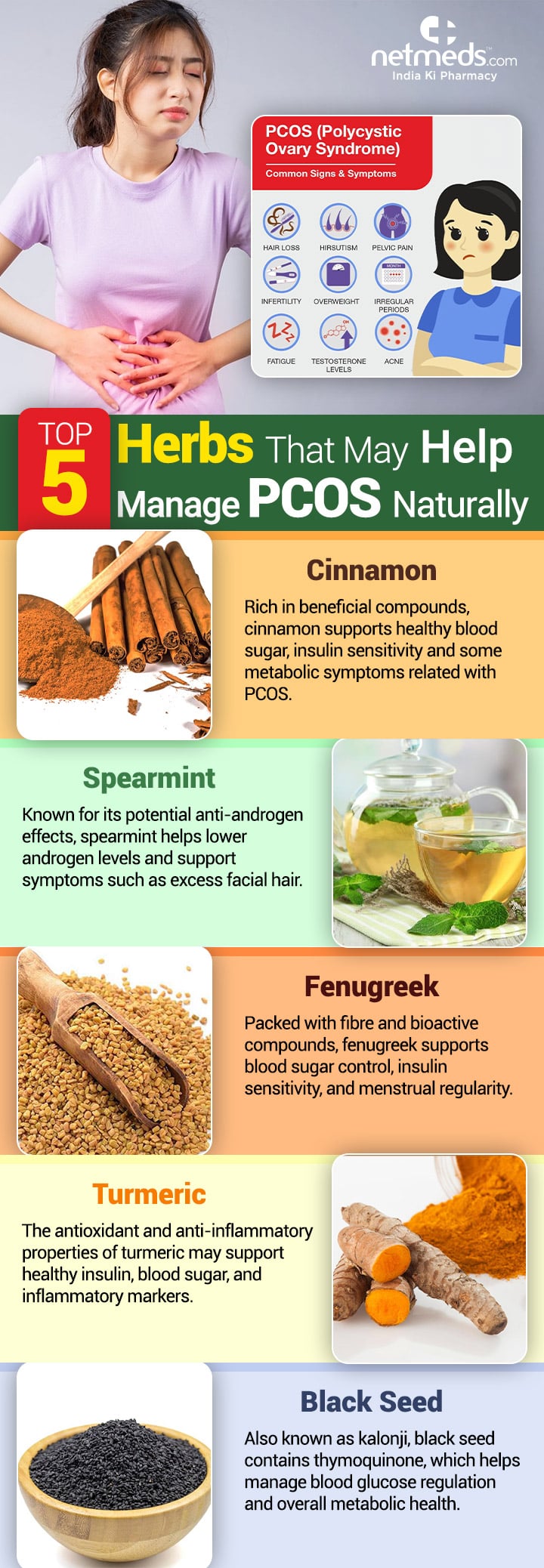
Cinnamon, spearmint, fenugreek, turmeric, and black seed have shown promising results in early PCOS research, particularly for metabolic and hormonal health. However, they cannot cure PCOS or replace medical care. Use them as complementary options alongside sustainable lifestyle habits and guidance from a healthcare professional.
References:
- Teede HJ, et al. International Evidence-based Guideline for the Assessment and Management of Polycystic Ovary Syndrome 2023. Monash University.
- Heydarpour F, et al. Effects of cinnamon on controlling metabolic parameters of polycystic ovary syndrome: A systematic review and meta-analysis. Journal of Ethnopharmacology.
- Grant P. Spearmint herbal tea has significant anti-androgen effects in polycystic ovarian syndrome. Phytotherapy Research.
- Singh A, et al. Efficacy of a Proprietary Fenugreek Seed Extract in Women with Polycystic Ovary Syndrome.
- Shen W, et al. Therapeutic effect and safety of curcumin in women with PCOS: A systematic review and meta-analysis.
 Previous