Bones, which form our skeletal structure, are extremely vital as they not only store calcium and provide a structure to the body but also protect organs and anchor muscles. Bones are living connective tissue that is continuously changing; old bones get broken down and are replaced with newly formed ones, a process known as bone remodelling. Several studies suggest that with age, bones get brittle, making them prone to fractures and breaking. This happens mainly due to the gradual reduction of bone mass. When a person is younger, the body creates bone mass at a faster pace than it breaks down, while increasing the total bone mass. As the person gradually ages, this process slows down and by the age of 30, most people reach the peak bone mass. In the 30’s and 40s, this bone mass is lost faster than it’s created, resulting in a condition medically termed Osteopenia.
What Exactly Is Osteopenia?
Osteopenia is a medical condition where a person loses bone mineral mass, causing the bone density to be lower than normal peak density, but the loss is not severe enough to be classified as osteoporosis. It usually leads to bone weakening and an increased risk of bone fractures. If the condition is left untreated for a long time, Osteopenia slowly advances and becomes osteoporosis, where the bone density reduces considerably.
Also Read: Osteopenia: Causes, Diagnosis And Prevention
Although osteopenia is common in both men and women but the female counterpart loses bone mass more quickly after menopause, due to lower estrogen levels. Right from having a family history of low bone density, being in the 40’s or 50’s, having menopause before the age of 45 for women, removal of ovaries before menopause, not getting enough exercise, drinking too much alcohol or caffeine, following a diet lacking calcium and vitamin D or smoking or using other forms of tobacco, Osteopenia can occur due to several factors. Since there are not many characteristic symptoms, apart from localised bone pains, stooped posture, decreased height, and weakness once a person attains the age of 45 years, it is advised that people above 35 years go for a bone mineral density test every year.
It’s never too late to start protecting your bones by “banking” them early in life during the childhood and adolescence period. Although the peak bone mass varies from person to person, studies reveal that the higher the peak bone mass, the more bone one has 'in the bank’ to spare and the less likely one is to develop osteopenia or osteoporosis at a later stage.
How To Prevent Osteopenia?
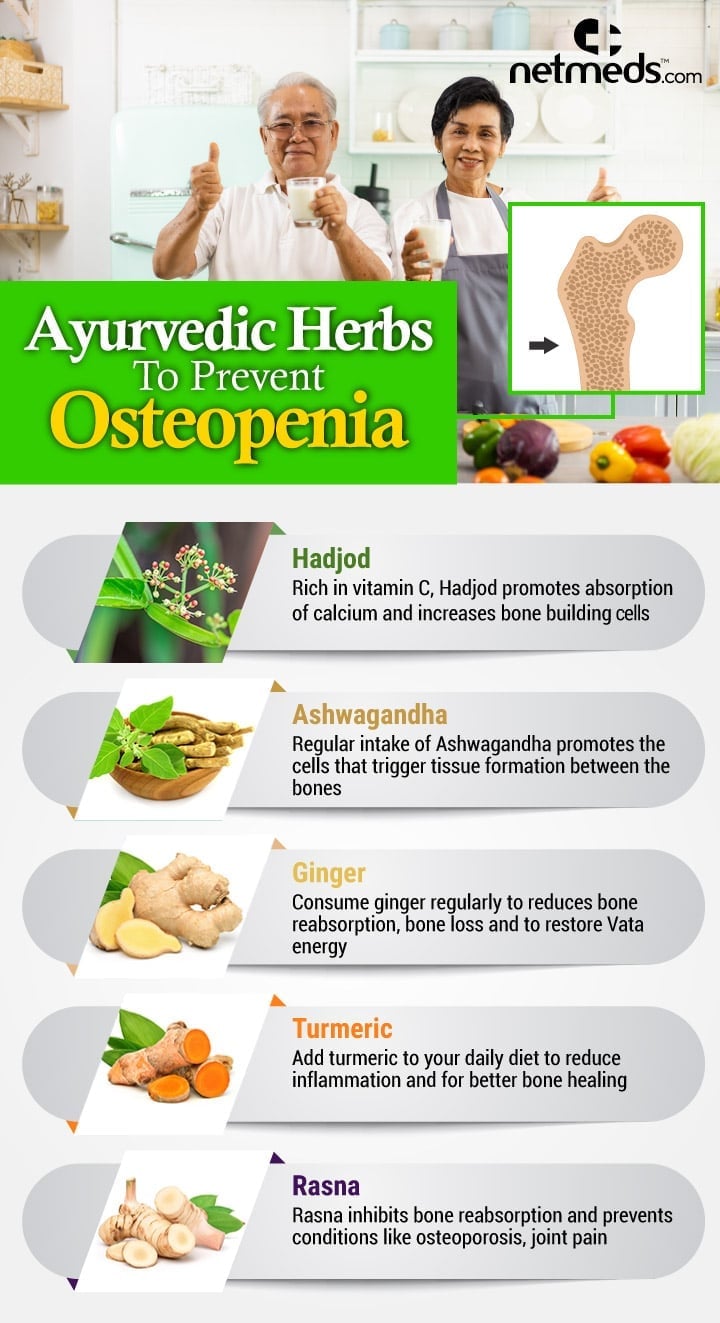
While a diet rich in calcium and vitamin D is quintessential for healthy body and bones, if you want a surer shot at increasing bone mineral density right from adulthood, here comes Ayurveda as your knight in shining armour. This traditional remedial science brings certain ayurvedic treatments and natural herbs and spices that not only prevents osteopenia and inhibits it from turning into osteoporosis but also increases bone density and bone mass.
Frequently Asked Questions
Is Osteopenia A Serious Condition?
Osteopenia is not as severe as osteoporosis, but it indicates lower-than-normal bone density and increases the risk of fractures if left untreated.
What is the best treatment for osteopenia?
Treatment for osteopenia typically includes weight-bearing exercise, a calcium- and vitamin D-rich diet, healthy lifestyle changes, and medications in high-risk individuals as recommended by a doctor.
What Are The Main Causes Of Osteopenia?
Common causes include aging, menopause, low calcium or vitamin D intake, lack of physical activity, smoking, excessive alcohol consumption, certain medications, and medical conditions that affect bone health.
What Deficiency Causes Osteopenia?
Deficiencies in calcium and vitamin D are the most common nutritional causes of osteopenia, as both are essential for maintaining healthy and stronger bones.
What Is The Best Vitamin For Osteopenia?
Vitamin D is one of the most important vitamins for osteopenia because it helps the body absorb calcium. Vitamins K2 and C may also support bone health when consumed as part of a balanced diet.
What Foods Should I Avoid With Osteopenia?
Limit foods high in sodium, sugary beverages, excessive alcohol, and processed foods. Excessive caffeine may also reduce calcium absorption in some people if calcium intake is inadequate.
References:
Plant-derived natural medicines for the management of osteoporosis: A comprehensive review of clinical trials
Seyedeh Mahnaz Karimi a, Mohammad Bayat b, Roja Rahimi a,∗
https://pmc.ncbi.nlm.nih.gov/articles/PMC10785263/
Herbal Treatment for Osteoporosis: A Current Review
Ping-Chung Leung 1,✉, Wing-Sum Siu 2,3
https://pmc.ncbi.nlm.nih.gov/articles/PMC3924968/
Foray through this infographic to know about the amazing ayurvedic herbs that improve bone health naturally.
 Previous