The monsoon season brings much-needed respite from the scorching summer heat, but it also increases the risk of infections, stomach illnesses, and seasonal flu among children. With the change in temperatures, increased humidity and the growth of pathogens like bacteria and viruses, children become easily vulnerable to illnesses during this season. While parents need to know how to safeguard their children and keep them healthy during monsoon season.
Keep Your Child Healthy This Monsoon With Our Broad Range Of Trusted Health Essentials
A balanced and wholesome monsoon diet for children plays a primary role in strengthening their immune system, supporting healthy growth, and protecting them from seasonal infections. A healthy diet loaded with essential vitamins, minerals, proteins, probiotics and antioxidants helps children stay energetic, recover faster and optimise their overall health throughout the rainy season.
Common Health Problems Children Face During Monsoon
Children may commonly experience:
Common cold
Viral fever
Sore throat
Diarrhoea
Food poisoning
Indigestion
Mosquito-borne diseases like dengue and malaria
Good nutrition supports the development of a stronger immune system and may help reduce the severity and duration of common illnesses.
Also Read: Monsoon Viral Fever: Causes, Foods To Eat And Avoid, Sample Diet Plan
Why Is a Healthy Diet Important for Children During Monsoon?
Children's immune systems are still developing, making them easily susceptible to viral infections, colds, coughs, diarrhoea, and food-borne illnesses during the monsoon. Thus, a healthy and wholesome monsoon diet helps:
Strengthen the immune system
Lower the risk of seasonal infections
Improve digestion and gut health
Deliver key nutrients for growth and development
Maintain good hydration despite reduced thirst
Support brain development and physical performance
Avert the risk of nutritional deficiencies
Eating freshly prepared, home-cooked meals, hygienic, and nutrient-rich foods can remarkably reduce the chances of falling sick during the rainy season.
Nutrients Essential for Children During Monsoon
Vitamin C
Vitamin C is a key nutrient that promotes immune function and acts as an antioxidant. Adding foods rich in vitamin C, such as amla, oranges, guava, lemon, kiwi, bell peppers, cauliflower, and potatoes, may help meet the demands and keep infections at bay.
Protein
Protein is an important macronutrient that helps to repair tissues and supports healthy growth and development. Incorporate food sources such as eggs, milk, paneer, lentils, chickpeas, fish, lean meat and soybeans that are loaded with protein to trigger immune function and fight infections.
Zinc
Zinc is an important mineral that contributes to normal immune function and wound healing. Pumpkin seeds, beans, nuts, dairy products, and eggs are some of the food sources abundant in zinc that support immunity.
Iron
Iron supports healthy haemoglobin formation and energy production. It acts as a cofactor for immune cells to multiply and activate the defence system. Spinach, green leafy vegetables, dates, raisins, legumes and jaggery are food sources rich in iron.
Probiotics
Probiotics help maintain a healthy gut microbiome, which supports digestion and immune health. Adding food sources rich in probiotics like curd, homemade yoghurt, and buttermilk helps maintain gut microbiome balance.
Best Foods to Include in a Monsoon Diet for Children
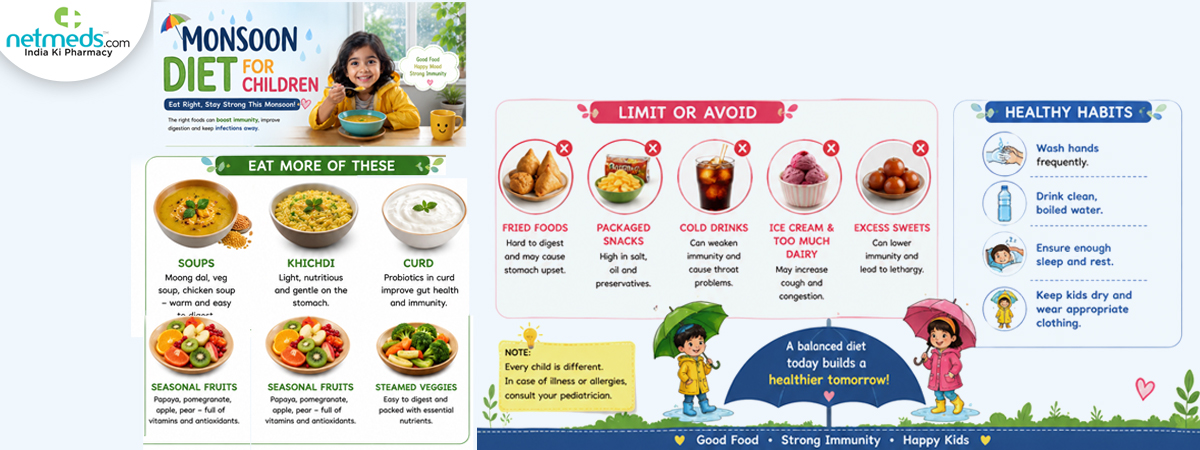
Seasonal Fruits
Fresh seasonal fruits provide vitamins, minerals, antioxidants, and fibre.
Choose:
Apples
Pears
Pomegranate
Banana
Papaya
Always wash fruits thoroughly before serving.
Warm Homemade Soups
Vegetable soups, tomato soup, lentil soup, and chicken soup are nutritious, easy to digest, and comforting during rainy weather.
Freshly Cooked Meals
Serve freshly prepared meals that are soft, nutritious and rich in protein. Healthy options include:
Dal with rice
Vegetable khichdi
Idli with sambar
Vegetable upma
Chapati with dal and vegetables
Whole Grains
Whole grains provide a steady and sustained source of energy and fibre. Brown rice, oats, millets, whole wheat and wheat products.
Nuts and Seeds
Nuts and seeds are healthy sources of good fats, protein and essential minerals that boost immune function and keep you healthy. Add small amounts of almonds, walnuts, flaxseeds, pumpkin seeds and chia seeds.
Hydrating Fluids
During the rainy season, children may not feel very thirsty, where hydration is easily overlooked. It is important to encourage them to drink boiled water and also include hydrating fluids such as:
Fresh soups
Homemade fruit smoothies
Foods to Avoid During Monsoon
To reduce the risk of infections and digestive problems, limit or avoid:
Street food
Cut fruits sold outside
Raw leafy salads from unhygienic sources
Unpasteurised milk
Stale leftovers
Fried and oily snacks
Sugary beverages
Packaged junk foods
Excess chocolates and candies
Sample Vegetarian Monsoon Diet Plan for Children
Early Morning
A glass of warm water
4–5-soaked almonds and 1 walnut
Breakfast
2 Vegetable idlis with 1 cup of sambar or
½ cup of Vegetable poha with ¼ cup of mint chutney or
1 bowl of Breakfast cereal with milk, fruits and nuts or
2 Moong dal chilla with ½ cup of curd
And one glass of milk
Mid-Morning Snack
A bowl of seasonal fruit salad
Lunch
2 Whole wheat chapatis or 1 cup of rice or 1 whole wheat chapati with ½ cup of rice
1 cup of Dal or sambar or rajma curry or spinach dal
1 katori of Seasonal vegetable curry
½ cup of curd
OR
1 cup of Vegetable kichidi
1/ cup of Curd
½ cup of dry vegetable sabzi
Evening Snack
1/ cup of Roasted makhana or Roasted chana or Sprouts chaat (boiled sprouts) or Corn chaat or 2 pieces of French toast
Or
1 cup of Pumpkin soup or any vegetable soup
Dinner
2 Chapati or 2 millet dosa or 2 vegetable dosa
1 cup of Paneer burji with ½ cup of boiled carrots
Bedtime
Warm milk with a pinch of turmeric (optional, if suitable for the child)
Food Safety Tips for Children
Follow these simple precautions:
Wash fruits and vegetables thoroughly.
Serve freshly cooked meals.
Drink boiled or filtered water.
Keep food covered.
Avoid raw or undercooked foods.
Maintain proper hand hygiene before meals.
Refrigerate leftovers promptly and reheat thoroughly before use.
Can Supplements Help During Monsoon?
Most healthy children can meet their nutritional needs through a balanced diet. However, some children with unhealthy eating habits, poor appetite, or those with nutritional deficiencies may require supplements such as vitamin D, iron, zinc, or probiotics. These should only be given under the guidance of a paediatrician or qualified healthcare professional.
Frequently Asked Questions
What Is The Best Diet For Children During Monsoon?
A balanced diet that includes whole grains, fruits, vegetables, protein-rich foods, dairy products, nuts, seeds, and plenty of fluids is ideal for children during the monsoon season.
Which Fruits Are Good For Children During Monsoon?
Apples, bananas, guavas, papayas, pears, and pomegranates are nutritious choices. Wash fruits thoroughly before serving to reduce the risk of contamination.
How Can I Boost My Child's Immunity During Monsoon?
Provide a balanced diet rich in vitamin C, protein, zinc, iron, and probiotics; ensure adequate hydration and sound, restful sleep; maintain good hygiene, and keep vaccinations up to date.
Conclusion
A wholesome monsoon diet for children is one of the best ways to strengthen the immune system and optimise overall health during the rainy season. Adding a rich array of colourful fruit, veggies, whole grains, protein-rich foods, probiotics, and good hydration helps boost immunity, support staying healthy, and mitigate the risk of seasonal infections and digestive illnesses.
References:
https://www.researchgate.net/publication/375677900_VARSHA_RITUCHARYA-_A_GUIDE_FOR_GOOD_HEALTH_DURING_MONSOONS_FOR_CHILDREN
https://www.sciencedirect.com/science/article/abs/pii/S2212267226000055
https://www.sciencedirect.com/science/article/abs/pii/S2212267226000055
 Previous