Kidneys do more than filter waste; they maintain fluid balance, regulate blood pressure, and keep your body functioning optimally. However, kidney disease can develop slowly and may not cause visible symptoms in its early stages. A kidney function test checks primary markers like creatinine and eGFR to analyse how your kidneys are functioning.
(Check Your Kidney Health, Book Your Test Now)
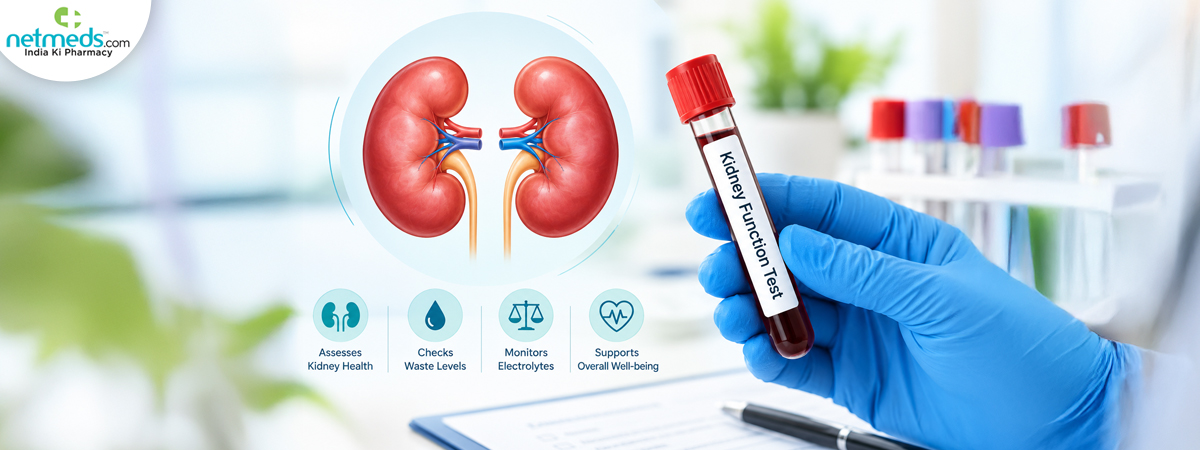
Recently, the parliamentary panel has recommended a mandatory kidney function test every six months for all adults aged 20 and above. This proposed strategy change aims to transform national healthcare priorities from treating end-stage renal failure to averting kidney disease progression at an early stage. Therefore, early screening can help determine chronic kidney disease before any permanent organ damage occurs.
Why Mandatory Kidney Function Test Screening Matters?
Chronic kidney disease (CKD) mostly remains silent during its early stages. Thus, relying only on serum creatinine is inadequate for prompt diagnosis, as levels may stay normal despite remarkably functional loss. To address this concern, the panel suggested that diagnostic laboratories should automatically report estimated glomerular filtration rate alongside creatinine. Moreover, this practice assures timely clinical intervention for all high-risk populations, including those with diabetes or hypertension.
The Indian Government has included CKD screening and management within its non-communicable disease (NCD) category. The latest government guidance suggests evaluating people at higher risk and monitoring them with tests like urine protein/albumin testing and serum creatinine, with estimated glomerular filtration rate (eGFR) used for further assessment.
Also Read: Kidney Function Tests: Know The Types, How It Is Done And What To Expect
What Is A Kidney Function Test?
A kidney function test (KFT) includes several blood and urine tests to determine how well the kidneys are working.
Some of the common tests include:
Serum creatinine: Measures creatinine, a waste product that is normally removed by the kidneys.
eGFR: Estimates how well the kidneys filter blood and is calculated using factors such as serum creatinine and other patient characteristics.
Urine albumin or protein: Helps detect abnormal protein loss through the kidneys.
Urine routine examination: Can identify certain abnormalities that may indicate kidney or urinary tract problems.
The Government of India's CKD guidance recommends urine testing and serum creatinine during screening, with eGFR and renal function testing used for further evaluation when appropriate.
Why Is Kidney Function Testing Important?
Kidney Disease Symptoms Are Silent
KFT is an important screening tool as early-stage CKD may not cause any obvious symptoms. A person may feel normal and fine even while kidney function starts to slowly decline. Thus, regular screening can help determine any abnormalities before symptoms become prominent, allowing healthcare providers to determine the exact cause and recommend an appropriate treatment plan.
Diabetes Can Affect Kidney Health
Diabetes is considered as a key risk factor for CKD. Continuous high blood glucose levels can slowly damage the small blood vessels involved in kidney filtration. Hence, all diabetic patients may need regular assessment of kidney health as advised by their doctor.
High Blood Pressure Can Damage The Kidneys
Blood pressure in the long run can affect the minute blood vessels in the kidneys and contribute to declining kidney function. Furthermore, kidney disease can itself contribute to high blood pressure, which creates a vicious cycle worsening both conditions.
Also Read: Kidney Health: Know About 11 Early Warning Signs of Renal Disease
Kidney Health Is Linked With Cardiovascular Health
Kidney disease and heart conditions are closely associated. The Government of India's CKD guidance includes a previous history of cardiovascular events such as heart attack or stroke among factors that can indicate increased CKD risk.
Who Should Consider a Kidney Function Test?
According to the Government of India CKD guidance, people with certain risk factors should be identified for kidney disease screening.
These include people with:
Diabetes
High blood pressure
Kidney stones
Recurrent urinary tract infections (UTIs)
A personal history of kidney disease
Persistent swelling of the legs or face
Chronic anaemia not related to pregnancy or lactation
A family history of kidney disease
A history of cardiovascular events such as heart attack or stroke
People with these risk factors should discuss appropriate kidney screening with a healthcare professional.
What Are the Warning Signs of Kidney Problems?
Some of the warning signs and symptoms of kidney disease may include:
Puffiness around the eyes, feet or ankles
Changes in urination
Blood in the urine
Foamy urine
Persistent tiredness
Nausea or loss of appetite
Itching
Breathlessness, particularly in advanced disease
Note: These symptoms can occur owing to several other health conditions and do not necessarily suggest that a person has kidney disease. Appropriate medical evaluation is essential when symptoms are persistent or worrying.
How Often Should Kidney Function Tests Be Done?
Well, there is no single testing schedule that applies to every adult. Also, the frequency depends on factors such as:
Diabetes mellitus
Hypertension
Existing kidney disease
Previous abnormal kidney test results
Family history
Other comorbid medical conditions
Medicines that may affect kidney function
Individuals at higher risk may require periodic monitoring as advised by their healthcare provider.
Can Kidney Disease Be Prevented?
Not all cases of kidney disease can be prevented, but numerous measures can help safeguard kidney health:
Controlling blood pressure.
Managing blood glucose if you have diabetes.
Maintaining a healthy body weight.
Staying physically active.
Eating a balanced and varied diet.
Staying well hydrated and drinking adequate fluids according to individual medical needs.
Avoid taking painkillers without a doctor's prescription or other medicines that may affect the kidneys.
Get evaluated for persistent urinary symptoms.
Follow recommended screening if you have CKD risk factors.
Conclusion
The Government of India has incorporated CKD screening as mandatory into its public healthcare framework and recommends identifying high-risk individuals and getting them tested for serum creatinine, eGFR, and urine albumin/protein assessment when appropriate. However, the current guidance should not be regarded as a recommendation that every adult should routinely undergo a KFT. If you have diabetes, hypertension, a family history of kidney disease, recurrent UTIs, kidney stones or other CKD risk factors, speak with a healthcare professional about appropriate kidney screening. In addition, the report suggests that biannual testing should be free for those below the poverty line. Also, expanding digital health tracking may help improve long-term patient care.
References
Parliamentary panel recommends mandatory kidney tests for all aged 20 yrs and above every 6 months – ETHealthworld
Ministry of Health and Family Welfare, Government of India – National Programme for Prevention and Control of Non-Communicable Diseases (NP-NCD) Reports.
References:
https://biomedres.us/fulltexts/BJSTR.MS.ID.006662.php
Assessment of Public Knowledge and Attitude towards Chronic Kidney Disease by Using a Validated Questionnaire: An Observational Study
Rashid I1, Sharma S2, Kamboj G2, Deshwal PR1, Akhilesh KJ2, Tiwari P*3 and D’Cruz S4
Received: January 27, 2022 | Published: February 11, 2022
Hill NR, Fatoba ST, Oke JL, Hirst JA, O Callaghan CA, et al. (2016) Global Prevalence of Chronic Kidney Disease A Systematic Review and Meta Analysis.
Major RW, Cheng MRI, Grant RA, Shantikumar S, Xu G, et al. (2018) Cardiovascular disease risk factors in chronic kidney disease: a systematic review and metaanalysis.
Gansevoort RT, Correa-Rotter R, Hemmelgarn BR, Jafar TH, Heerspink HJL, et al. (2013) chronic kidney disease and cardiovascular risk: epidemiology, mechanisms and prevention. The Lancet 382(9889): 339-352.
Fogo AB (2007) Mechanisms of progression of chronic kidney disease.
Król E, Rutkowski B, Czarniak P, Kraszewska E, Lizakowski S, et al. (2009) Early Detection of Chronic Kidney Disease Results of the PolNef Study. American Journal of Nephrology 29(3): 264-273.
Kinchen KS, Sadler J, Fink N, Brookmeyer R, Klag MJ, et al. (2002) The timing of specialist evaluation in chronic kidney disease and mortality. Ann Intern Med 137(6): 479-486.
Levin A, Stevens PE (2011) Early detection of CKD the benefits limitations and effects on prognosis. Nature Reviews Nephrology 7(8): 446-457.
McLaughlin K, Manns B, Culleton B, Donaldson C, Taub K (2001) An economic evaluation of early versus late referral of patients with progressive renal insufficiency. Am J Kidney Dis 38(5): 1122-1128.
Hussain S, Habib A, Najmi AK (2019) Limited Knowledge of Chronic Kidney Disease among Type 2 Diabetes Mellitus Patients in India. Int J Environ Res Public Health 16(8): 1443.
 Previous