


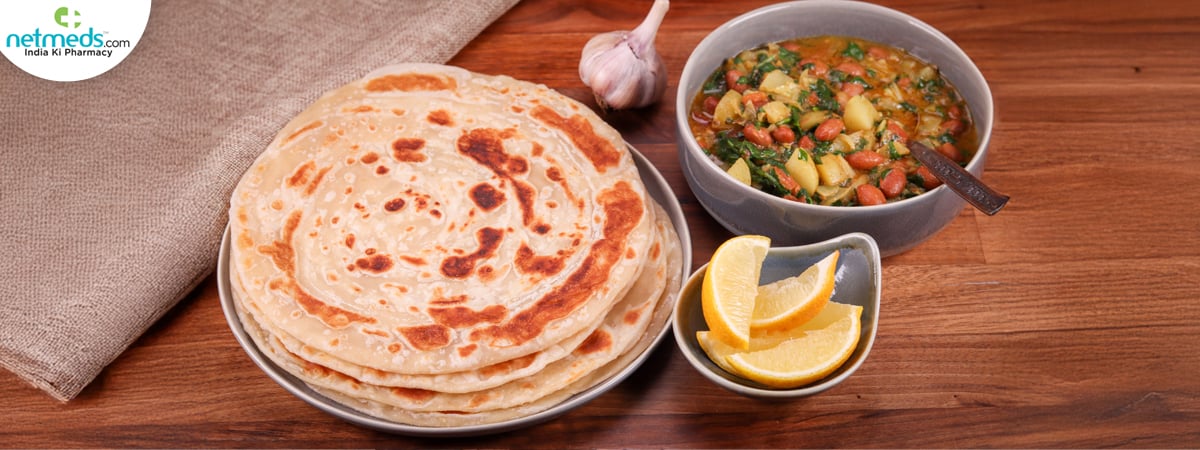
Parotta, flaky, buttery, layered flatbread loaded with carbs and energy, is the most relished food in South India, especially very famous in Tamil Nadu and Kerala. It is known for its rich flavour, as it is loaded with ghee, butter or oil and is usually consumed with rich curries like salna, kurma or non-vegetarian gravies. However, when analysed from a nutritional and health point of view, most people doubt whether parotta is healthy or not.
To Augment Your Overall Health And Well-Being, Shop From Our Wide Range Of Nutritional Supplements
Well, the answer depends on how often you eat, how it is made and what you pair it with. Dive into this article to learn more about parotta’s health profile, ways to keep it healthy and side effects.
Nutritional Profile of Parotta
Parotta is made using:
Refined wheat flour (maida)
Oil, ghee or dalda
Salt
Sometimes sugar
Nutrition Content 1 medium parotta ~100 g
Calories: 300–350 kcal
Carbohydrates: 40–45 g
Fat: 12–18 g
Protein: 5–6 g
Fiber: Very low
As the main ingredients are maida and oil, parotta is energy-dense but low in essential nutrients and dietary fiber.
Is Parotta Healthy or Unhealthy?
Parotta is not essentially unhealthy, but it is a refined, simple-carb food loaded with dense calories and unhealthy fat. Eating it rarely as a part of a balanced diet is fine, but frequent intake can lead to health problems. As per the nutritional classification, parotta falls under refined grain, high-calorie foods.
Also Read: Maida vs. Wheat Flour: Differences, Which Is Bad for Gut Health? Find Out Here
How Parotta Impacts Health?
Energy Boost
Parotta offers a steady source of fuel owing to its high carbohydrate content, making it very filling and satisfying.
Blood Sugar Spikes
The main ingredient in parotta is refined flour, maida, which comes with a high glycemic load and can rapidly surge blood sugar levels.
Hence, parotta is not a preferred choice of food for people with diabetes, insulin resistance or other metabolic conditions.
Weight Gain Risk
One medium-sized parotta offers 300 calories and 15 grams of fat, which can significantly increase fat content in the body and result in weight gain. Thus, regular intake of parotta can make you gain weight without balancing overall calorie consumption.
Low Nutrient Density
Compared to whole-grain and multigrain rotis, parotta lacks essential fiber, vitamins, and minerals. It offers empty calories and is devoid of nutrients.
Digestive Effects
Low fiber content in parotta impedes the digestive functions. This results in slower digestion and constipation when consumed frequently.
Side Effects of Eating Parotta Frequently
Regular or excessive consumption of parotta may lead to:
High calorie density can lead to excess body fat and weight gain.
Frequent intake of refined carbs may worsen insulin resistance and spike blood sugar levels.
As it is cooked with excessive oil or vanaspati, it may raise LDL cholesterol and increase your risk of heart disease over time.
How to Make Parotta Healthier?
You can still improve parotta’s nutrition with simple dietary modifications.
Use whole wheat and multigrain atta instead of refined flour.
Limit the oil or ghee used to knead the dough and use minimal oil while cooking to lower the calorie content.
Combine it with protein-rich ingredients like egg parotta, paneer-stuffed parotta or legumes.
Add vegetables like cauliflower, carrot, spinach or methi in the dough to boost fiber and nutritional value.
Pair with healthy sides like dal curry, grilled chicken, curd or vegetable kurma.
Limit to 1–2 parottas occasionally instead of frequent large portions.
Who Should Limit Parotta Intake?
Those trying to lose weight.
Individuals with high cholesterol.
People with heart disease.
Those with sedentary lifestyles.
Is Parotta Healthier Than Roti?
No, whole wheat roti is healthier because it comes with a wealth of nutrients, including essential vitamins, minerals, high fiber, low fat and calories. Moreover, it stabilises blood sugar levels and prevents weight gain.
On the contrary, parotta is richer in calories and fat content and more indulgent, making it better suited as an occasional treat.
Frequently Asked Questions
Why Is Parotta Bad For Health?
Parotta is typically high in refined flour, calories and fat. Frequent consumption may contribute to weight gain and poor blood sugar and cholesterol control.
Can We Eat Parotta Once A Month?
Yes. Eating parotta occasionally, such as once a month, can fit into a balanced diet. Choose a moderate portion and pair it with protein- and vegetable-rich sides.
How Much Protein Is In 2 Parottas?
Two plain parottas generally provide around 8–10 g of protein, depending on their size and recipe.
What Are The Benefits Of Eating Parotta?
Parotta provides carbohydrates for energy and some protein and fat. However, it has limited fibre and micronutrients, so it is best eaten occasionally as part of a balanced meal.
Conclusion
Parotta is a tasty comfort food that can absolutely fit into a healthy diet when eaten occasionally and portion-controlled. As it is made with maida and oil, regular consumption may contribute to weight gain, blood sugar spikes, and heart health risks.
The simple tweak to make it healthier is to use whole wheat flour, reduce oil, add vegetables, protein and combine it with a wholesome side dish, which can make parotta healthier without compromising on the taste.
References
Effect of processing conditions on the quality of South Indian parotta – an Indian traditional food
Wiley , Journal of Food Quality, author Indrani Dasappa
https://www.researchgate.net/publication/230359913_Effect_of_processing_conditions_on_the_quality_of_south_Indian_parotta_-_an_Indian_traditional_food
https://www.allresearchjournal.com/archives/2021/vol7issue3/PartD/7-3-79-535.pdf
 Previous