Intrigued by how celebrities get that perfectly defined jawline and elevated cheekbones without going under the knife? It is all contouring and highlighting, people. Done right, these two techniques can lift your natural contours, add some oomph to your face, and grant you that effortlessly snatched face, ready to face the camera.
So, whether you are a newbie who wants to learn the basics of makeup or a beauty addict, this tutorial will guide you through everything to become a master of contouring and highlighting.
Also Read: DIY Highlighters: Amazing Illuminators To Make Your Skin Glow In A Jiff
Get Blemish-Free, Radiant And Sculpted Face With Our Wide-Range Of Makeup And Skincare Products!

What Is Contouring And Highlighting?
Let us cover the basics first before diving into the how-to:
Contouring is the process of applying a darker colour than your natural skin tone to define shadows and outline areas like the cheekbones, jawline, temples, and nose.
Highlighting involves employing a lighter colour or a lightening product to raise the high areas of your face, including the apexes of your cheeks, nose bridge, and brow bone.
All of these techniques put together give your face structure and balance, and your features seem toned and radiant.
What You Will Need?
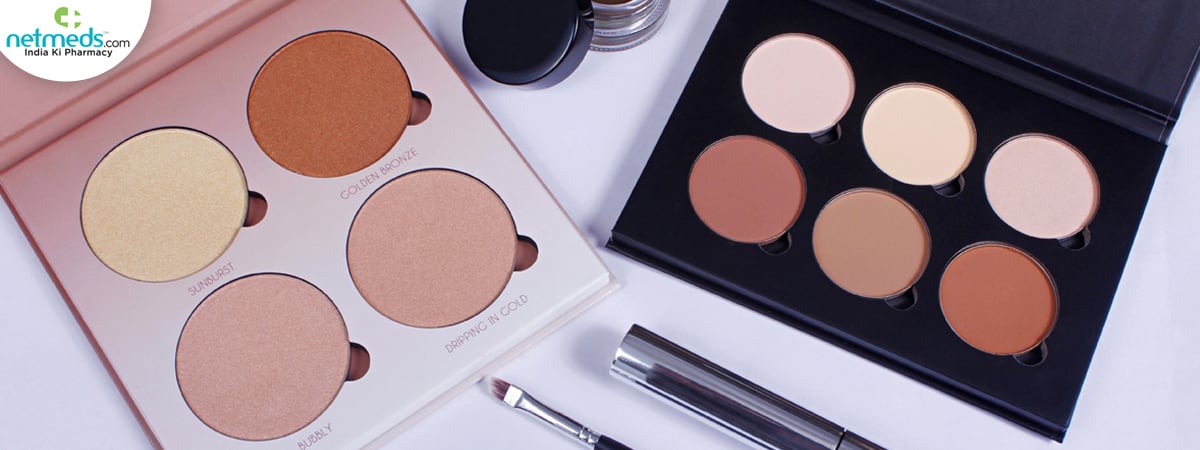
To achieve a perfectly sculpted look, gather the following materials:
Contour product: Cream, stick, or powder (choose 1–2 shades lighter than your complexion)
Highlighter: Cream, liquid, or powder (opt for one with a soft shine rather than lumpy glitter)
Foundation and concealer: For a smooth finish
Blending tools: Makeup sponge or contour brush
Setting powder or spray: To set the look in place
Pro Tip: Cream products are easier to blend for beginners, whereas powders are ideal for an even more accurate, photo finish.
Step-by-Step: How To Contour And Highlight Your Face?
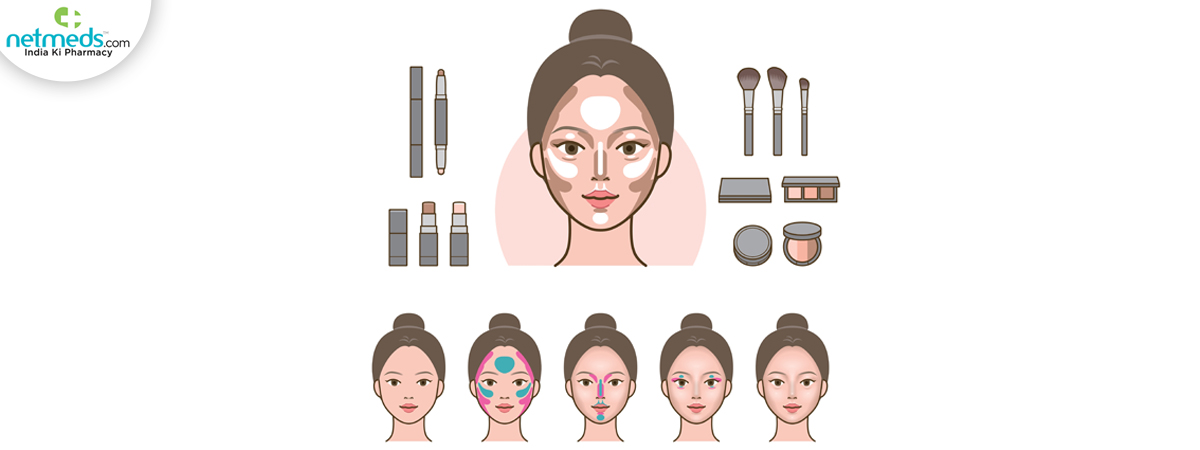
Prep and Prime
Begin with a clean, moisturised face. Prime and apply your foundation to create a smooth, even face palette. Contouring and highlighting do best on a well-prepped base.
Map Out Your Contour
With your contouring product, place lines specifically in these focal areas:
Under your cheekbones (from the top of your ear towards the edge of your mouth)
On the temples and sides of your forehead
Along your jawline to contour and sculpt
Optional: Along the side of your nose for a more slender appearance
Pro Tip: Begin with less product; you can always add more later
Highlighter to the High Points
Then apply your highlighter or a lighter-tone concealer to areas you want to move to the front:
Top of cheekbones
Centre of your forehead
Bridge of the nose and tip
Chin
Under the eyes in an inverted triangle shape
Brow bone and inner corners of eyes for added brightness
This adds light and depth, creating that lifted, radiant face.
Blend Properly
Blending is where the magic happens. Use a damp makeup sponge or a fluffy brush to softly blend your contour upward and highlighter outward. Avoid harsh lines; your goal is a natural shadow effect, not obvious streaks.
Set Your Makeup
To maintain your sculpt throughout the day, dust translucent powder onto highlighted areas and matte bronzer to softly set the contour. Top with a setting spray for a dewy, skin-like finish.
Pro Tips For A Flawless Sculpted Look
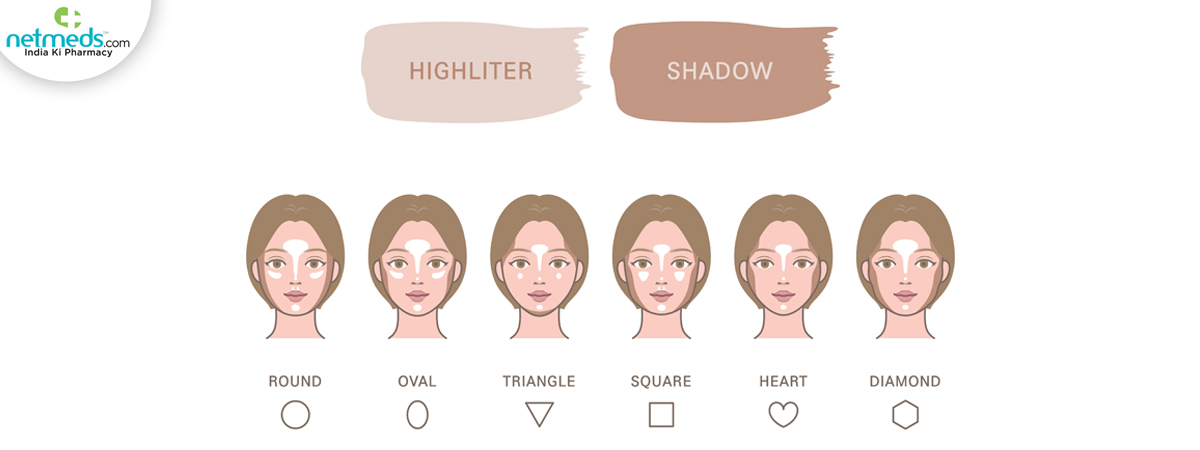
Know your face shape: Adapt contour placement depending on whether you are round, oval, heart-shaped, or square
Less is more: Begin light and build up slowly to prevent a cakey finish
Natural lighting is essential: Always inspect your blending in natural sunlight for the truest finish
Cream before powder: For long-lasting wear and blended results
Flash test: Use flash photography to check for unblended patches and harsh lines

Frequently Asked Questions
Can I contour and highlight on a daily basis?
Yes, but do a light, natural look as everyday wear and save the heavy sculpting for a special occasion.
Cream or powder contour: which is better?
Cream is easy to blend and leaves a dewy finish, while powder gives a crisper, matte look; select based on your skin type and occasion.
Do I apply contour before or after foundation?
For a smooth finish, contour after foundation. For a soft, blended finish, try underpainting (contouring before foundation).
Can I use concealer as a highlighter?
Yes! Apply a concealer 1–2 shades lighter than your skin to naturally highlight.
How do I contour a round face?
Attempt to accentuate angles and contour under cheekbones, along the jawline, and on the sides of the forehead to define and extend the face.
Conclusion
Contouring and highlighting can be intimidating to accomplish, but after a few tries and mastering the techniques, you can transform your makeup application. It is not about changing your face; it is about enhancing your natural features and utilizing light and darkness to get the look you want. So, grab your brushes, continue reading, and get ready to turn heads with your stunningly sculpted face.
 Previous