


Monsoon may bring refreshing showers and cool weather, but it can be a nightmare for your hair. The constant humidity, dampness, and exposure to rainwater can make your hair frizzy, limp, sticky, and difficult to manage. If your strands feel rough, look dull, and refuse to stay in place, chances are your hair is reacting to excess moisture in the air.

The good news? You don’t need expensive salon treatments to fix monsoon hair woes. With the right care, nourishing ingredients, and a few smart habits, you can control frizz, prevent damage, and restore smooth, healthy hair naturally.
In this quick guide, let us understand what causes hair problems during monsoon and the best ways to keep your locks healthy and manageable.
(Shop From Our Wide Range Of Hair Care Products To Get Smooth, Frizz-Free Hair!)
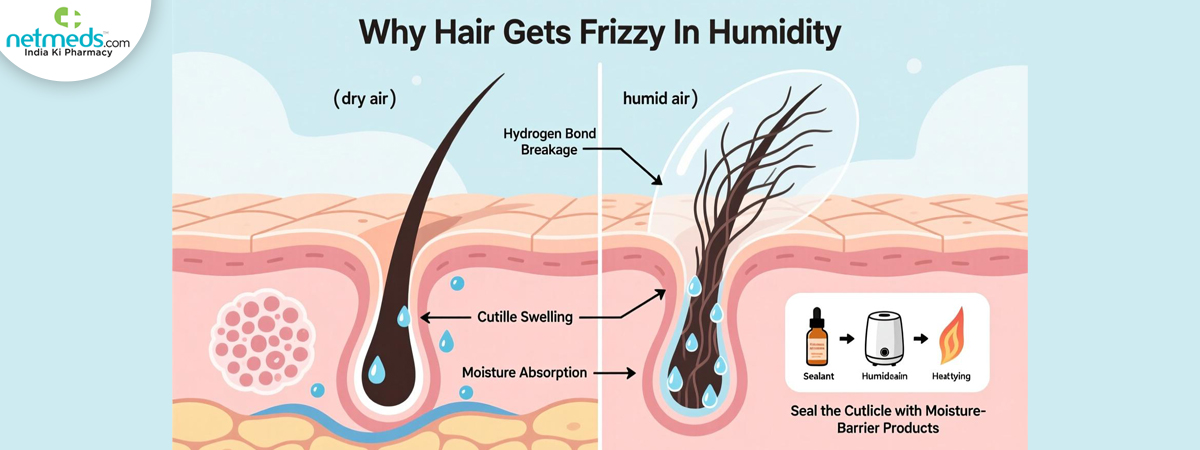
What Causes Hair Problems During Monsoon?
Several environmental and lifestyle factors contribute to hair damage during the rainy season:
High humidity causes hair to absorb excess moisture and swell
Rainwater (often acidic or polluted) weakens hair strands
Damp scalp increases the risk of fungal infections
Sweat and dirt buildup clog hair follicles
Frequent wetting and drying leads to breakage
Common signs include frizz, limp hair, scalp itchiness, dandruff, and hair fall.
Also Read: Natural Oils Are A Great Way To Control Frizzy Hair
How Monsoon Humidity Affects Your Hair
Humidity disrupts your hair’s natural structure by allowing excess moisture to enter the hair shaft. This leads to:
Loss of smooth texture and increased frizz
Weakening of hair strands
Flat, lifeless appearance
Increased tangling and breakage
Without proper care, these issues can worsen throughout the season.

7 Simple Hair Care Tips For Monsoon
Deep Oil Massage For Nourishment
Massaging your scalp with oils like coconut, almond, or argan oil helps nourish and strengthen hair roots while protecting strands from humidity damage. Slightly warm the oil for better absorption.
Benefits: Restores moisture balance, reduces frizz, and strengthens hair naturally.
Use Anti-Frizz Hair Masks
Weekly hair masks made with ingredients like yogurt, aloe vera, or banana can help control frizz and deeply condition your hair.
Benefits: Smoothens rough strands, adds shine, and improves manageability.
Avoid Getting Hair Wet In Rain
Rainwater may contain pollutants that can damage your hair and scalp. Try to cover your hair when stepping out.
Benefits: Prevents scalp infections, dryness, and hair fall.
Keep Your Scalp Clean And Dry
Wash your hair regularly using a mild shampoo to remove sweat, dirt, and buildup. Avoid leaving your scalp damp for long.
Benefits: Reduces dandruff, itchiness, and scalp infections.
Limit Heat Styling Tools
Humidity already weakens hair structure, and using heat styling tools can make it worse. Minimize their use during monsoon.
Benefits: Prevents additional dryness and breakage.
Use A Lightweight Conditioner
Heavy products can weigh your hair down in humid weather. Opt for lightweight conditioners that hydrate without making hair greasy.
Benefits: Keeps hair soft, smooth, and manageable.
Trim Your Hair Regularly
Humidity can worsen split ends and roughness. Regular trims help maintain healthy hair.
Benefits: Prevents breakage and promotes smoother hair growth.

Bonus Tips For Healthy Monsoon Hair
Tie your hair in loose braids or buns to reduce frizz
Use a wide-tooth comb to avoid breakage
Avoid over-washing your hair
Use anti-frizz serums or leave-in conditioners
Dry your hair completely before tying or styling
Protections
Avoid tying wet hair tightly
Do not skip scalp hygiene
Patch test DIY masks before use
Consult a dermatologist for severe hair fall or infections
Conclusion
Monsoon hair problems can be frustrating, but they are completely manageable with the right approach. By following these simple tips, you can control frizz, protect your scalp, and keep your hair smooth and healthy even in humid weather.
Consistency is key. With proper care, balanced nourishment, and mindful habits, your hair can stay strong, shiny, and beautiful throughout the rainy season.
References
 Previous