


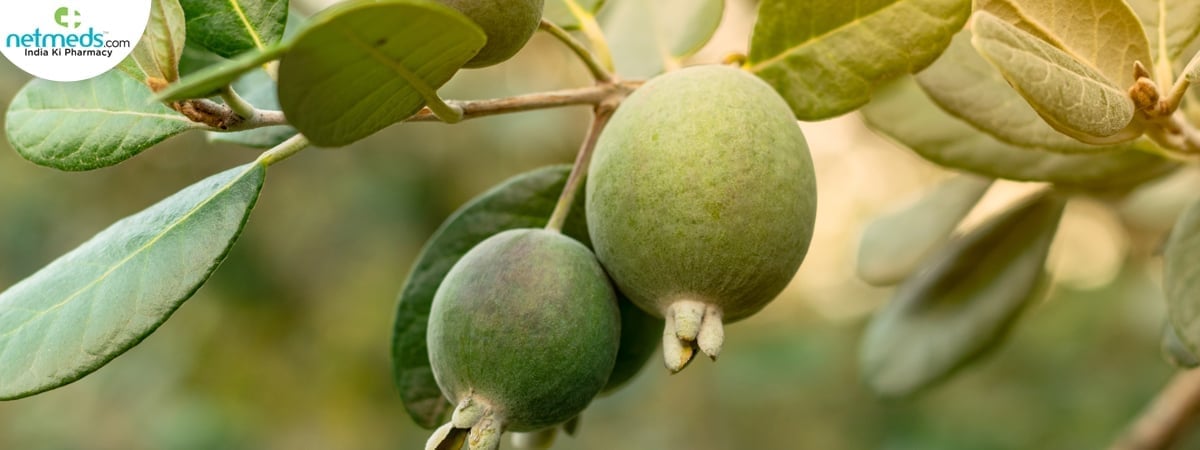
A luscious small fruit that tastes as if it were a combination of guava and pineapple, thus known as pineapple guava or guavasteen, Feijoa is a delightful fruit native to Brazil, Paraguay, Argentina, and Uruguay, now cultivated in various parts of the world, more so in mild climatic zones. The luscious small fruit that boasts potential health benefits is packed with essential vitamins and minerals, making it a valuable addition to any diet. In this article, let us explore the health benefits of feijoa and its bioactive compounds.
Also: Mangosteen: Incredible Health Benefits Of This Delicious Fruit
In traditional medicine, various parts of the feijoa plant, including the fruit, leaves, and flowers, have been used to treat several ailments, including digestive disorders, skin conditions, and respiratory infections. Herbal drink or tea from the feijoa plant was used to treat dysentery in the olden days. The Vitamin C in the fruit is almost double the amount found in oranges, and like other tropical fruits, feijoa is also high in folate, a natural form of Vitamin B9.
Fabulous Health Benefits Of Feijoa
Bolsters Immunity
Feijoa contains Vitamin C, an antioxidant renowned for its immune-boosting properties, helping in the body's defence against infections and illnesses. Additionally, feijoa contains significant amounts of vitamin E that protect body cells from damage caused by free radicals.
Aids Digestion
Feijoa is a good source of dietary fibre, which plays a crucial role in digestive health. A diet high in fibre is associated with a reduced risk of various gastrointestinal conditions, including colorectal cancer. Managing bowel movements prevents constipation and promotes a healthy gut microbiome by serving as food for beneficial gut bacteria.
Ideal For Weight-Watchers
Feijoa is notably low in calories and fat, making it an excellent choice for those looking to manage their weight. Its natural sweetness can satisfy cravings for sugary snacks, making it a healthier alternative to processed desserts. Incorporating feijoa into your diet can help you feel full and satisfied while providing essential nutrients without excess calories.
Keeps Blood Pressure In Control
Feijoa is rich in potassium, an electrolyte essential for maintaining proper fluid balance and nerve function. Adequate potassium intake is crucial for regulating blood pressure and reducing the risk of stroke, heart disease, and kidney stones. Including potassium-rich foods like feijoa in your diet can contribute to overall cardiovascular health and well-being.
Fights Oxidative Stress
Feijoa also contains a range of beneficial phytochemicals, including flavonoids and polyphenols, which have antioxidant and anti-inflammatory properties. These compounds help protect cells from inflammation, thus reducing the risk of chronic diseases such as heart disease, diabetes, and certain types of cancer.
Also Read: Akebi: Nutritional Content, Health Benefits, and Easy Recipes Of This Succulent Fruit
Ways To Eat Feijoa Fruit
Best ripened on the tree and mainly eaten fresh, cut feijoas in half and scoop out the flesh with a spoon. Store mature ones in the fridge, and they will stay for about a week. In Brazil, feijoa is jellied or canned and made into alcoholic drinks, sparkling wines, and juices. Feijoa can also be cooked into dumplings, pies, puddings, pastry fillings, and for flavouring ice-creams, and made into jams and sauces.
Shop From Our Wide Array Of Vitamins And Minerals
A powerhouse of bioactive compounds and nutrition, exotic feijoa is indeed an elixir for wellness. So, if you come across this sweet, delicious fruit, you must try it and enjoy its unique flavour while reaping the rewards of its impressive nutritional profile. And yes, do try this simple smoothie recipe too!
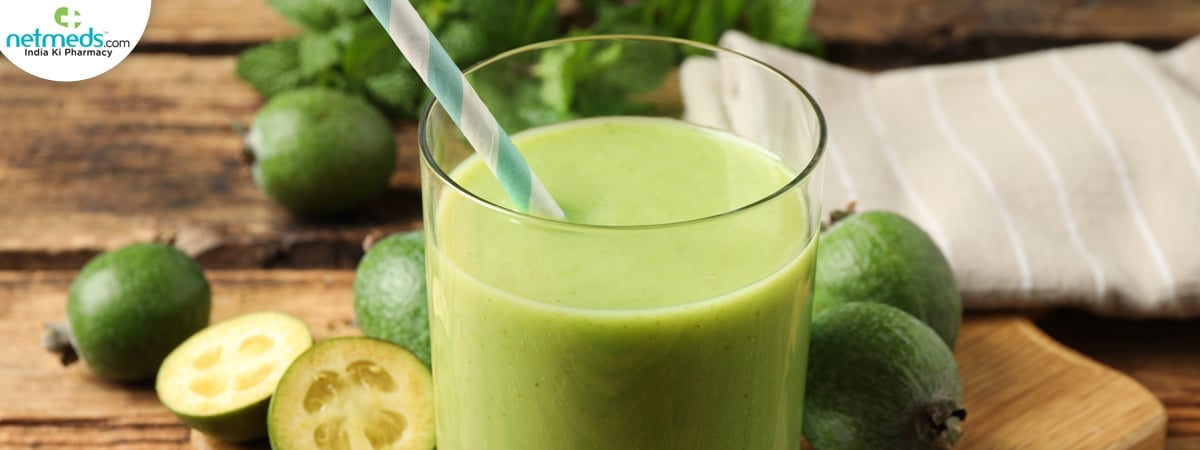
Feijoa And Banana Smoothie
Ingredients
- 2 ripe, peeled, and chopped feijoas
- 1 ripe, peeled, and sliced banana
- 1 cup Greek yoghurt
- 1/2 cup almond milk or any low-fat milk
- 1 tsp honey
- 1/2 tsp vanilla extract (optional)
- Ice cubes (optional)
Method
- Peel and chop the feijoas and banana
- In a blender, combine the chopped feijoas, sliced banana, Greek yoghurt, almond milk, honey, and vanilla extract
- Blend all the ingredients until they become smooth
- You can add milk or a little water to reach the desired consistency
- Adjust the sweetness if necessary
- Pour the smoothie, add ice if desired
- You can garnish with a slice of feijoa or a sprinkle of cinnamon
- Enjoy your refreshing and nutritious feijoa and banana smoothie
Nutrition
Rich source of Vitamin C and imbued with antibacterial, antifungal, and antioxidant activities, sweet feijoas can help boost immunity to support digestive health and cardiovascular function. Feijoas can be fabulous if added to the diet.
Frequently Asked Questions
What Nutrition Does Feijoa Fruit Contain?
Feijoa fruit is rich in antioxidants, vitamin C, and dietary fibre, which help boost immunity, improve digestion, and support heart health. Its anti-inflammatory properties may aid in reducing oxidative stress, while natural compounds in feijoa can help regulate blood sugar levels and promote healthy skin.
Is Feijoa Low In Calories?
Feijoa is a low-calorie fruit packed with essential nutrients such as vitamin C, vitamin B6, potassium, magnesium, and fibre. It also contains beneficial antioxidants and iodine, making it especially helpful for thyroid function and overall metabolic health.
How Can Feijoa Be Used?
Feijoa can be enjoyed fresh by scooping out the pulp or used in a variety of recipes such as smoothies, fruit salads, jams, desserts, and baked goods. A simple and refreshing recipe is a feijoa smoothie made by blending feijoa pulp with yoghurt, honey, and ice for a nutritious summer drink.
What are the health benefits of eating feijoa fruit?
Feijoa is rich in vitamin C, fibre, antioxidants, and potassium, which may support immunity, digestion, heart health, and overall wellness.
What is feijoa called in India?
Feijoa is generally known as feijoa in India and does not have a widely used local name.
What is the feijoa fruit called in English?
Feijoa is commonly called Pineapple Guava.
Are feijoas good for cholesterol?
Yes, the fibre and antioxidants in feijoa may help support healthy cholesterol levels when included in a balanced diet.
Can humans eat feijoas?
Yes, feijoas are safe and nutritious for humans to eat. The flesh is commonly eaten fresh, and the skin is also edible.
References:
Nephroprotective effects of Feijoa Sellowiana leaves extract
Mohammad Karami,1,* Faezeh Karimian Nokabadi,1 Mohammad Ali Ebrahimzadeh,2 and Farshad Naghshvar3
https://www.ncbi.nlm.nih.gov/pmc/articles/PMC3938889/
- Chemical and biological properties of feijoa (Acca Sellowiana)
School of Chemical Sciences, University of Auckland, Private Bag 92019, Auckland, 1142, New Zealand
https://www.sciencedirect.com/science/article/abs/pii/S0924224418304606
 Previous


